DIY Herbal Tea Blends Made Easy.
7 cozy recipes for sleep, digestion, energy, and soothing everyday sipping at home. Make one now
Your Kitchen Can Become a Tiny Tea Studio
Making your own tea blends sounds fancy.
Like something you’d do while wearing linen, living near a lavender field, and somehow knowing the difference between “bright floral top notes” and “herbaceous undertones.”
But really?
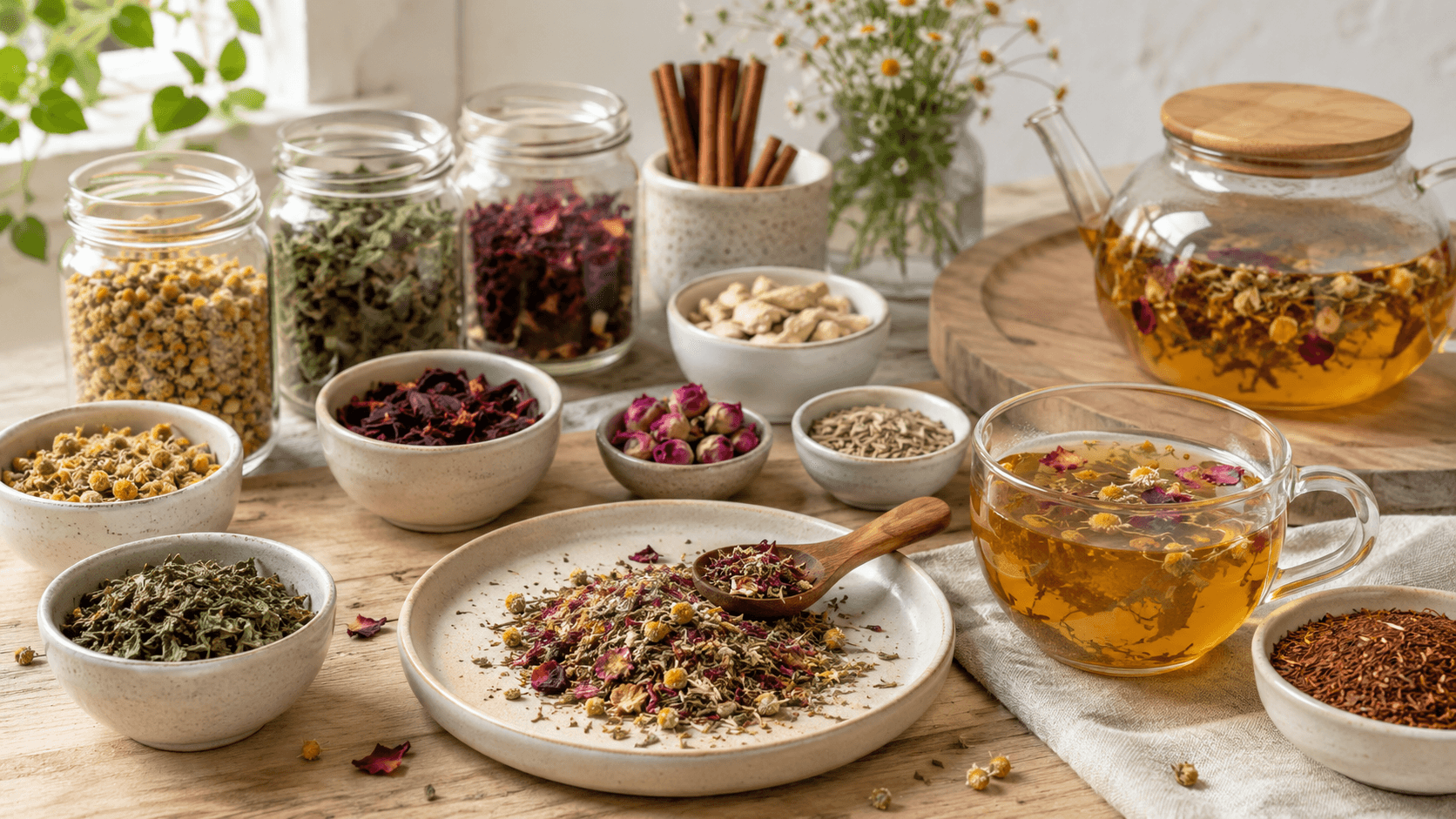
DIY Herbal Tea Blends can start with a few dried herbs, a clean jar, and a spoon.
That’s it. No tiny apothecary required. No dramatic tea ceremony. No need to alphabetize your botanicals unless that brings you joy, in which case: please carry on.
The beauty of making herbal tea blends at home is that you get to create a cup that fits your actual life. A gentle chamomile blend for the nights when your brain refuses to close its many browser tabs. A peppermint-fennel cup after a heavy meal. A ginger-citrus blend when you want a little morning brightness without the caffeine tap-dancing through your nervous system.
Homemade tea blends are practical, personal, and surprisingly forgiving.
You can make them cozy. Fresh. Floral. Spicy. Tart. Sweet. Simple. You can make a blend for sleep, digestion, energy, or just because it is 4 p.m. and you deserve something warm in your hands.
In this guide, we’ll walk through the basics of DIY Herbal Tea Blends, the simple formula for balancing flavor, the best beginner herbs to keep on hand, and seven easy recipes you can try at home.
One gentle note before we start steeping: herbs can be powerful. Start small, pay attention to how your body feels, and check with a healthcare professional if you are pregnant, nursing, taking medication, or managing a health condition.
Now let’s make your kitchen smell like a very calm little tea shop.
What Are DIY Herbal Tea Blends?
DIY Herbal Tea Blends are homemade mixtures of dried herbs, flowers, fruits, roots, seeds, and spices that you steep in hot water.
That’s the simple answer.
The prettier answer: they are little mood recipes.
You can build a blend for sleep, digestion, morning brightness, winter coziness, or “I need something comforting but I already had two coffees and my left eyelid is making decisions.”
Most herbal tea blends are naturally caffeine-free because they do not come from the traditional tea plant, Camellia sinensis. Instead, they come from plants like chamomile, peppermint, rooibos, fennel, ginger, hibiscus, lemon balm, nettle, lavender, and rosehips.
Herbal Tea vs. True Tea
Here’s where tea language gets a little sneaky.
Technically, “true tea” comes from one plant: Camellia sinensis. That includes:
Green tea
Black tea
White tea
Oolong tea
Pu-erh tea
Herbal tea is different. It is often called a “tisane,” which sounds very elegant and slightly like it should be wearing pearls. But for everyday sipping, most people simply call it herbal tea.
Herbal teas are made from botanicals instead of tea leaves. That means they can taste floral, minty, spicy, fruity, earthy, or naturally sweet depending on what you mix together.
You can also blend herbs with true tea. For example, green tea with mint, black tea with cinnamon, or oolong with dried orange peel. But in this guide, we’re focusing mostly on caffeine-free herbal blends you can sip any time of day.
For more tea-blending inspiration, you can also explore Tea Shots Club’s guides on Soothing Sips: The Art of Blending Green Tea with Herbal Infusions and A World in a Cup: Discovering the Global Varieties of Tea.
Why Make Your Own Herbal Tea Blends?
Store-bought tea is convenient. I love convenience. Convenience is why snacks exist.
But making your own herbal tea blends gives you something store-bought boxes can’t always offer: control.
You control the flavor. You control the strength. You control the ingredients. You control whether lavender enters the room politely or kicks the door open.
Homemade blends also let you use what you already have. A little peppermint. Some cinnamon. Dried ginger. A jar of chamomile you bought with peaceful intentions and then forgot behind the oats.
Even better, DIY blends can save money over time, especially if you drink tea often. Loose herbs usually stretch farther than individual tea bags, and you can make small batches instead of buying a full box of a flavor you may not love.
They also make beautiful gifts. A small jar of homemade tea with a handwritten label feels thoughtful without being complicated.
Which is my favorite kind of thoughtful.
The Simple Formula for Balanced Herbal Tea Blends
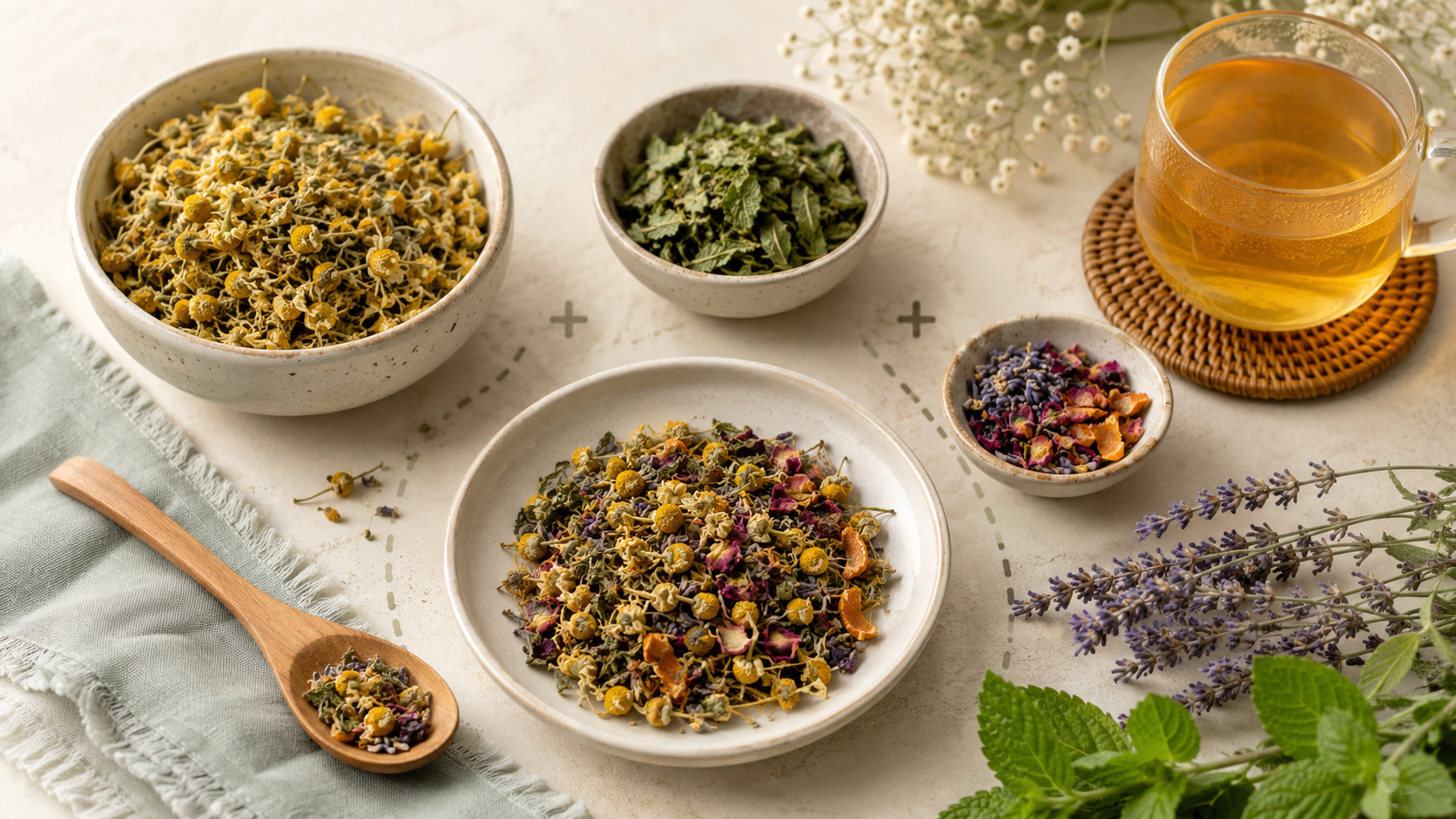
A good herbal tea blend is a little like a cozy outfit.
You need the main piece. You need something that supports it. And then you need one tiny detail that makes the whole thing feel intentional.
A scarf. A gold hoop. A ridiculous-but-perfect sock.
Tea works the same way.
When you’re making DIY Herbal Tea Blends, the easiest beginner formula is:
2 parts base herb
1 part supporting herb
½ part strong flavor ingredient
That’s it. That little ratio can save you from the classic beginner mistake: tossing seven herbs into a bowl and hoping they become friends.
Sometimes they do.
Sometimes they become hot confusion.
Start With a Base Herb
Your base herb is the foundation of the blend. It should be pleasant, gentle, and something you enjoy drinking in a full cup.
Good beginner base herbs include:
Chamomile
Rooibos
Peppermint
Lemon balm
Nettle
Tulsi
Raspberry leaf
Think of the base herb as the couch in the living room. It takes up the most space, so you need to like it.
For example, chamomile makes a soft, floral bedtime base. Rooibos creates a naturally sweet, cozy base. Peppermint gives you a fresh, clean base that works beautifully after meals.
Add a Supporting Herb
The supporting herb gives your blend more direction.
This is where you decide what you want the tea to do in the moment. Do you want it to feel calming? Bright? Spicy? Digestive? Comforting?
A few easy pairings:
Chamomile + lemon balm for calm
Peppermint + fennel for digestion
Rooibos + cinnamon for cozy sweetness
Hibiscus + rosehips for tart, fruity brightness
Ginger + lemongrass for a zesty lift
The supporting herb does not need to shout. It just needs to help the base herb make sense.
Like a good friend who brings snacks and doesn’t reorganize your kitchen.
Finish With a Personality Ingredient
This is the little sparkle.
Your personality ingredient adds aroma, flavor, color, or depth. It is usually stronger, so use less of it.
Try:
Lavender
Cardamom
Clove
Dried orange peel
Rose petals
Vanilla
Licorice root
Dried berries
Black pepper
Fennel seed
This is where tea blending gets fun. A pinch of lavender can make chamomile feel like bedtime in a cup. A little orange peel can make rooibos taste like a cozy winter afternoon. A few crushed fennel seeds can make peppermint softer and sweeter.
But go gently.
Some herbs are divas.
Lavender, clove, licorice root, hibiscus, and black pepper can take over fast. They are not background singers. They are already holding the microphone.
Start with less than you think you need. You can always add more in the next batch.
A Simple Beginner Example
Here’s how the formula looks in real life:
Calming Evening Blend
2 teaspoons chamomile
1 teaspoon lemon balm
½ teaspoon lavender
Mix, steep, sip.
That’s a balanced blend: soft base, calming support, floral finish.
Once you understand the formula, you can create dozens of herbal tea blends without needing a recipe every time. You’ll start tasting your way through it.
A little more ginger here. A little less hibiscus there. A tiny pinch of cinnamon because your soul requested it.
That’s the joy of homemade tea.
Essential Herbs and Ingredients for DIY Herbal Tea Blends
You do not need a wall of tiny jars to make good tea.
I know. Disappointing for anyone who wanted their kitchen to look like a woodland apothecary on Pinterest.
But truly, beginner-friendly DIY Herbal Tea Blends only need a small group of reliable ingredients. Think of these as your tea pantry staples: the herbs and spices you can mix in different ways depending on your mood, your stomach, your evening routine, or the weather’s emotional state.
Start with five to seven ingredients. Learn what they taste like. Notice which ones you reach for again.
That is how you build confidence without accidentally buying three pounds of dried yarrow at 11:42 p.m.
Calming Herbs
Calming herbs are your soft landing.
They are lovely for evening blends, bedtime cups, and those moments when your brain is still hosting a staff meeting after 9 p.m.
Good beginner calming herbs include:
Chamomile: soft, floral, apple-like, and classic for bedtime blends.
Lemon balm: lightly lemony, green, gentle, and beautiful with chamomile.
Lavender: floral and aromatic, but strong. Use a tiny amount.
Passionflower: earthy and mild, often used in relaxing nighttime blends.
Tulsi: also called holy basil, with a slightly spicy, herbal flavor.
A simple calming blend could be chamomile, lemon balm, and just a pinch of lavender. The pinch matters. Lavender is charming until it starts tasting like soap with a publicist.
For more cozy nighttime inspiration, Tea Shots Club’s guide to Discovering the Best Sleepytime Tea is a natural next read.
Digestive Herbs
Digestive herbs are the ones you want after a big meal, a heavy dinner, or one of those “I regret nothing but my stomach has notes” moments.
Beginner-friendly digestive herbs include:
Peppermint: fresh, cooling, and easy to love.
Fennel seed: lightly sweet, licorice-like, and wonderful after meals.
Ginger: warming, spicy, and bold.
Anise seed: sweet, aromatic, and similar to fennel.
Dandelion root: earthy, roasted, and grounding.
Peppermint and fennel are one of the easiest pairings for beginners because peppermint brings freshness while fennel adds a soft natural sweetness. Ginger can make the blend warmer and more lively.
This is a great place to connect with Tea Shots Club’s articles Tea for Digestion: How Tea Can Soothe and Support Your Digestive Health and Sip Away Bloat Fast: Fennel Tea for Digestion Calms Your Gut in Minutes.
Bright and Energizing Herbs
Not every energizing tea needs caffeine.
Sometimes you just need a cup that tastes awake.
Bright herbal ingredients are great for morning blends, afternoon slumps, iced teas, and days when your water bottle is judging you from across the room.
Try:
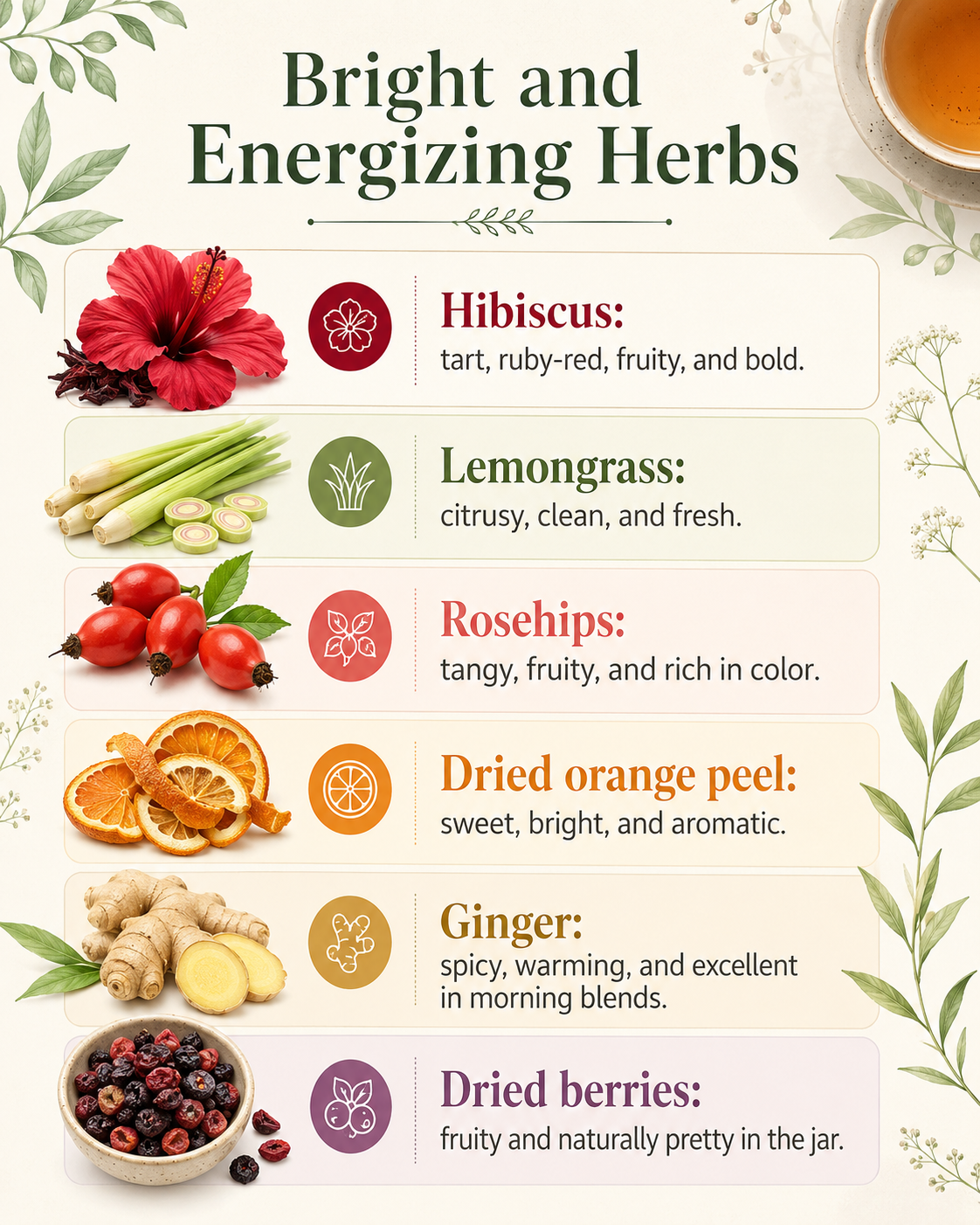
Hibiscus is gorgeous, especially iced. But it is strong. A little can turn the whole cup tart very quickly, like tea wearing red lipstick and making an entrance.
For a beginner blend, try lemongrass, orange peel, and rosehips before adding hibiscus. It gives you brightness without too much pucker.
Cozy Flavor Builders
These are the comfort ingredients.
They make a tea feel warm, rounded, and dessert-adjacent without turning it into a cupcake wearing a tea bag costume.
Good cozy ingredients include:
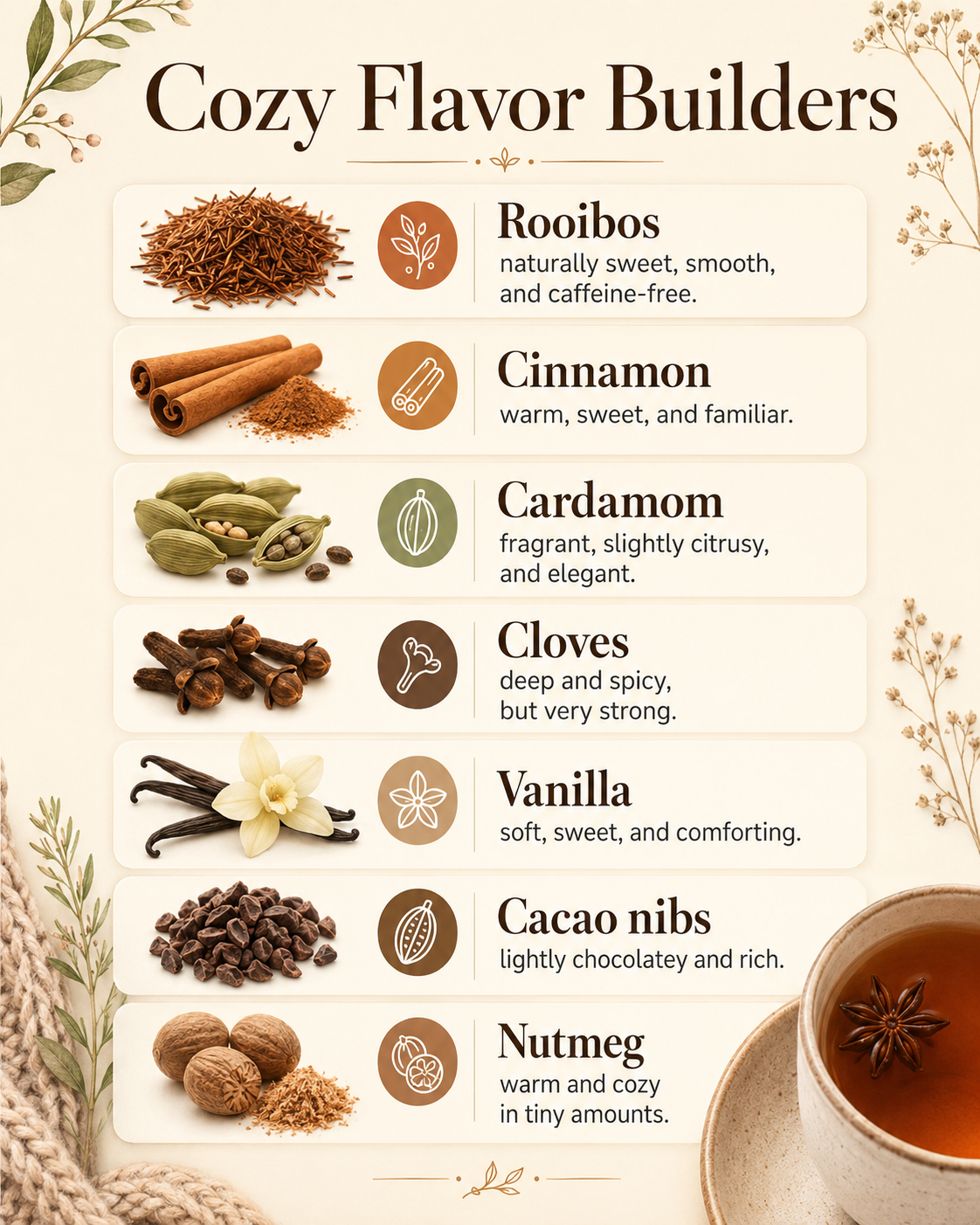
Rooibos is one of the best bases for cozy blends because it plays well with spices. Cinnamon, vanilla, and cardamom turn it into a cup that feels like a blanket with better boundaries.
Tea Shots Club’s Savoring the Cozy Embrace of Apple Cinnamon Tea is a beautiful internal link for readers who love warm, spiced flavors.
The Best Beginner Herbal Tea Pantry
To keep things simple, start with this small starter set:
Chamomile
Peppermint
Rooibos
Ginger
Fennel seed
Lemon balm
Cinnamon
Dried orange peel
With those ingredients, you can make calming blends, digestive blends, cozy blends, and bright morning blends.
That is plenty.
You can always add hibiscus, rosehips, lavender, nettle, tulsi, or cardamom later once you know what you like.
The goal is not to own every herb.
The goal is to make a cup you want to drink again.
7 Easy DIY Herbal Tea Blends to Try at Home
Now for the fun part.
The part where we stop talking about tea blending and actually make tea.
These DIY Herbal Tea Blends are beginner-friendly, flexible, and made with easy-to-find herbs. Each recipe makes about 1 cup of tea, but you can multiply the amounts to create a small jar for the week.
To brew: use 1–2 teaspoons of blend per 8 ounces of hot water, steep for 5–10 minutes, then strain.
And yes, you may absolutely name your blends something dramatic.
“Moon Garden Sleep Tea” sounds much better than “I mixed chamomile with lavender because Tuesday was a lot.”
1. Sleepy Chamomile Lavender Blend
Best for: bedtime, evening calm, and slow wind-down rituals.
Ingredients:
2 teaspoons chamomile
1 teaspoon lemon balm
¼ to ½ teaspoon lavender
Flavor: soft, floral, lightly lemony, and soothing.
This is the blend you make when your body is tired but your mind is still opening random tabs. Chamomile gives the cup a gentle floral base. Lemon balm adds a soft green brightness. Lavender brings that spa-like aroma—but use it carefully.
Lavender is lovely.
Lavender is also bossy.
Too much and your tea can start tasting like a candle named “Grandma’s Linen Closet.” Start with ¼ teaspoon, then add more next time if you want a stronger floral flavor.
Sip this about 30–60 minutes before bed as part of your evening routine.
2. Peppermint Fennel Digestion Blend
Best for: after meals, bloating days, and heavy-food evenings.
Ingredients:
2 teaspoons peppermint
1 teaspoon lightly crushed fennel seed
½ teaspoon dried ginger
Flavor: fresh, lightly sweet, cooling, and warming at the same time.
Peppermint is the clean, fresh friend. Fennel is the sweet, gentle friend. Ginger is the friend who says, “Let’s get moving.”
Together, they make one of the easiest DIY Herbal Tea Blends for after-dinner comfort.
Lightly crush the fennel seeds before steeping so they release more flavor. You do not need to pulverize them like you’re angry at dinner. Just a gentle crush with a spoon or mortar and pestle is enough.
This blend is especially nice after rich meals, holiday dinners, or those nights when you said, “Just one more bite,” and then made several more legally binding bite decisions.
For more digestive tea ideas, read Tea Shots Club’s Sip Away Bloat Fast: Fennel Tea for Digestion Calms Your Gut in Minutes and Top 5 Teas Compared: Finding the Absolute Best Tea for Gut Health.
3. Ginger Citrus Energy Blend
Best for: caffeine-free mornings, afternoon slumps, and bright iced tea.
Ingredients:
1 teaspoon dried ginger
1 teaspoon lemongrass
1 teaspoon dried orange peel
½ teaspoon rosehips
Flavor: zesty, citrusy, tangy, and lively.
This blend tastes awake.
Not “three shots of espresso and now I can hear colors” awake.
More like: open the curtains, stretch your shoulders, remember you are a person and not just a task list.
Ginger brings warmth. Lemongrass adds clean citrus flavor. Orange peel gives natural sweetness and aroma. Rosehips add a tangy, fruity edge.
This is a great morning cup if you want something bright without caffeine. It also makes a beautiful iced tea. Brew it strong, chill it, and pour over ice with a little honey or maple syrup.
Tiny umbrella optional.
Mood improvement probable.
4. Cozy Cinnamon Rooibos Blend
Best for: dessert cravings, chilly evenings, and cozy comfort cups.
Ingredients:
2 teaspoons rooibos
½ teaspoon cinnamon chips or cinnamon pieces
¼ teaspoon crushed cardamom
Tiny pinch of vanilla powder or a few drops of vanilla after brewing
Flavor: warm, naturally sweet, smooth, and gently spiced.
Rooibos is a gift to homemade tea blending because it behaves beautifully. It is naturally caffeine-free, softly sweet, and friendly with spices.
Basically, rooibos is the golden retriever of tea bases.
Add cinnamon and cardamom, and suddenly you have a cup that feels like a soft sweater. Vanilla rounds everything out and makes the blend taste dessert-like without needing actual dessert.
Although actual dessert is not the enemy.
This blend is perfect when you want something cozy at night but do not want a sugary drink. It also pairs beautifully with a splash of milk or oat milk.
For readers who love warm spice blends, Tea Shots Club’s Savoring the Cozy Embrace of Apple Cinnamon Tea is a lovely next sip.
5. Hibiscus Rose Glow Blend
Best for: iced tea, summer sipping, brunch, and pretty pink cups.
Ingredients:
1 teaspoon hibiscus
1 teaspoon rosehips
½ teaspoon dried rose petals
½ teaspoon dried berries or dried orange peel
Flavor: tart, fruity, floral, and bright.
This blend is gorgeous in the cup.
Hibiscus gives it that deep ruby color. Rosehips add tang. Rose petals bring a soft floral note. Dried berries or orange peel make it feel fruity and cheerful.
It is the tea equivalent of wearing lipstick to the grocery store just because you felt like it.
A small warning: hibiscus is tart. Wonderful, yes. Shy, no. If you like a softer cup, use less hibiscus and more rosehips or orange peel.
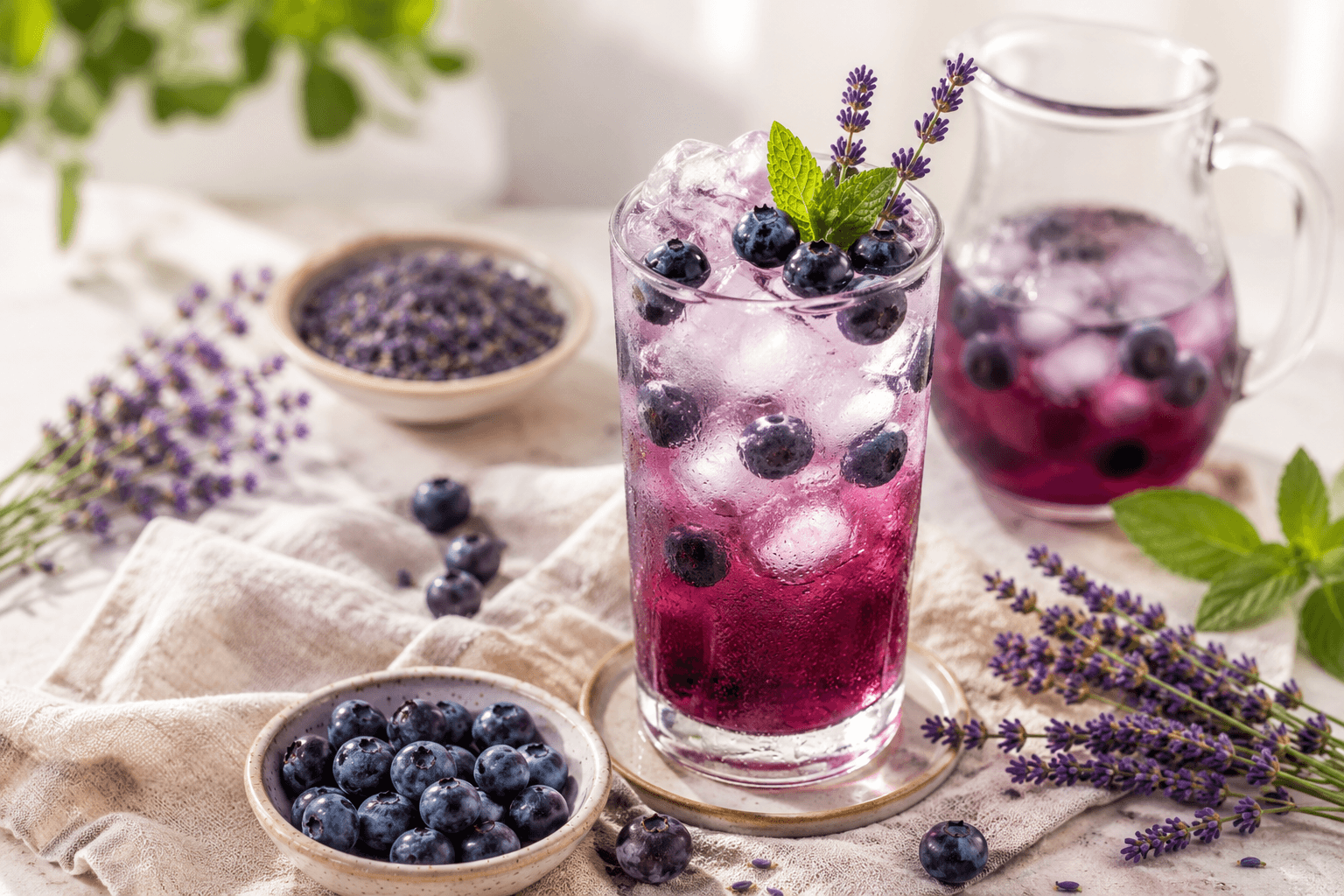
This blend is especially good cold-brewed. Add the herbs to cold water, refrigerate for several hours, strain, and serve over ice. Sweeten lightly if you like.
It also looks beautiful in a glass pitcher, which is very useful if you enjoy pretending your afternoon is more organized than it is.
6. Nettle Mint Mineral Blend
Best for: everyday wellness sipping, fresh green flavor, and simple daily tea.
Ingredients:
2 teaspoons nettle
1 teaspoon peppermint
1 teaspoon lemon balm
Flavor: green, fresh, lightly minty, and grounded.
This is a simple, steady, everyday kind of blend.
No drama. No fireworks. No “limited-edition seasonal sparkle energy.”
Just a clean green cup that tastes fresh and nourishing.
Nettle has an earthy, grassy flavor, so peppermint helps brighten it. Lemon balm softens the edges and adds a gentle lemony note. Together, they make a balanced cup that feels practical in the best way.
This is a good blend for mornings, afternoons, or anytime you want a caffeine-free tea that does not feel too sleepy.
For readers interested in nettle, Tea Shots Club’s Unlocking the Hormonal Harmony: The Remarkable Benefits of Nettle Tea is a helpful internal read.
7. Golden Ginger Turmeric Blend
Best for: cold days, warming rituals, and bold earthy flavor.
Ingredients:
1 teaspoon dried turmeric
1 teaspoon dried ginger
½ teaspoon cinnamon
Tiny pinch of black pepper
Flavor: earthy, spicy, warming, and bold.
This is not a delicate tea.
This is a “put on socks, stand near the stove, and become emotionally available to winter” tea.
Turmeric gives the blend its golden color and earthy flavor. Ginger adds heat. Cinnamon softens the edges. Black pepper adds a tiny kick and helps round out the spice.
Use a tiny pinch of black pepper. Tiny. This is tea, not soup.
This blend is lovely with honey and a splash of milk, coconut milk, or oat milk. It becomes almost latte-like, especially if you simmer it gently on the stove for a few minutes instead of steeping it like a regular tea.
Because turmeric can stain, use a mug you trust. Not the precious white one you bought because you were becoming “a minimalist.”
We both know how that went.
For more warming tea ideas, explore Tea Shots Club’s The Best Tea for Inflammation: Your Complete Guide to Anti-Inflammatory Brews.
Quick Beginner Tip: Make Tiny Test Batches First
Before you fill a whole jar with a new blend, make one cup.
One.
Tea blending is part recipe, part mood, part “hmm, that was too much clove.”
Small test batches let you adjust without wasting herbs. If the blend tastes flat, add citrus peel, mint, ginger, or cinnamon. If it tastes too strong, add more base herb. If it tastes chaotic, remove one ingredient and try again.
You are not failing.
You are editing.
And honestly, tea is much kinder to edit than a paragraph.
How to Make and Store Your Herbal Tea Blends
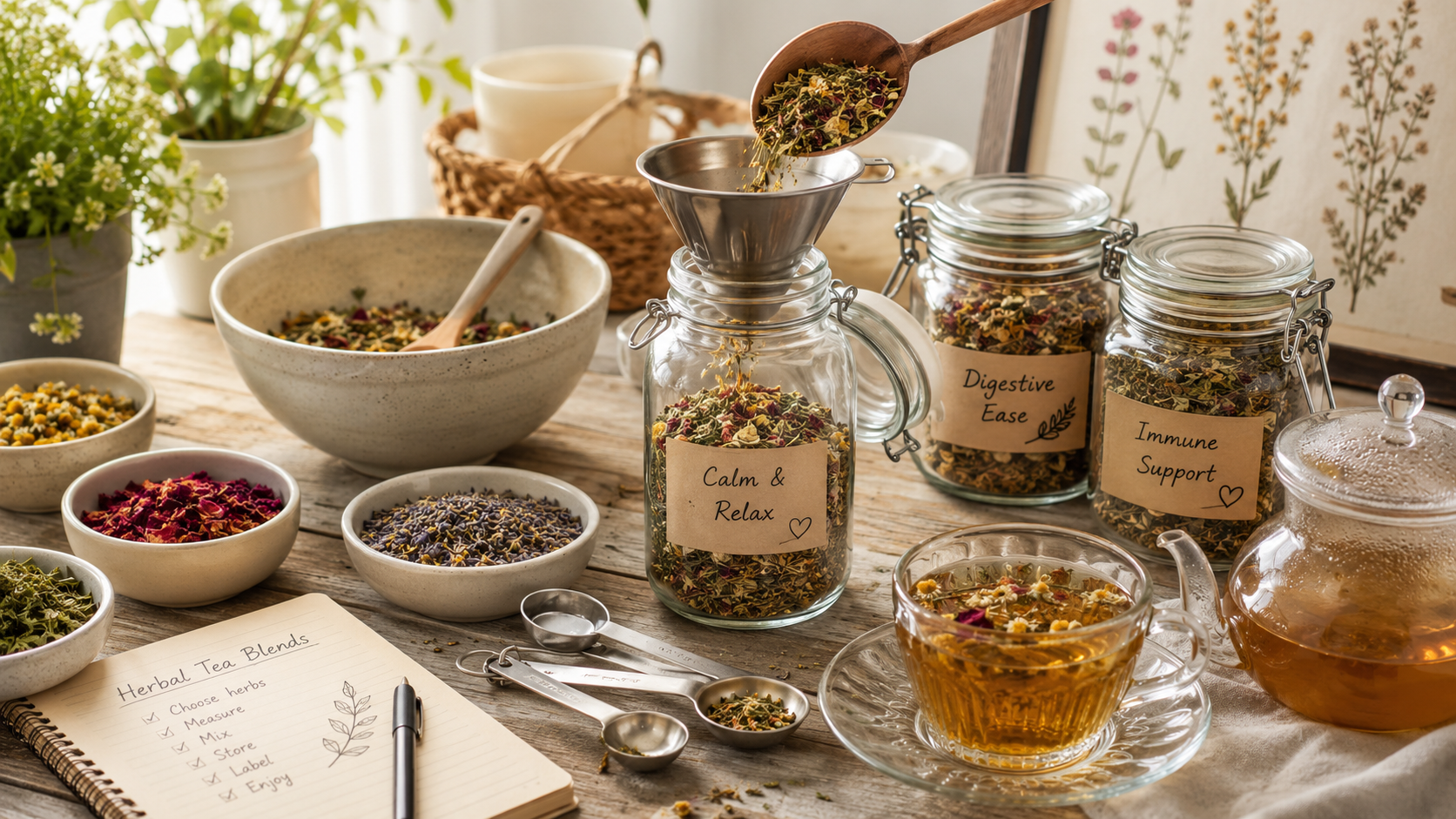
Making DIY Herbal Tea Blends is wonderfully simple.
You measure. You mix. You store. You label.
That last one matters more than you think.
Because nothing humbles a tea lover faster than finding a mysterious jar of dried green things and thinking, “Is this lemon balm… or something I bought during my wellness era?”
Let’s keep future-you from becoming a pantry detective.
Step 1: Measure Your Herbs
You can measure herbs two ways: by teaspoons or by “parts.”
Teaspoons are easiest when you’re making one cup.
Parts are best when you want to make a bigger batch.
For example, if a recipe says:
2 parts chamomile
1 part lemon balm
½ part lavender
That could mean:
2 tablespoons chamomile
1 tablespoon lemon balm
½ tablespoon lavender
Or:
2 cups chamomile
1 cup lemon balm
½ cup lavender
Same ratio. Bigger batch.
The ratio is the recipe’s skeleton. You can dress it up however you like.
Step 2: Mix Gently
Add your herbs to a clean bowl and mix them with a spoon or clean hands.
Be gentle with delicate flowers like chamomile, lavender, rose petals, and hibiscus. You want to combine them, not turn them into botanical dust.
Roots, seeds, and spices are sturdier. Ginger, fennel seed, cinnamon, and cardamom can handle a little more movement.
If you’re using seeds like fennel, anise, or cardamom, lightly crush them before blending. This helps release their aroma and flavor when steeped.
Lightly is the key word.
You are waking the seeds up, not sending them to boot camp.
Step 3: Store in Airtight Jars
Once your blend is mixed, transfer it to a clean, dry, airtight jar.
Glass jars work beautifully, especially if they have tight lids. Small tins or resealable tea pouches also work.
Store your blends away from:
Heat
Direct sunlight
Moisture
Strong kitchen smells
Herbs are absorbent little creatures. If you store them too close to spices, coffee, or open pantry chaos, they may pick up flavors you did not invite.
Chamomile with a hint of garlic powder?
No thank you.
Step 4: Label Everything
Label each jar with:
Blend name
Ingredients
Date made
Brewing notes
You can keep the names simple, like “Sleep Blend” or “Digestive Mint.”
Or you can be dramatic and call one “Golden Hour Calm” because honestly, why not?
A label helps you remember what worked. It also helps you adjust the next batch. If your first sleepy blend had too much lavender, write that down. If your digestion blend was perfect with extra ginger, write that down too.
Tea blending gets easier when you stop relying on memory.
Memory is busy. It has passwords to forget.
Step 5: Use While Fresh
Dried herbs do not spoil quickly when stored properly, but they do lose aroma and flavor over time.
A good rule: make small batches you can use within a few months.
Before brewing, smell the blend. Good dried herbs should still have a clear aroma. If the blend smells flat, dusty, or like absolutely nothing, it may still be safe, but it probably won’t make an exciting cup.
And tea should have a little excitement.
Even the sleepy kind.
Simple How-To: Make a Small Jar of Herbal Tea Blend
Use this beginner method when you want a small batch for the week:
Choose your goal: sleep, digestion, energy, or cozy comfort.
Pick one base herb.
Add one supporting herb.
Add a small amount of a strong flavor ingredient.
Mix gently in a bowl.
Transfer to an airtight jar.
Label with the name, ingredients, and date.
Use 1–2 teaspoons per cup when brewing.
That is the whole process.
No complicated equipment. No tea wizard license. Just a few good herbs and a little curiosity.
Which, conveniently, fits in a jar.
How to Brew Herbal Tea So It Actually Tastes Good
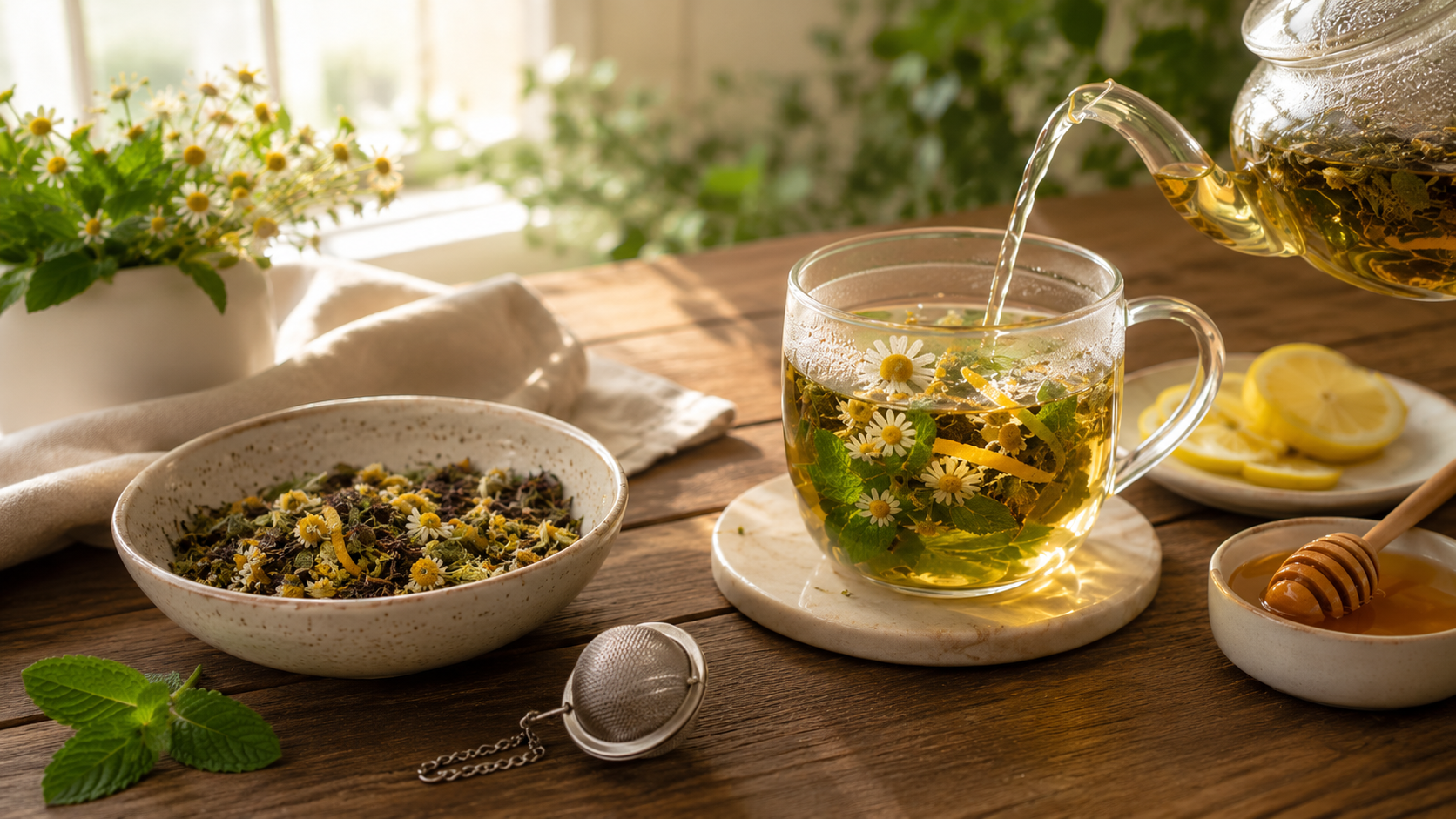
Here is a tiny truth with big tea consequences:
You can make a beautiful herbal tea blend and still ruin the cup by brewing it like sad dishwater.
Not because you are bad at tea.
Because herbal tea needs a little more time, a little more patience, and sometimes a little more herb than we think.
Unlike black or green tea, most herbal blends are made from sturdier plant parts: flowers, roots, seeds, peels, berries, spices, and leaves. They often need a longer steep to release their flavor.
Translation: don’t wave hot water at the herbs and hope for magic.
Let them do their job.
Use Enough Herbs
For most DIY Herbal Tea Blends, start with:
1–2 teaspoons of dried blend per 8 ounces of water
If you like a lighter cup, use 1 teaspoon. If you want more flavor, use 2 teaspoons.
Some fluffy herbs, like chamomile, take up more space on the spoon. Denser ingredients, like dried ginger, cinnamon, fennel seed, and turmeric, pack more flavor into a smaller amount.
So trust your taste buds.
If your tea tastes weak, the answer is usually not despair. It is more herbs.
Steep Long Enough
Herbal tea usually needs 5–10 minutes to steep.
Delicate floral blends may taste lovely around 5 minutes. Root, seed, and spice blends often need closer to 10 minutes.
A chamomile-lavender blend? Gentle. Five to seven minutes may be perfect.
A ginger-turmeric-cinnamon blend? Sturdier. Give it the full 10 minutes and let those spices wake up.
If your herbal tea tastes like hot water wearing a costume, it probably needed more time.
Cover While Steeping
This is one of the easiest upgrades.
Cover your mug while the tea steeps.
Use a small plate, a saucer, a mug lid, or anything heat-safe that traps the steam. Many herbs release aromatic oils as they steep, and those oils help give your tea its flavor and scent.
Without a cover, some of that goodness floats away into the air.
Lovely for the kitchen.
Less lovely for your cup.
Covering your tea is like closing the door while your herbs get dressed. Give them a little privacy.
Sweeten Gently
Some herbal blends taste better with a tiny bit of sweetness.
Try:
Honey
Maple syrup
Date syrup
Stevia
Coconut sugar
You do not need much. Start small.
Sweetness can soften tart hibiscus, round out spicy ginger, and make cinnamon-rooibos blends taste extra cozy. But too much sweetener can flatten the herbs and turn the tea into dessert with a botanical accent.
Which is not always bad.
But it may not be the cup you meant to make.
Try It Iced
Some herbal blends shine cold.
Especially:
Hibiscus
Rosehips
Mint
Lemongrass
Orange peel
Dried berries
Ginger
To make iced herbal tea, brew your blend stronger than usual, let it cool, and pour it over ice. You can also cold brew it by adding the herbs to cold water and refrigerating for several hours.
Cold brewing is especially nice for tart and fruity blends because it often tastes smoother and less sharp.
A hibiscus rose blend over ice with orange peel?
That is not just tea.
That is summer in a glass, behaving beautifully for once.
Taste and Adjust
Your first cup is information.
Too weak? Add more blend or steep longer. Too bitter or strong? Use less of the bold ingredient. Too tart? Reduce hibiscus or add orange peel. Too floral? Use less lavender or rose. Too flat? Add ginger, mint, citrus peel, cinnamon, or a tiny pinch of salt.
Yes, salt.
Just a few grains can make flavors feel more awake, especially in fruity or citrusy blends. You should not taste salt. It should simply make the tea taste more like itself.
Tea blending is not about getting everything perfect immediately.
It is about noticing.
A little more this. A little less that. A cup that gets better each time.
Very civilized. Very cozy. Very unlike assembling furniture.
Common Mistakes When Making DIY Herbal Tea Blends
Making DIY Herbal Tea Blends is simple.
But simple does not always mean foolproof.
A sandwich is simple too, and yet somehow we have all made one that tasted like regret and wet lettuce.
Tea blending has its own little traps. Nothing dramatic. Nothing that requires a formal apology to your herbs. Just a few common mistakes that can turn a promising blend into something confusing, flat, bitter, or suspiciously perfume-adjacent.
Let’s save your cup.
Mistake 1: Using Too Many Ingredients
This is the big one.
When you first start blending tea, it is tempting to add everything.
Chamomile! Mint! Ginger! Cinnamon! Hibiscus! Lavender! Rosehips! Orange peel! A tiny pinch of chaos!
The problem is that too many ingredients can make the blend taste muddy. Instead of clear flavor, you get botanical noise.
Start with three ingredients:
One base herb
One supporting herb
One flavor accent
That is enough.
Once you understand how those ingredients work together, you can add more. But in the beginning, keep your blends small and focused. A simple tea that tastes good is always better than a complicated tea that tastes like a committee meeting.
Mistake 2: Adding Too Much of the Strong Stuff
Some herbs are gentle.
Some herbs arrive wearing tap shoes.
Lavender, clove, licorice root, hibiscus, ginger, turmeric, and black pepper can take over quickly. They are wonderful in the right amount. They are exhausting when overused.
Use strong ingredients like seasoning.
A pinch. A small spoonful. A supporting role, not the entire Broadway production.
If your tea tastes too floral, reduce lavender or rose. If it tastes too tart, reduce hibiscus. If it tastes too spicy, reduce ginger, clove, or pepper. You can always add more next time.
You cannot easily remove clove once it has moved in and started rearranging the furniture.
Mistake 3: Forgetting the Flavor Goal
Before you mix herbs, ask one simple question:
What kind of cup do I want?
Calming? Fresh? Cozy? Tart? Spicy? Sweet? Bright?
Without a flavor goal, it is easy to create a blend that has no direction. The herbs may be individually lovely, but together they feel lost. Like guests at a party where no one knows who invited whom.
A sleepy blend might need chamomile, lemon balm, and lavender.
A digestive blend might need peppermint, fennel, and ginger.
A cozy blend might need rooibos, cinnamon, and vanilla.
Pick the mood first. Then choose ingredients that support that mood.
Tea blending gets easier when every herb has a job.
Mistake 4: Not Labeling the Blend
You think you’ll remember.
You will not.
This is not a personal flaw. This is being human in a world with grocery lists, passwords, laundry, and that one email you meant to answer three days ago.
Label your blends with:
The blend name
Ingredients
Date made
Brewing notes
Any changes you want to try next time
A simple label turns each batch into a tiny recipe card. It helps you repeat the good blends and fix the weird ones.
Because “that nice minty one from last month” is not a recipe.
It is a mystery with leaves.
Mistake 5: Expecting the First Blend to Be Perfect
Your first blend might be beautiful.
It might also be… educational.
That is fine.
Tea blending is not a test. It is more like cooking soup, adjusting a smoothie, or finding the right throw pillow for a couch. You try something. You notice. You adjust.
Too weak? Use more herbs or steep longer. Too strong? Use less blend next time. Too tart? Reduce hibiscus. Too floral? Reduce lavender. Too flat? Add mint, citrus peel, cinnamon, or ginger.
A “bad” blend is not a failure.
It is tea research.
Very cozy science.
Mistake 6: Buying Too Many Herbs at Once
A full herbal pantry sounds romantic until you have twenty bags of dried plants and no idea what to do with them.
Start small.
Choose a few useful staples:
Chamomile
Peppermint
Rooibos
Ginger
Fennel seed
Lemon balm
Cinnamon
Orange peel
That little group gives you plenty of room to play. You can make sleep blends, digestion blends, cozy blends, and bright morning blends without turning your kitchen into a storage facility for ambitious botanicals.
Buy more only when you know what you actually enjoy.
Your future cabinet will thank you.
Mistake 7: Ignoring Safety
Herbal tea feels gentle because it is warm, fragrant, and usually served in cute mugs.
But herbs still matter.
Some herbs may not be right for pregnancy, nursing, certain medications, blood pressure concerns, allergies, or specific health conditions. This does not mean you need to be afraid of herbal tea. It means you should be thoughtful.
Start with small amounts. Try one new herb at a time when possible. Pay attention to how your body responds. And check with a healthcare professional if you are unsure.
Cozy should also be wise.
That is the whole cup.
DIY Herbal Tea Blends vs. Store-Bought Tea
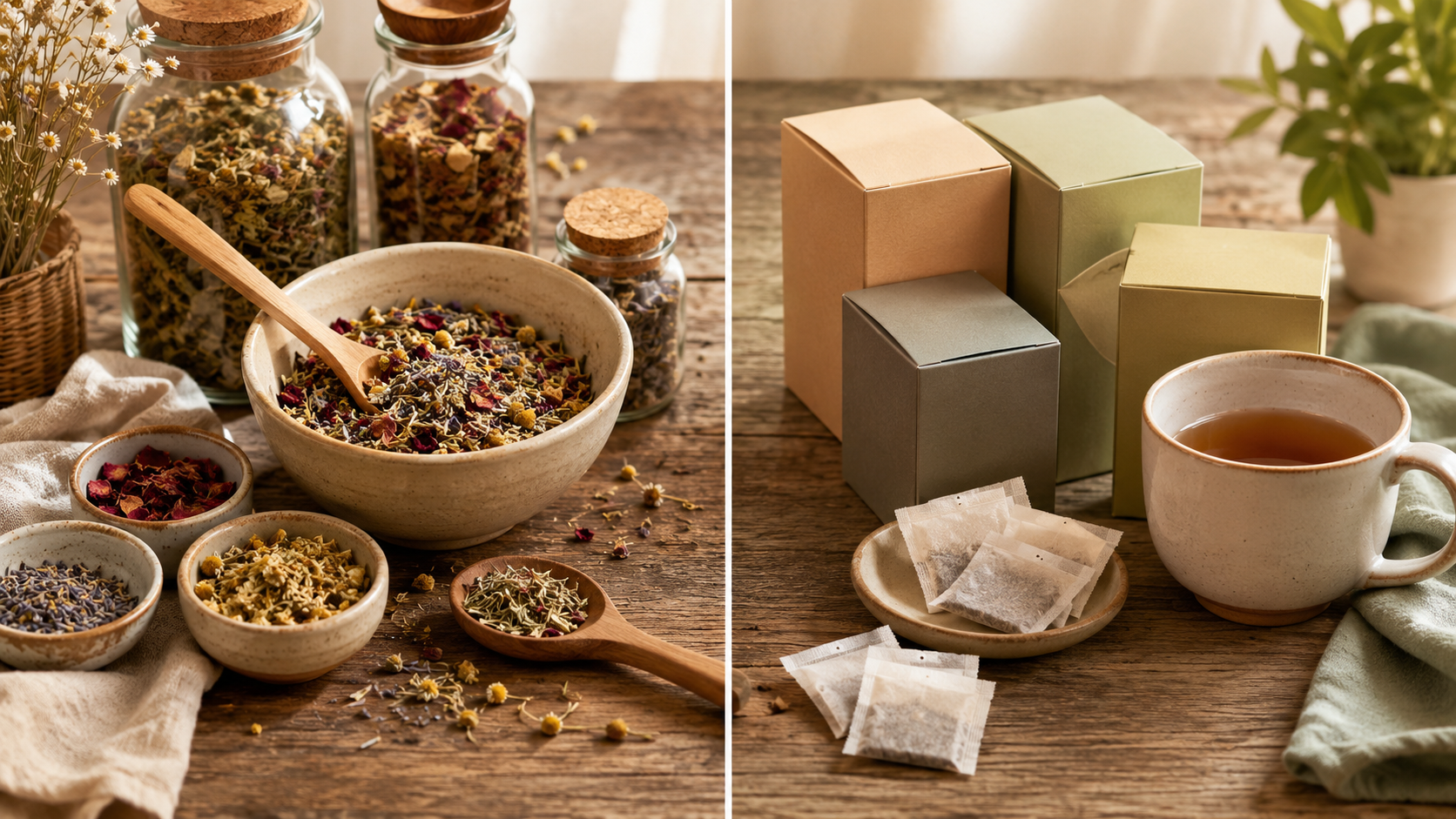
Store-bought tea is not the villain.
Let’s say that first.
A good boxed tea can be a small miracle on a busy day. You open the packet, drop the bag into a mug, add hot water, and feel like you have made a respectable life choice.
Beautiful.
But DIY Herbal Tea Blends offer something different: flexibility. They let you make a cup that fits your taste, your mood, your pantry, and your very specific need for “something cozy but not too sweet and definitely not lavender-heavy.”
Both options have a place.
The trick is knowing when to use each one.
DIY Herbal Tea Blends Are Best for Customization
Homemade blends are ideal when you want control.
You can make your tea stronger, softer, brighter, spicier, sweeter, or more soothing. You can skip ingredients you dislike. You can use more peppermint, less hibiscus, a tiny pinch of cinnamon, or absolutely no licorice root because licorice root has opinions.
This is especially helpful if you’ve ever bought a tea that sounded perfect on the box but tasted like potpourri with ambition.
With DIY blends, you can adjust the recipe one cup at a time.
Too tart? Use less hibiscus. Too floral? Reduce lavender. Too flat? Add ginger, citrus peel, mint, or cinnamon.
You become the editor of your cup.
And unlike editing a paragraph, tea editing comes with snacks.
Store-Bought Tea Is Best for Convenience
Store-bought tea wins when you want ease.
No measuring. No sourcing herbs. No labeling jars. No wondering if the mystery bag in your pantry is nettle or oregano having a midlife crisis.
Tea bags are fast, portable, and consistent. They are great for travel, work, busy mornings, and those nights when even opening three jars feels like a personal attack.
A well-made store-bought blend also saves you the work of figuring out ratios. Someone else already tested the flavor balance, which is useful when your brain is tired and your only goal is “hot drink now.”
There is no shame in convenience.
Convenience is not laziness. Sometimes convenience is how we take care of ourselves when life is full.
DIY Can Be More Affordable Over Time
Loose herbs may cost more upfront, but they often stretch farther than boxed tea bags.
A bag of dried peppermint, chamomile, rooibos, or fennel seed can make many cups. If you drink tea daily, making your own blends can be more budget-friendly over time.
It also helps reduce waste, especially if you buy herbs in resealable bags or refillable bulk quantities.
But here is the tiny catch: DIY tea only saves money if you buy ingredients you actually use.
Buying twelve herbs because they looked pretty online is not a savings plan.
It is a botanical shopping episode.
Start small. Use what you have. Add new herbs slowly.
Store-Bought Tea Is Better for Testing Flavors
Before buying a full bag of a new herb, store-bought blends can help you test what you enjoy.
Curious about hibiscus? Try a hibiscus tea bag first. Not sure about rooibos? Buy a small box before committing to loose leaf. Wondering if you like fennel? Test it before giving it permanent pantry real estate.
This is especially helpful with stronger flavors like licorice root, lavender, turmeric, clove, and hibiscus. Some people love them. Some people take one sip and immediately question the friendship.
A boxed blend can be your low-commitment first date.
The Best Choice? Use Both
You do not have to choose one forever.
This is not a tea marriage contract.
Use DIY Herbal Tea Blends when you want creativity, freshness, customization, or a slower ritual. Use store-bought tea when you want speed, consistency, or a cup that requires no decision-making.
That balance is real life.
Some days, you make a beautiful homemade chamomile-lavender blend and label the jar with your best handwriting.
Other days, you microwave water, grab a tea bag, and call it wellness.
Both count.
Beginner FAQ About DIY Herbal Tea Blends
Can I mix any herbs together for tea?
Not always.
Many common culinary herbs and tea herbs blend beautifully together, but that does not mean every herb belongs in your mug. Some herbs are very strong. Some may interact with medications. Some may not be recommended during pregnancy, nursing, or certain health conditions.
Start with familiar, beginner-friendly herbs like chamomile, peppermint, rooibos, ginger, fennel, lemon balm, cinnamon, and orange peel.
Simple is your friend here.
Simple does not send you into a late-night search spiral about whether your tea blend accidentally became a potion.
How much herbal tea blend should I use per cup?
A good starting point is 1–2 teaspoons of dried herbal tea blend per 8 ounces of hot water.
Use 1 teaspoon for a lighter cup. Use 2 teaspoons for a stronger, fuller flavor.
Fluffy herbs like chamomile may need a heaping spoonful because they take up more space. Dense ingredients like ginger, turmeric, cinnamon, and fennel seed are stronger by volume, so a little goes farther.
Your taste buds get a vote.
They are, after all, the committee drinking the tea.
How long should herbal tea steep?
Most herbal teas need 5–10 minutes.
Delicate blends with flowers and leaves may taste best around 5–7 minutes. Root, spice, seed, and berry blends often need closer to 10 minutes to release their flavor.
Cover your mug while steeping if you can. It keeps the aromatic goodness in the cup instead of letting it wander off into the kitchen like it forgot its purpose.
Are DIY Herbal Tea Blends caffeine-free?
Most herbal tea blends are naturally caffeine-free because they are not made from the traditional tea plant, Camellia sinensis.
Common caffeine-free ingredients include chamomile, peppermint, rooibos, hibiscus, lemon balm, fennel, ginger, lavender, nettle, rosehips, and cinnamon.
But always check your ingredients.
If you add green tea, black tea, white tea, oolong, pu-erh, yerba mate, or guayusa, your blend will contain caffeine.
Which is fine.
Just maybe not at 10:37 p.m. when you are trying to become a peaceful person.
Can I make herbal tea blends as gifts?
Yes, and they make lovely gifts.
A homemade tea blend feels personal without being fussy. Add the blend to a small glass jar, label it clearly, and include simple brewing instructions.
A good gift label should include:
Blend name
Ingredients
Date made
Amount to use per cup
Steeping time
You can also add a small tea infuser, honey sticks, or a handwritten note.
Suddenly, you are not just giving tea.
You are giving someone a tiny pause in their day.
That is a very good gift.
What herbs should beginners avoid using too much of?
Go gently with strong ingredients like:
Lavender
Clove
Hibiscus
Licorice root
Ginger
Turmeric
Black pepper
Cardamom
These are beautiful in small amounts, but they can take over quickly.
Think of them as seasoning, not the main meal. A pinch of clove can make a cup taste warm and cozy. Too much clove can make it taste like you steeped a holiday candle.
Start small. Taste. Adjust.
Tea blending rewards the patient sipper.
Final Sip — Start With One Blend, Not a Whole Herbal Pantry
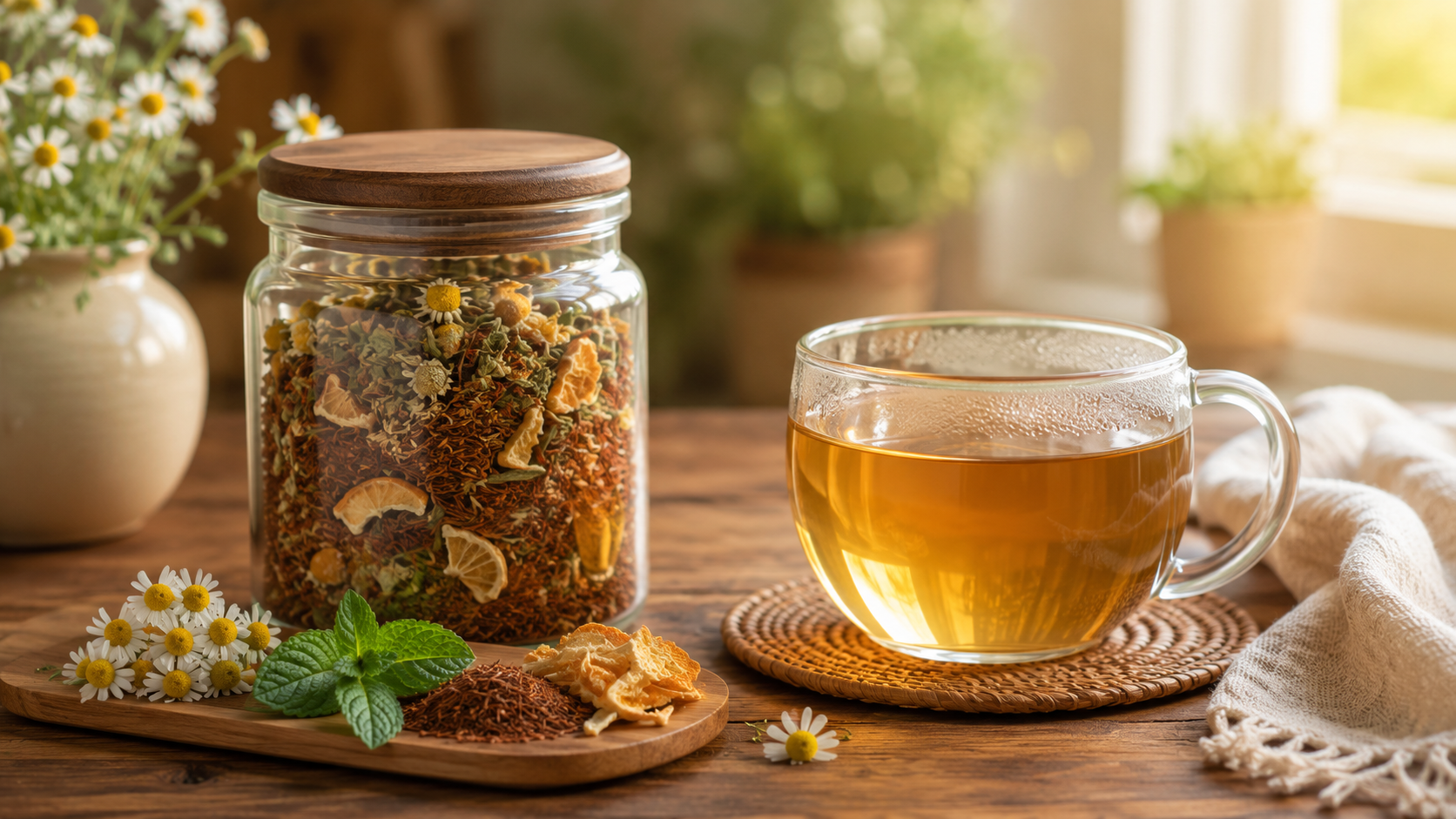
The best herbal tea blend is not the fanciest one.
It is not the one with twelve rare botanicals, a poetic name, and a jar that looks like it belongs in a sunlit cottage owned by someone who never loses their keys.
The best blend is the one you will actually make again.
That is where the magic lives.
Start with one goal. Just one.
Maybe you want a sleepy evening cup. Maybe you want something fresh after meals. Maybe you want a caffeine-free morning blend that helps you feel awake without making your nervous system file a complaint.
Choose the moment first.
Then build the blend around it.
For sleep, try chamomile, lemon balm, and a tiny pinch of lavender. For digestion, try peppermint, fennel, and ginger. For cozy comfort, try rooibos, cinnamon, and vanilla. For brightness, try ginger, lemongrass, orange peel, and rosehips.
That is enough.
You do not need a full herbal pantry to begin making DIY Herbal Tea Blends. You need curiosity, a few reliable ingredients, and permission to adjust as you go.
The first cup teaches you something. The second cup gets better. The third cup starts feeling like yours.
And that is the real joy of homemade tea.
Not perfection.
Personalization.
So pick one blend from this guide. Make a small batch. Label the jar. Brew a cup. Hold it in both hands for a minute before rushing to the next thing.
That pause counts too.
Advertisement