High-Energy Teas to Replace Coffee: 7 Energizing Brews Without the Crash.
7 energizing teas for steady focus, natural energy, and fewer crashes.
Coffee has a reputation.
It shows up fast, makes a grand entrance, and sometimes leaves just as dramatically.
For some people, that morning cup feels like a trusted friend. For others, it feels more like a tiny, caffeinated life coach shouting motivational quotes through a megaphone before disappearing at 2 p.m. and taking all your energy with it.
If you've ever found yourself staring at an empty coffee mug wondering why you're somehow tired and jittery at the same time, you're not alone.
That's exactly why more people are turning to tea.
Not because tea is trying to win a competition with coffee.
And not because coffee is the villain in this story.
But because certain teas offer something many of us are secretly looking for: steady energy.
The kind that helps you focus on your work, finish your to-do list, survive your afternoon meeting, and still feel like a reasonably pleasant human being afterward.
Many high-energy teas contain caffeine, just like coffee. The difference is that tea also contains naturally occurring compounds such as L-theanine, an amino acid that may help create a calmer, more balanced feeling of alertness.
Instead of a dramatic spike followed by a crash landing, tea often feels more like a gentle climb that stays in the air longer.
Think of coffee as a speedboat.
Think of tea as a sailboat with a very good sense of direction.
Both move you forward. One simply takes a smoother route.
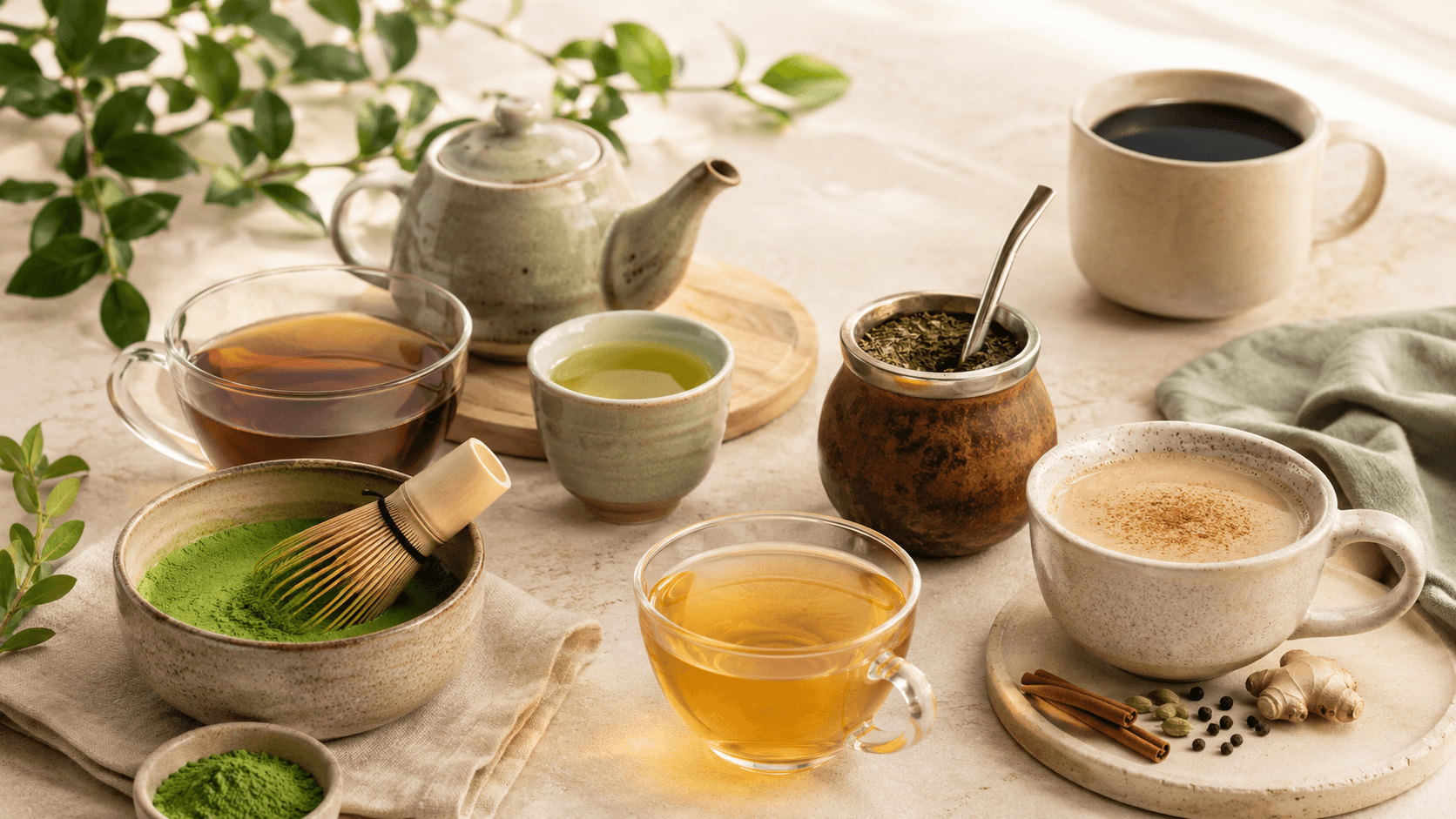
In this guide, we'll explore seven of the best high-energy teas that can replace—or at least reduce your dependence on—coffee. Whether you're looking for laser-sharp focus, a gentler morning routine, or an energy boost without the jitters, there's likely a tea here with your name on it.
Let's start with the tea that has become the unofficial mascot of calm productivity: matcha.
Why More People Are Swapping Coffee for Tea
The funny thing about coffee is that most people don't quit because they hate it.
They quit because the relationship gets... complicated.
Maybe the first cup feels amazing.
The second feels necessary.
And the third feels like you're trying to negotiate peace between your brain and your nervous system.
If that sounds familiar, tea might be exactly the change you're looking for.
The Coffee Roller Coaster
Coffee is incredibly effective at one thing: getting your attention.
Fast.
That's part of its appeal.
But for some people, that rapid burst of caffeine comes with a few unwanted side effects:
Mid-morning jitters
Racing thoughts
Energy crashes later in the day
Difficulty concentrating after the initial boost wears off
Sleep disruption when consumed too late
Of course, not everyone experiences these issues. Plenty of people drink coffee happily for years.
But if you've ever felt strangely exhausted after being highly caffeinated, you're not imagining things.
It's a little like sprinting up a hill.
You get there quickly.
You're just not thrilled about the recovery afterward.
Tea's Different Kind of Energy
Tea takes a different approach.
Instead of kicking the door open and shouting, "Let's do this!" tea tends to walk into the room, pull up a chair, and help you focus on the next thing in front of you.
Many true teas—from green tea and matcha to black tea and oolong—contain caffeine. But they also naturally contain L-theanine, an amino acid that has been widely studied for its potential role in promoting calm alertness.
The result?
Many tea drinkers describe the experience as:
More focused
Less jittery
Longer lasting
Easier on the nervous system
It's not necessarily less energy.
It's often smoother energy.
And for busy mornings, long workdays, study sessions, or creative projects, that difference can feel surprisingly significant.
A Better Question Than “Tea or Coffee?”
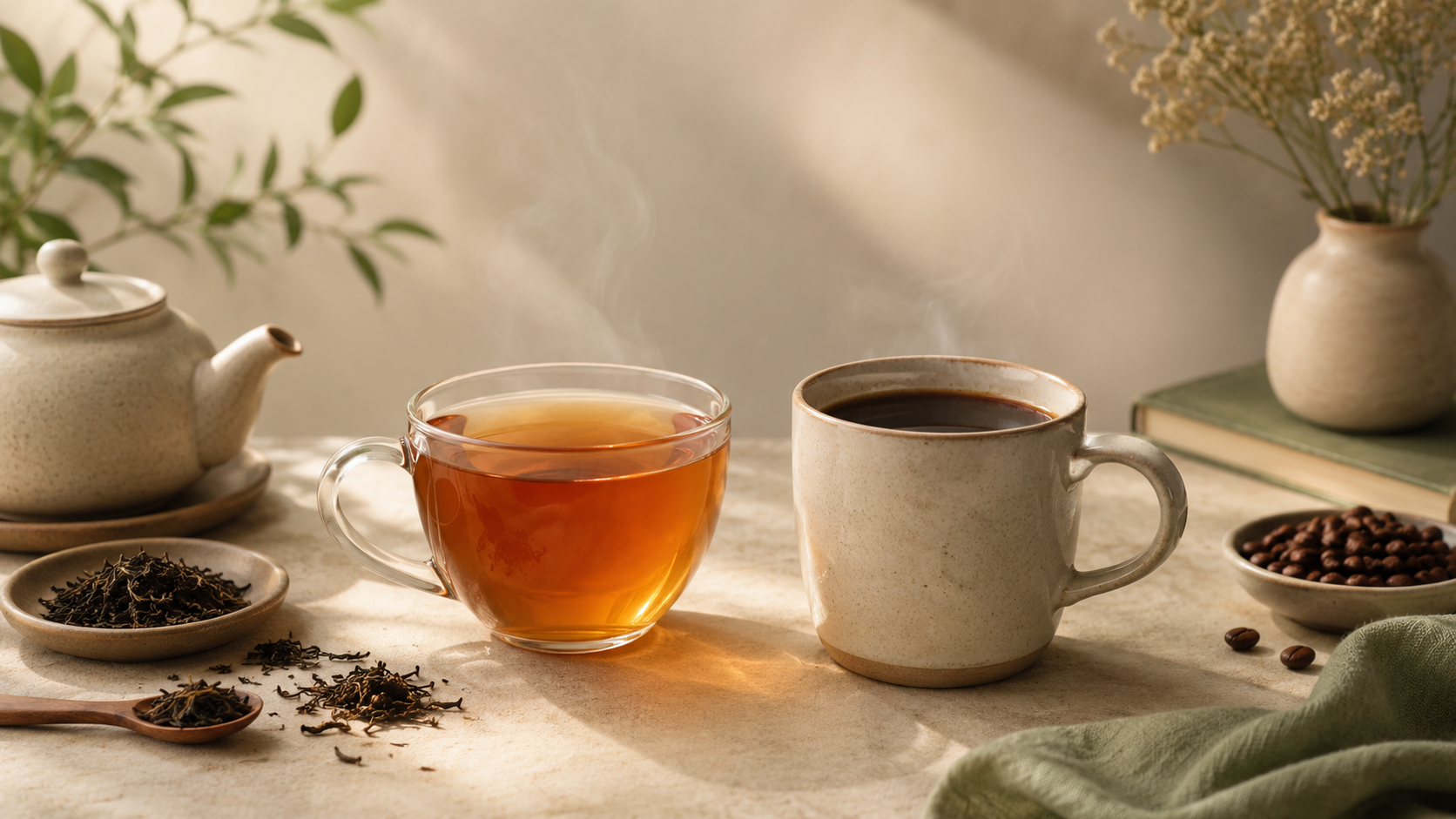
The real question isn't whether tea is better than coffee.
It's whether your current source of energy is helping you feel the way you want to feel.
Do you want intensity?
Or consistency?
Do you want a quick burst?
Or a steady flow?
Neither answer is wrong.
But if you're looking for energy that feels balanced, focused, and sustainable, tea offers some compelling options.
Related read: Matcha vs Coffee: Which One Should You Drink?
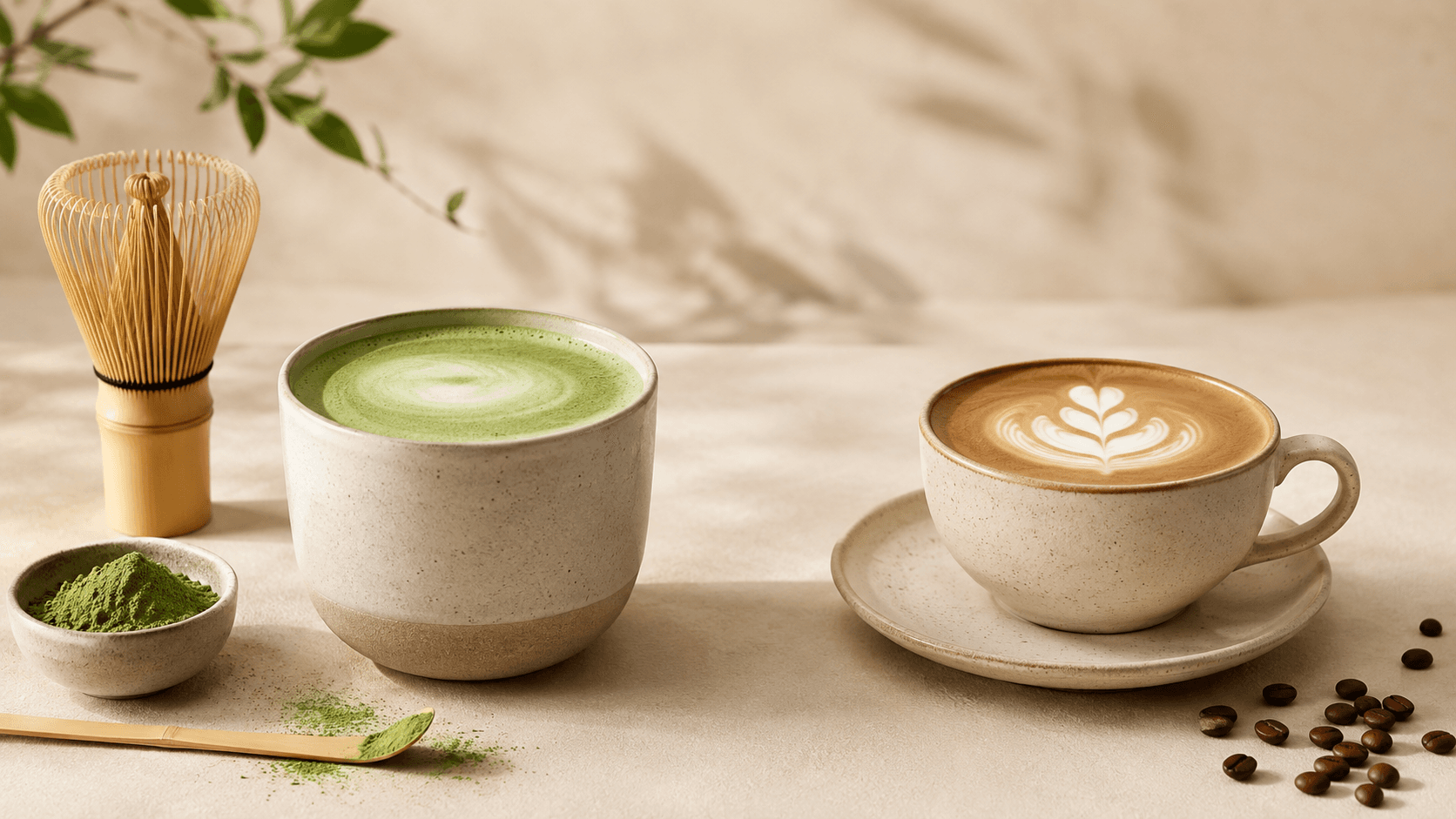
Matcha — Best Overall Coffee Alternative
If coffee is the loudest person at the party, matcha is the quietly confident one everyone ends up talking to.
Matcha has become wildly popular over the last decade, and not just because it photographs well next to a minimalist notebook and an expensive-looking plant.
People keep coming back to it because of how it makes them feel.
Focused.
Steady.
Alert.
Without feeling like they've accidentally plugged themselves into a wall outlet.
Why Matcha Feels Different
Unlike traditional green tea, where you steep the leaves and remove them, matcha is made from finely ground green tea leaves that are whisked directly into water or milk.
In other words, you're consuming the entire leaf.
That means you get more of the naturally occurring compounds found in green tea, including caffeine and L-theanine.
The combination is what makes matcha so interesting.
The caffeine helps promote alertness.
The L-theanine helps encourage a calmer state of focus.
Together, they create an energy profile many people describe as smooth, sustained, and less frantic than coffee.
Imagine the difference between a fireworks display and a sunrise.
Both create light.
One is simply a little less dramatic.
Who Will Love Matcha?
Matcha is especially popular among people who need mental focus for extended periods.
Think:
Students preparing for exams
Remote workers tackling deep-focus projects
Entrepreneurs managing approximately seventeen browser tabs and three different ideas before breakfast
Anyone trying to reduce coffee without giving up caffeine completely
It's also an excellent choice if you've experienced coffee jitters in the past but still enjoy having an energizing morning ritual.
What Does Matcha Taste Like?
Let's address the green elephant in the room.
Matcha doesn't taste like coffee.
It doesn't even taste like most teas.
Good-quality matcha has a fresh, grassy, slightly sweet flavor with a creamy texture when prepared correctly.
Some people fall in love at first sip.
Others need a few cups before their taste buds stop asking questions.
A simple matcha latte made with milk and a touch of honey can be an easy place to start.
Best Time to Drink Matcha
Most people enjoy matcha:
First thing in the morning
Mid-morning instead of a second coffee
Early afternoon when energy begins to dip
Because it contains caffeine, it's usually best to avoid it close to bedtime.
Your future self at 1 a.m. will appreciate the consideration.
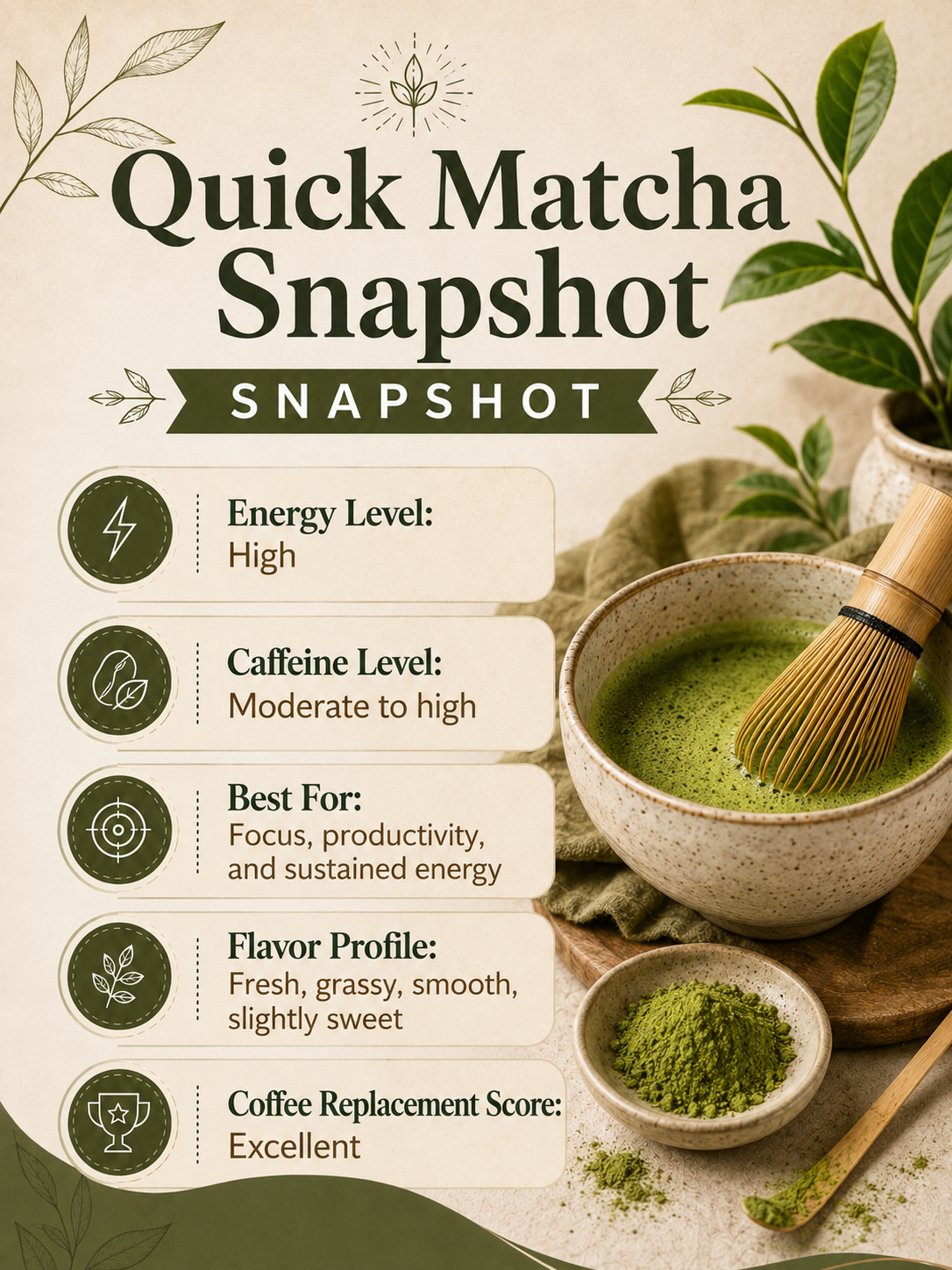
For many tea drinkers, matcha becomes the gateway tea that proves energy doesn't have to arrive with jitters, crashes, or a racing heart.
And while it may not completely replace coffee for everyone, it's often the first tea that makes people seriously consider the possibility.
Yerba Mate — Best for Strong Energy
If matcha is the calm overachiever, yerba mate is the adventurous cousin who somehow wakes up before sunrise and genuinely enjoys it.
For people searching for a tea that comes closest to coffee's energy level, yerba mate is often the answer.
And once you try it, you'll understand why it has such a loyal following.
What Is Yerba Mate?
Yerba mate is a traditional South American drink made from the leaves of the Ilex paraguariensis plant.
It's especially popular in Argentina, Uruguay, Paraguay, and parts of Brazil, where sharing a gourd of mate is as much a social ritual as it is a beverage.
For generations, people have relied on it for sustained energy, focus, and endurance.
Now it's becoming increasingly popular around the world as a coffee alternative.
Why Yerba Mate Feels So Energizing
Yerba mate contains a significant amount of caffeine—often more than black tea and sometimes approaching the levels found in coffee.
But many drinkers report that the experience feels different.
Instead of a sudden jolt followed by a crash, the energy often feels steadier and more gradual.
Some people describe it as:
Alert but not anxious
Energized without feeling overstimulated
Focused without the mental fog that can follow a caffeine crash
Of course, everyone responds differently to caffeine.
If you're highly sensitive to caffeine, yerba mate may still feel quite strong.
But for many coffee drinkers, it's one of the easiest transitions because it delivers the kind of energy they're already used to.
What Does Yerba Mate Taste Like?
Let's be honest.
Yerba mate is not trying to taste like dessert.
Its flavor is earthy, grassy, slightly smoky, and pleasantly bitter.
Think green tea's bolder, more rugged cousin.
The first sip can surprise people.
The second usually makes more sense.
And somewhere around the fifth cup, many tea lovers suddenly understand why entire countries are obsessed with it.
If the traditional flavor feels too intense, many brands offer flavored versions with mint, citrus, or herbs that soften the bitterness.
Who Will Love Yerba Mate?
Yerba mate is a great choice for:
Coffee drinkers who want similar energy levels
Busy professionals with long workdays
Students during demanding study periods
Active people looking for a pre-workout beverage
Anyone who feels that green tea simply isn't strong enough
Best Time to Drink Yerba Mate
Because of its higher caffeine content, yerba mate works especially well:
In the morning
Before workouts
During long afternoons that require concentration
It may be wise to avoid it late in the evening unless your hobby is staring at the ceiling and evaluating life choices at midnight.
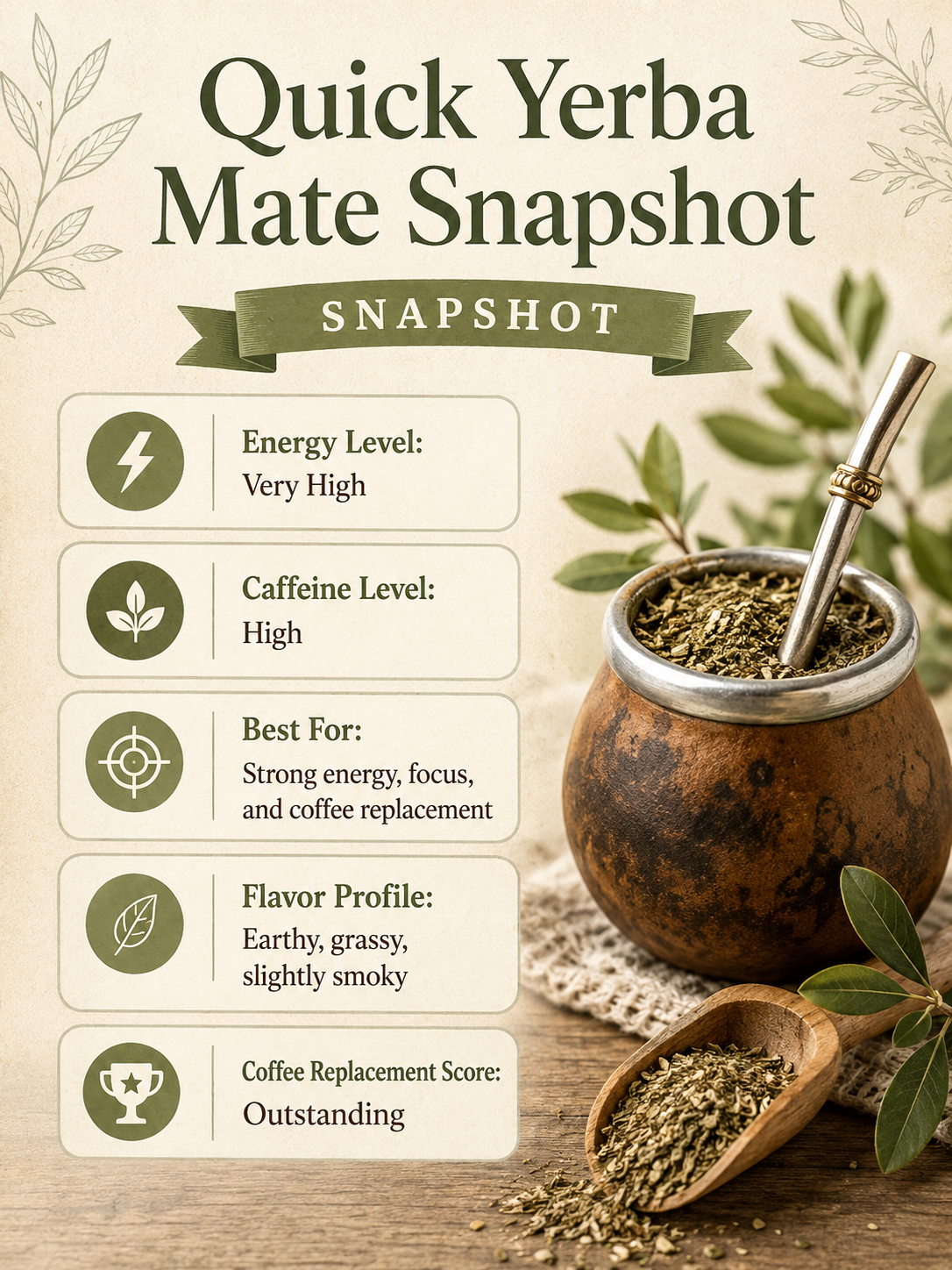
For many people, yerba mate is the closest thing tea has to coffee's power.
The difference is that it often delivers that energy with a little more balance and a little less drama.
And sometimes that's exactly what a busy day needs.
Black Tea — Best for a Familiar Morning Boost
Some people try to replace coffee with green tea and immediately think:
"That's nice. But where did the rest of the flavor go?"
If that's you, black tea might be your perfect starting point.
Among all the teas on this list, black tea often feels the most familiar to coffee drinkers. It has a richer flavor, a deeper color, and enough caffeine to help you start the day without feeling like you've switched from a pickup truck to a bicycle overnight.
Why Black Tea Works So Well
Black tea comes from the same plant as green tea.
The difference is in the processing.
Black tea leaves are fully oxidized, creating a darker color and a stronger, bolder flavor profile.
The result is a tea that feels substantial.
Comforting.
Like it actually showed up ready to do its job.
Most black teas contain moderate amounts of caffeine, making them an excellent middle ground between coffee and lower-caffeine teas.
You get a noticeable energy boost without necessarily experiencing the intense highs and lows that some people associate with coffee.
The Best Black Teas for Energy
Not all black teas are created equal.
If your goal is replacing coffee, these are some of the strongest and most satisfying options:
Assam Tea
Assam tea comes from northeastern India and is known for its bold, malty flavor.
If black tea had a handshake, Assam's would be firm.
It's one of the strongest black teas available and a favorite among former coffee drinkers.
English Breakfast Tea
This classic blend was practically designed for mornings.
Rich, smooth, and dependable, it pairs beautifully with milk and can easily become part of a daily routine.
Irish Breakfast Tea
Think of Irish Breakfast as English Breakfast's more energetic sibling.
Typically blended with a higher percentage of Assam tea, it often delivers a stronger flavor and a slightly bigger caffeine kick.
What Does Black Tea Taste Like?
Black tea offers a flavor profile that feels more robust than green tea.
Depending on the variety, you may notice notes of:
Malt
Honey
Caramel
Toast
Dried fruit
Cocoa
It's warm, rich, and satisfying.
The kind of drink that feels appropriate while reading a book, answering emails, or staring thoughtfully out a rainy window while pretending you're in a movie.
Who Will Love Black Tea?
Black tea is ideal for:
Coffee drinkers making their first transition to tea
People who enjoy bold flavors
Morning tea drinkers
Anyone looking for reliable daily energy
If matcha feels too grassy or yerba mate feels too intense, black tea often lands right in the sweet spot.
Related read: Unveiling the Nuances: Types of Black Tea from Around the World
Best Time to Drink Black Tea
Black tea shines during:
Breakfast
Mid-morning
Early afternoon
Many people find it energizing enough for productivity without being overwhelming.
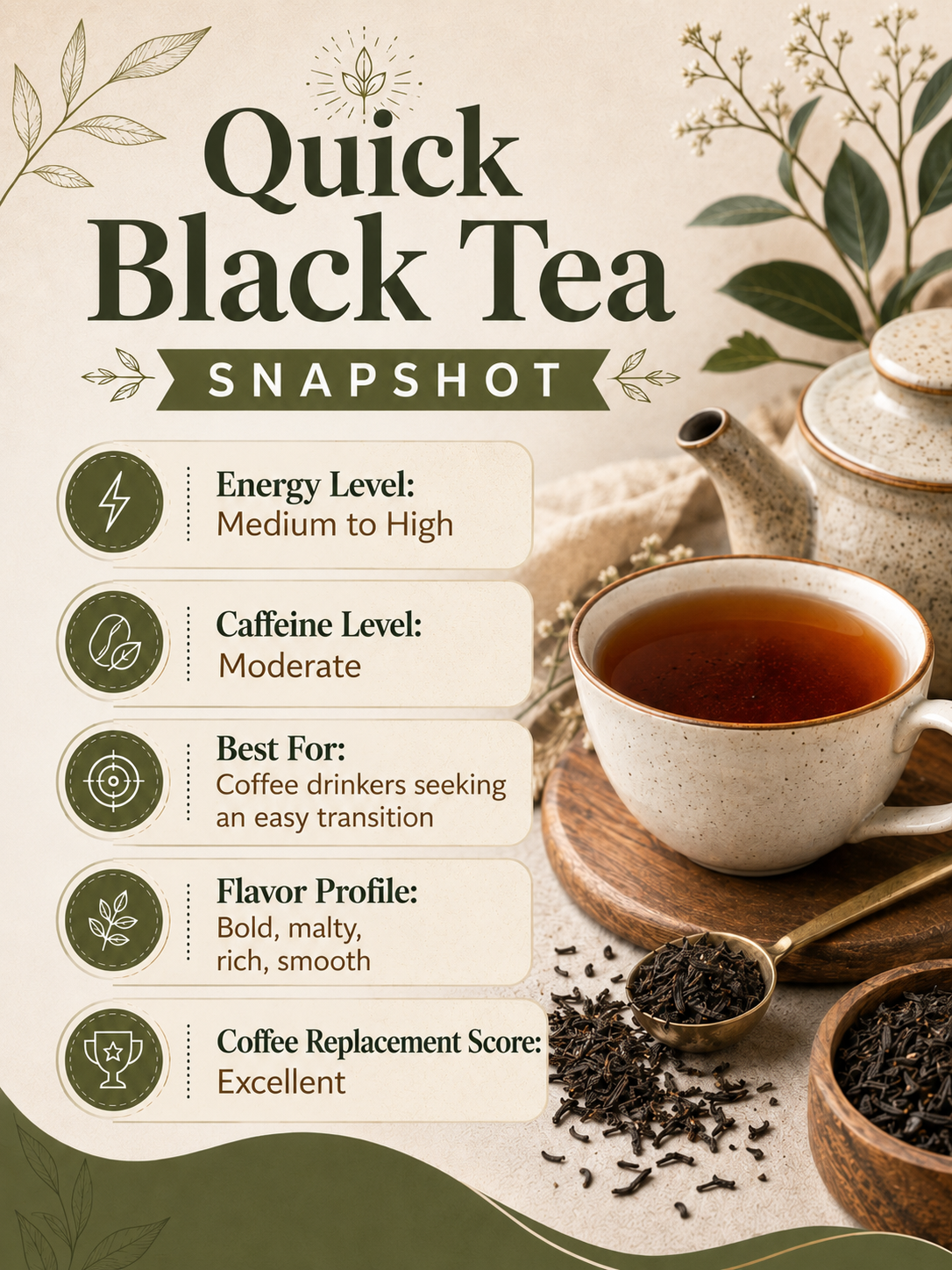
For many tea lovers, black tea becomes the bridge between coffee and the wider world of tea.
It's familiar enough to feel comfortable.
Different enough to feel like a fresh start.
And sometimes that's exactly what a morning needs.
Oolong Tea — Best for Balanced Energy
Somewhere between green tea and black tea lives a tea that refuses to pick a side.
That's oolong.
And honestly, that's part of its charm.
If green tea feels a little too gentle and black tea feels a little too bold, oolong often lands in that beautiful middle ground where everything feels balanced. The flavor. The caffeine. The experience.
It's the tea equivalent of someone who remembers to bring a jacket, charges their phone before leaving the house, and somehow never seems rushed.
What Makes Oolong Different?
Like green tea and black tea, oolong comes from the Camellia sinensis plant.
The difference lies in how the leaves are processed.
Green tea is minimally oxidized.
Black tea is fully oxidized.
Oolong falls somewhere in between.
This creates an enormous range of flavors and caffeine levels, depending on the variety. Some oolongs taste light and floral. Others are rich, roasted, and almost buttery.
It's one of the most diverse tea categories in the world.
Which is a fancy way of saying there's probably an oolong you'll love.
Why Oolong Is Great for Energy
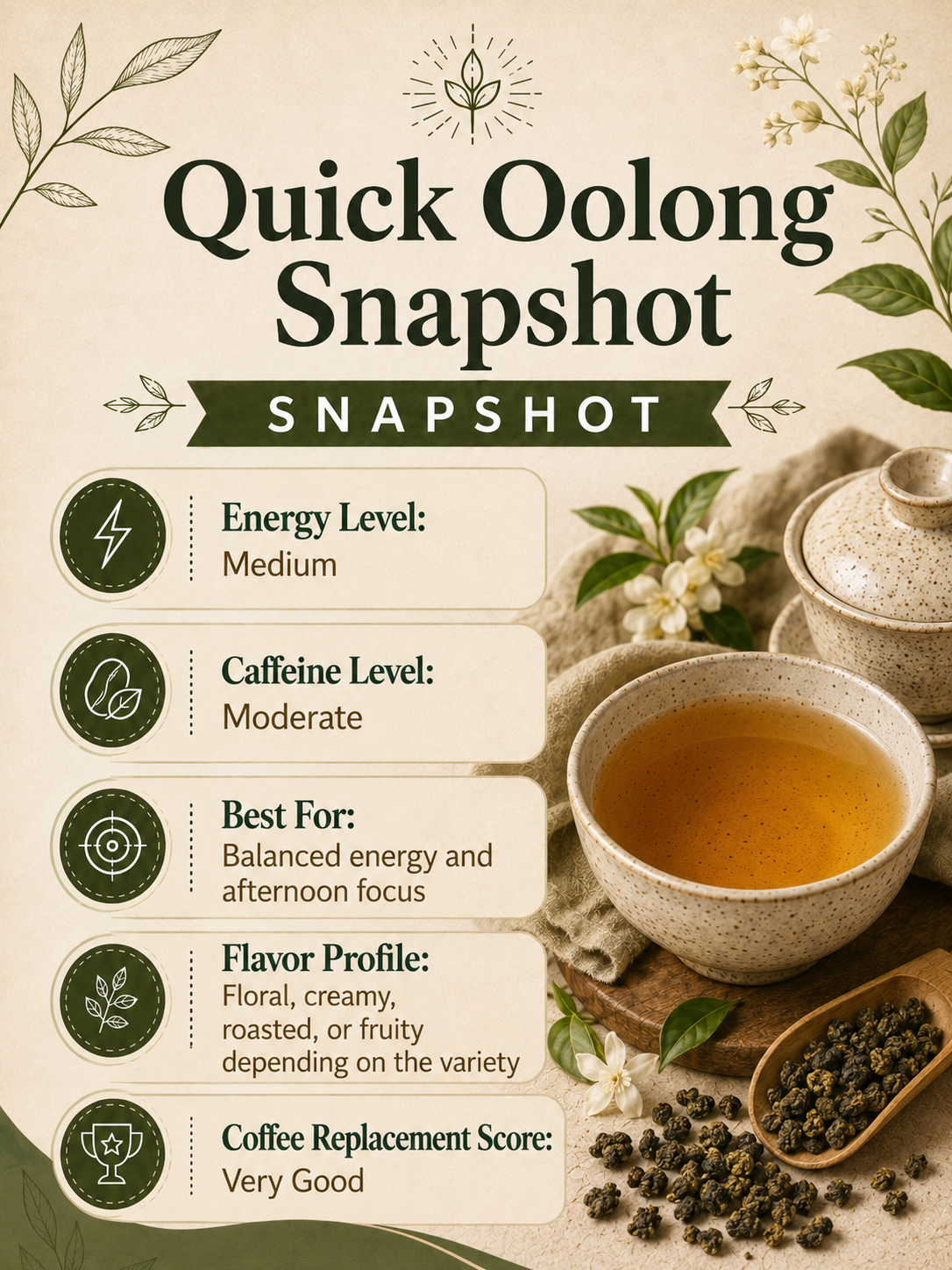
Oolong typically contains a moderate amount of caffeine.
Enough to help you stay alert.
Not so much that you feel like reorganizing your entire garage at 11 p.m.
Many tea drinkers appreciate oolong because it provides:
Steady mental focus
Gentle energy
Less stimulation than coffee
A smoother afternoon boost
It's particularly popular among people who want to stay productive without feeling overstimulated.
The energy feels balanced.
Predictable.
Like a reliable coworker who always shows up on time and never replies-all to company emails.
What Does Oolong Taste Like?
This is where things get interesting.
Depending on the style, oolong can taste:
Floral and delicate
Creamy and smooth
Toasty and roasted
Fruity and sweet
Nutty and rich
A lightly oxidized Taiwanese oolong may remind you of fresh flowers and honey.
A darker roasted oolong might offer notes of caramel, toasted nuts, and baked fruit.
In other words, oolong keeps things interesting.
Who Will Love Oolong?
Oolong is an excellent choice for:
Tea drinkers who want balanced energy
Coffee drinkers looking for a gentler alternative
People who enjoy exploring different flavors
Anyone battling the afternoon slump
If your energy tends to dip around 2 or 3 p.m., oolong can feel like exactly the right amount of help.
Not a rescue mission.
Just a friendly nudge.
Best Time to Drink Oolong
Oolong works especially well:
Mid-morning
After lunch
During focused work sessions
In the early afternoon
Many people find it provides enough energy to stay productive without interfering with evening relaxation.
Oolong may not be the strongest tea on this list.
That's exactly why so many people love it.
It's not trying to overwhelm you.
It's simply helping you move through your day with a little more energy and a little more ease.
Green Tea — Best for Gentle Daily Energy
Not every day requires maximum horsepower.
Sometimes you don't need to conquer a mountain, launch a startup, or answer seventy-three emails before lunch.
Sometimes you just want enough energy to feel awake, focused, and pleasantly human.
That's where green tea shines.
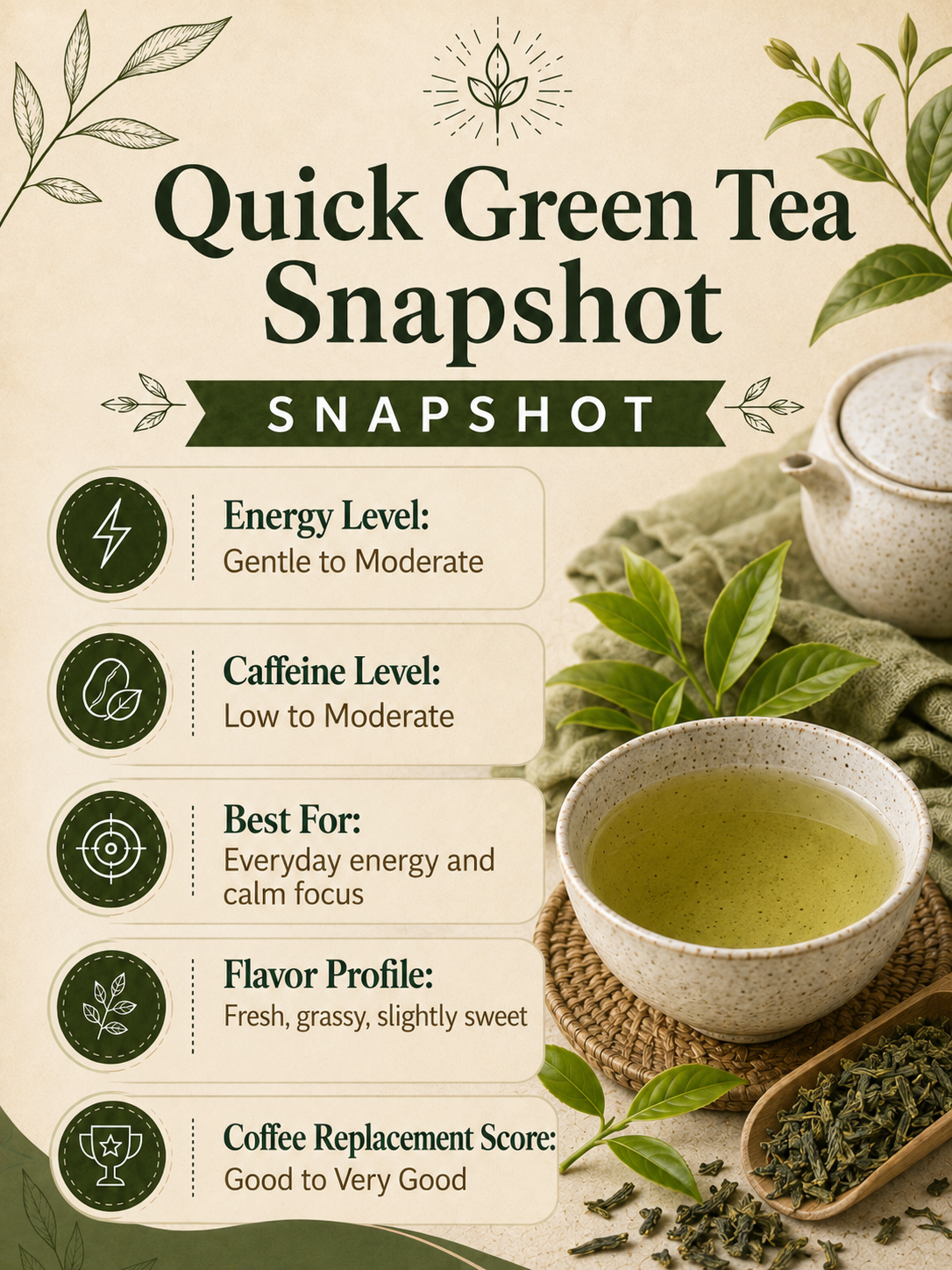
Green tea is often overlooked by people searching for energy because its caffeine content is lower than coffee, matcha, or yerba mate. But that lower caffeine level is exactly what makes it such a powerful daily companion.
It's energy without the drama.
Why Green Tea Feels Different
Green tea contains a modest amount of caffeine along with naturally occurring L-theanine.
This combination can help promote alertness while maintaining a calmer, more balanced feeling than many highly caffeinated drinks.
The experience is often described as:
Calm focus
Steady concentration
Gentle alertness
Less jitteriness
Think of green tea as background music.
You notice the difference when it's there.
But it never tries to steal the spotlight.
The Best Green Teas for Energy
Not all green teas are the same.
If you're looking for an energizing cup, these varieties are excellent places to start.
Sencha
The most popular green tea in Japan.
Sencha offers a fresh, grassy flavor with moderate caffeine and makes an excellent everyday tea.
Dragon Well (Longjing)
A famous Chinese green tea known for its smooth, slightly nutty taste.
It's approachable, balanced, and wonderfully easy to drink.
Gunpowder Green Tea
One of the bolder green tea varieties.
Its tightly rolled leaves produce a stronger brew with a slightly smoky character and a more noticeable caffeine boost.
What Does Green Tea Taste Like?
Green tea has a reputation.
Sometimes an unfair one.
Many people have only experienced over-steeped green tea, which can taste bitter enough to make you question your life choices.
Properly brewed green tea is much gentler.
Depending on the variety, you may notice:
Fresh grass
Sweet vegetables
Light nuttiness
Seaweed-like notes
Subtle natural sweetness
The key is avoiding boiling water.
Green tea prefers a gentler approach.
Much like houseplants and introverts.
Who Will Love Green Tea?
Green tea is ideal for:
People sensitive to caffeine
Tea beginners
Daily tea drinkers
Those seeking calm concentration
Anyone trying to reduce caffeine intake gradually
If coffee feels too intense and herbal tea feels too sleepy, green tea often finds the sweet spot.
Best Time to Drink Green Tea
Green tea works beautifully:
In the morning
Mid-morning
Early afternoon
During study or work sessions
Many people enjoy multiple cups throughout the day because the caffeine level remains relatively gentle.
Green tea won't hit you like a double espresso.
That's the point.
Its gift isn't intensity.
It's consistency.
And sometimes the most productive days are built on steady energy rather than spectacular bursts of it.
Guayusa Tea — Best for Clean, Jitter-Free Focus
If you've never heard of guayusa, don't worry.
A few years ago, most tea drinkers hadn't either.
But this Amazonian leaf has quietly built a reputation among people looking for steady energy without the shakiness that sometimes comes with coffee.
And once you understand why, you'll wonder why it isn't sitting on more grocery store shelves.
What Is Guayusa?
Guayusa, pronounced gwhy-you-sa, comes from the Amazon rainforest, where it has been consumed for centuries by Indigenous communities in Ecuador.
Like yerba mate, guayusa naturally contains caffeine.
But unlike many caffeinated drinks, it has earned a loyal following because of how balanced the experience feels.
Many drinkers describe it as energetic, clear-headed, and surprisingly smooth.
The kind of energy that helps you focus on what you're doing instead of making you suddenly interested in cleaning the top of your refrigerator.
Why Guayusa Feels So Clean
The magic of guayusa isn't necessarily that it contains less caffeine.
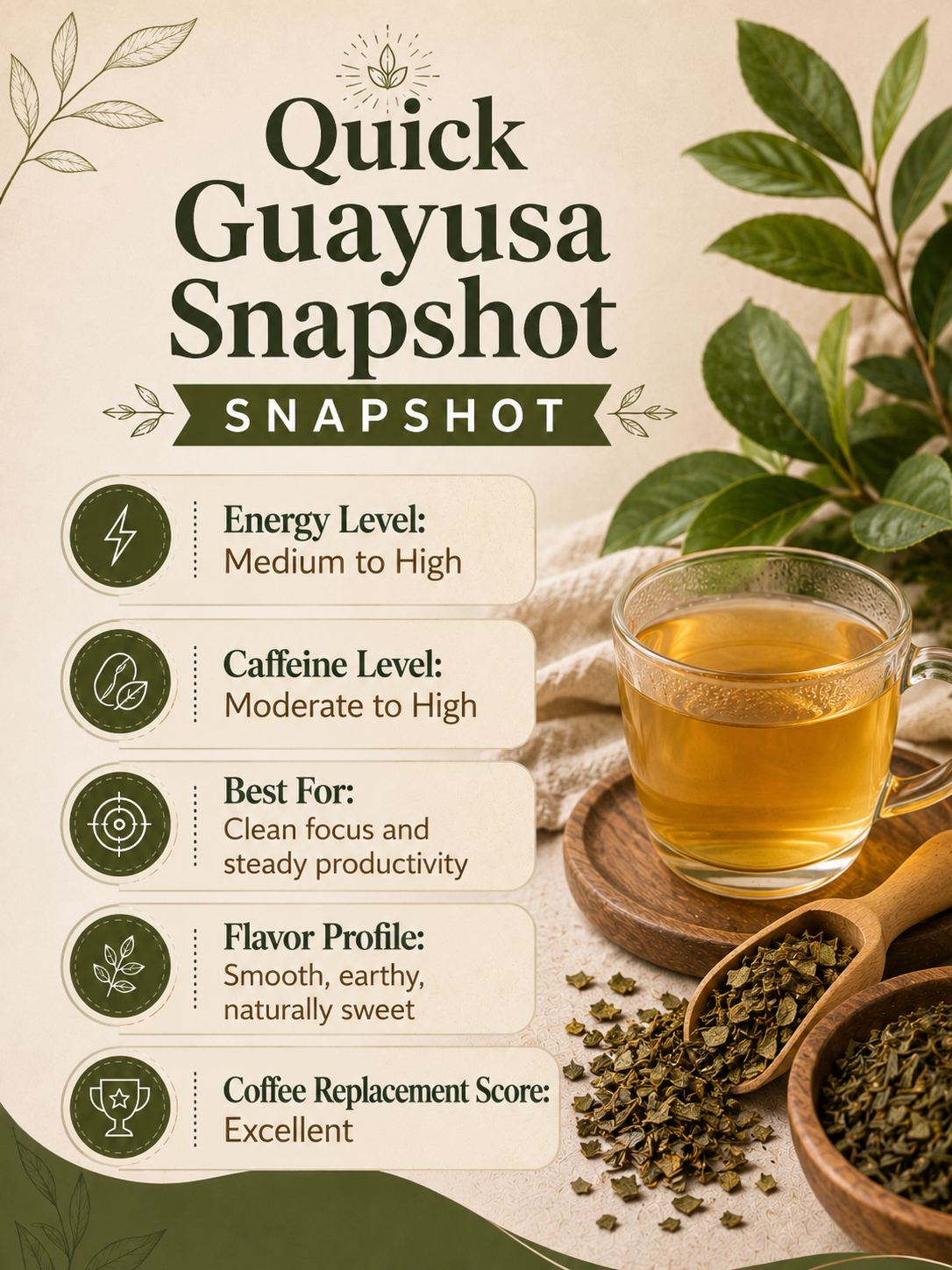
In fact, some guayusa teas contain caffeine levels similar to strong black tea.
The difference is often in how people experience that energy.
Many fans report:
Sustained focus
Mental clarity
Fewer jitters
Less of an afternoon crash
A smoother transition from alertness back to normal energy levels
Of course, caffeine affects everyone differently.
But guayusa has developed a reputation for delivering energy that feels calm, controlled, and productive.
Which is a pretty attractive combination on a busy Tuesday.
What Does Guayusa Taste Like?
This is another reason people love it.
Unlike green tea, guayusa isn't grassy.
Unlike yerba mate, it's usually less bitter.
Most people describe the flavor as:
Smooth
Mildly earthy
Slightly sweet
Clean and approachable
Some drinkers even notice subtle hints of cocoa or honey.
It's one of the easiest energy teas for beginners because the flavor doesn't require much adjustment.
You can simply brew it and enjoy it.
No convincing required.
Who Will Love Guayusa?
Guayusa is a great fit for:
Coffee drinkers looking for a smoother alternative
Professionals who need extended focus
Students during study sessions
People who find coffee too harsh
Anyone curious about lesser-known teas
It's especially appealing if you've tried green tea and wished it had a little more energy.
Or tried yerba mate and wished it were a little gentler.
Best Time to Drink Guayusa
Guayusa works particularly well:
In the morning
Before focused work sessions
During long afternoons
Before creative projects
Many people find it provides enough energy for productivity without creating the intense peaks and valleys associated with stronger caffeinated beverages.
Guayusa may not be as famous as matcha or black tea.
Yet.
But for people searching for calm, reliable energy, it often becomes one of those teas they discover once and then keep recommending to everyone they know.
Usually with the enthusiasm of someone who just found a shortcut nobody else is using.
Chai Tea — Best for Cozy Morning Energy
Some teas energize you.
Chai comforts you.
Then it energizes you.
It's a subtle but important difference.
If coffee feels like a productivity tool and matcha feels like a focus tool, chai feels like a ritual. The kind of drink that encourages you to slow down for five minutes before facing your inbox, your to-do list, or whatever surprise the day has prepared for you.
And honestly, we could all use more of that.
What Exactly Is Chai Tea?
Traditional masala chai originated in India and combines black tea with warming spices.
While recipes vary, common ingredients include:
Cinnamon
Cardamom
Ginger
Cloves
Black pepper
Star anise
The black tea provides caffeine.
The spices provide warmth, aroma, and flavor that transform an ordinary cup into something far more memorable.
It's less like drinking tea and more like wrapping your hands around a warm conversation.
Why Chai Makes a Great Coffee Alternative
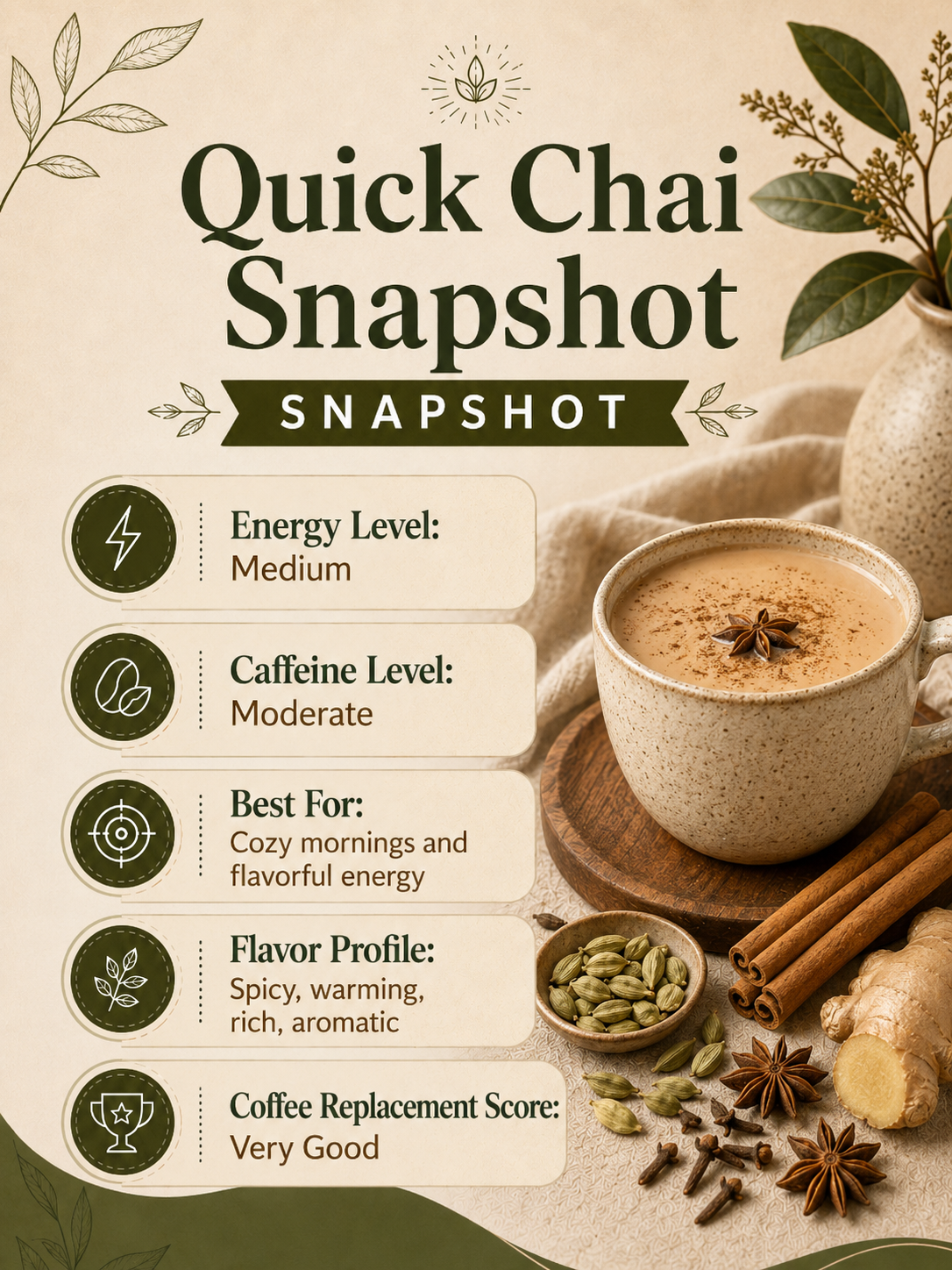
The black tea base gives chai enough caffeine to provide a noticeable energy boost.
But the spices create a completely different experience than coffee.
Instead of feeling sharp or intense, chai often feels:
Warming
Grounding
Comforting
Energizing in a gentler way
For many people, the appeal isn't just the caffeine.
It's the ritual.
Coffee often gets consumed quickly.
Chai invites you to slow down long enough to actually enjoy it.
What Does Chai Taste Like?
Imagine if a cozy autumn afternoon became a beverage.
That's chai.
Depending on the blend, you may notice:
Sweet cinnamon
Bright cardamom
Gentle heat from ginger
Rich black tea
Warm baking-spice flavors
It's bold without being harsh.
Complex without being intimidating.
And when prepared as a chai latte with steamed milk, it becomes one of the most satisfying coffee alternatives available.
Who Will Love Chai?
Chai is perfect for:
Coffee drinkers who love flavored coffee drinks
People who enjoy warm spices
Anyone seeking a more intentional morning routine
Tea beginners
Those looking for moderate energy with lots of flavor
If your favorite coffee order includes words like vanilla, cinnamon, caramel, or oat milk, chai may become your new best friend.
Best Time to Drink Chai
Chai shines during:
Breakfast
Slow weekend mornings
Mid-morning breaks
Cool-weather afternoons
It provides enough caffeine for energy while still feeling cozy and relaxing.
A surprisingly difficult balance to achieve.
Chai reminds us that energy isn't always about intensity.
Sometimes it's about starting the day feeling grounded, focused, and comfortable in your own skin.
And that's a pretty wonderful way to begin a morning.
Quick Comparison Table
By now you may be thinking:
"Okay, these all sound good. But which one should I actually try first?"
Fair question.
Here's a simple side-by-side comparison to help you find your best match.
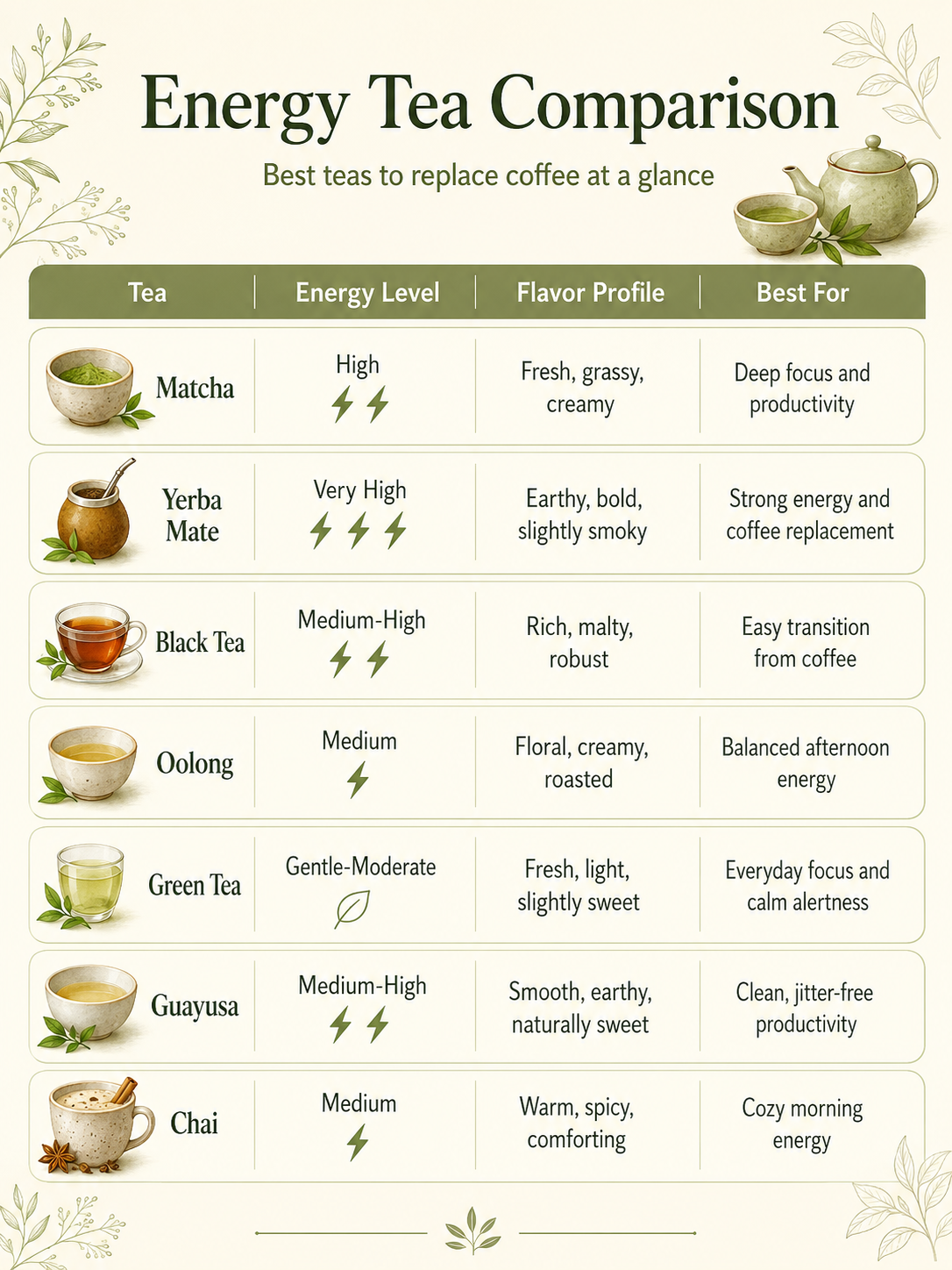
Which Tea Should You Choose?
Choose matcha if you want the strongest focus.
Choose yerba mate if you want energy closest to coffee.
Choose black tea if you're making your first switch from coffee.
Choose oolong if you're looking for balanced energy throughout the day.
Choose green tea if you're sensitive to caffeine.
Choose guayusa if you want clean energy without feeling overstimulated.
Choose chai if your ideal morning includes warmth, comfort, and something that smells like a bakery.
The good news?
You don't have to pick just one.
Most tea lovers eventually build a small collection and choose different teas depending on the day.
Kind of like having different shoes.
You probably wouldn't wear hiking boots to the beach.
The same logic applies to caffeine.
How to Switch from Coffee to Tea Without Feeling Miserable
Let's talk about expectations.
One reason people struggle when replacing coffee is because they expect tea to behave exactly like coffee.
It won't.
And that's actually the point.
Tea offers a different kind of energy experience.
The smoother ride only becomes obvious once you've been on it for a little while.
Start With One Cup
You don't need to throw away your coffee maker tomorrow morning.
In fact, please don't.
A gradual transition is usually easier and far more enjoyable.
Try replacing just one daily coffee with tea.
For example:
Morning coffee, afternoon tea
Tea on weekends
Tea as your second caffeinated drink of the day
Small changes are easier to maintain.
And your caffeine-loving brain tends to appreciate gradual negotiations.
Match the Tea to Your Goal
Different teas solve different problems.
Ask yourself what you're really looking for.
Need maximum focus? Try matcha.
Need strong energy? Try yerba mate.
Need a familiar morning drink? Start with black tea.
Need a gentler daily routine? Choose green tea.
Need balanced afternoon productivity? Reach for oolong or guayusa.
The right tea feels less like a replacement and more like an upgrade.
Give Your Taste Buds a Week
This might be the most important tip in the entire article.
Coffee has a strong personality.
If you've been drinking it every day for years, your taste buds have developed expectations.
Tea speaks a different language.
Give yourself at least a week before making a final judgment.
Many people discover that once their palate adjusts, they begin noticing flavors, aromas, and nuances they never appreciated before.
It's a bit like moving to a quieter neighborhood.
At first it feels strange.
Then one day you realize how peaceful it is.
Create a Ritual, Not Just a Beverage
One reason coffee becomes such a powerful habit isn't the caffeine.
It's the ritual.
The mug.
The aroma.
The familiar routine.
Tea can provide that same sense of comfort.
Take a few moments to brew it properly.
Use a mug you enjoy.
Sit down if you can.
Even two quiet minutes can make the experience feel less like a caffeine swap and more like a daily reset.
And honestly, most of us could use a little more of that.
The goal isn't to suffer through a coffee breakup.
The goal is to discover a source of energy that leaves you feeling better at the end of the day than you did at the beginning.
Frequently Asked Questions
What tea has the most caffeine?
Among the teas in this guide, yerba mate and matcha are typically the strongest options.
However, caffeine levels vary depending on the brand, brewing method, and serving size.
If you're looking for energy closest to coffee, start with one of those two.
Is matcha stronger than coffee?
Not necessarily.
A cup of coffee often contains more caffeine than a typical serving of matcha.
What makes matcha feel different is the combination of caffeine and L-theanine, which many people describe as producing smoother, more sustained focus.
Think less "rocket launch."
More "steady flight."
Which tea gives energy without jitters?
Everyone responds differently to caffeine, but many tea drinkers find that:
Matcha provides focused energy
Guayusa offers clean, steady alertness
Green tea delivers gentle stimulation
Oolong creates balanced energy without feeling overwhelming
If you're particularly sensitive to caffeine, green tea is often the best place to begin.
Can tea completely replace coffee?
Absolutely.
Many people switch entirely to tea and never look back.
Others prefer a combination of both.
There is no right answer.
The goal isn't joining Team Tea or Team Coffee.
The goal is finding a routine that helps you feel energized, focused, and comfortable.
How long does tea energy last?
This varies from person to person, but many tea drinkers report that tea's energy feels longer-lasting and more stable than coffee.
Instead of a sharp peak followed by a sudden drop, tea often provides a gentler rise and a slower landing.
Which, if we're being honest, sounds a lot like adulthood should work too.
Final Sip: Choose the Energy You Actually Want
For years, coffee has been the default answer to feeling tired.
Need energy?
Coffee.
Need focus?
Coffee.
Need motivation to answer emails that could have been a text message?
Definitely coffee.
But tea offers another option.
Not better.
Not worse.
Just different.
A cup of matcha can help you focus through a busy morning.
A mug of black tea can make the transition away from coffee surprisingly easy.
A strong yerba mate can power a long workday.
And a cozy chai can turn an ordinary morning into something you actually look forward to.
The best tea isn't the one with the most caffeine.
It's the one that helps you feel your best.
So start small.
Choose one tea from this list.
Brew a cup tomorrow morning.
Pay attention to how you feel.
Because finding the right source of energy isn't about chasing more stimulation.
It's about finding more balance.
And sometimes that balance begins with something as simple as a kettle, a mug, and a few quiet minutes before the day begins.
Ready for More Tea Inspiration?
Join the Tea Shots Club for beginner-friendly tea guides, cozy recipes, brewing tips, and simple ways to build a tea ritual you'll actually stick with.
One cup at a time.
Advertisement