
Adaptogen Tea Guide for Beginners.
A Simple Tea Routine for Stress, Energy, and Balance
You know that moment when you’re standing in the tea aisle, trying to choose something simple, and suddenly the shelf starts speaking fluent wellness?
Tulsi. Ashwagandha. Reishi. Rhodiola. Adaptogenic blend. Stress support. Calm energy. Balance.
Lovely.
Also: what?
That is exactly why this Adaptogen Tea Guide for Beginners exists. Because you should not need a botany degree, a wellness dictionary, or a tiny ceremonial robe to understand what’s going into your mug.
Adaptogen tea sounds fancy, but at its heart, it’s simple: it’s tea made with herbs, roots, or mushrooms traditionally used to help the body handle stress, energy dips, and daily wear-and-tear a little more gracefully.
Not magically.
Not overnight.
And definitely not in a “drink this once and become a glowing forest fairy by Tuesday” kind of way.
Think of adaptogen tea as a gentle ritual. A warm pause. A small way to support the version of you who is trying to answer emails, fold laundry, remember passwords, drink enough water, and not lose her mind because someone moved the oat milk.
In this guide, we’ll walk through what adaptogen tea is, which adaptogenic herbs are easiest for beginners, how to choose the right one for morning, afternoon, or evening, and how to make earthy ingredients taste less like you brewed a garden shovel.
We’ll also talk about safety, because “natural” does not always mean “perfect for everyone.”
By the end, you’ll know how to start with one cup, one purpose, and one simple routine.
No overwhelm.
Just tea. With benefits.
What Is Adaptogen Tea?
Adaptogens, Explained Simply
Adaptogens are herbs, roots, and mushrooms traditionally used to help the body respond to stress and come back to balance after life does what life does: piles up dishes, deadlines, noise, and tiny emotional paper cuts.
So what is adaptogen tea?
It’s a tea, herbal infusion, or warm drink made with adaptogenic ingredients. Sometimes that means one simple herb, like tulsi. Sometimes it means a blend with roots, mushrooms, spices, and maybe a little green or black tea.
Think of adaptogens less like a light switch and more like a thermostat.
A light switch says: On. Off. Fixed. Done.
A thermostat says: Let’s gently adjust. Let’s respond to the room. Let’s bring things back to a more comfortable place.
That is the spirit of adaptogen tea. It is not here to bulldoze your body into calm or energy. It is more like a quiet nudge inside a daily ritual.
A cup. A pause. A small reset.
Is Adaptogen Tea the Same as Herbal Tea?
Mostly, but not always.
Many adaptogen teas are herbal teas because they are made from herbs, roots, bark, flowers, or mushrooms instead of traditional tea leaves. But not every herbal tea is an adaptogen tea.
Chamomile, for example, is a classic herbal tea. It is gentle, floral, cozy, and beloved by sleepy people everywhere. But it is not usually considered a classic adaptogen.
Tulsi, ashwagandha, reishi, rhodiola, and some forms of ginseng are more commonly talked about in the adaptogen world.
Here’s the easiest way to remember it:
Herbal tea is the big cozy house. Adaptogen tea is one room inside that house.
And yes, that room has a lot of earthy jars in it.
Some adaptogen teas are caffeine-free. Others are blended with green tea, black tea, matcha, or yerba mate, which means they may contain caffeine. So always check the label before you make a mug at 9 p.m. and accidentally invite your brain to a midnight strategy meeting.
For beginners, the best place to start is simple: choose one adaptogen, drink it at a sensible time of day, and notice how your body feels.
No need to build a wellness cabinet that looks like a wizard moved in.
Why People Drink Adaptogen Tea

For Stress Support
Most people do not wander into adaptogen tea because life is already calm and organized.
They wander in because their nervous system feels like it has 47 browser tabs open, one of them is playing music, and nobody knows which one.
This is where adaptogen tea gets its popularity: many adaptogens are used because they may help the body respond to stress, fatigue, and everyday wear-and-tear.
That sounds lovely, right?
But here is the important part: adaptogen tea is not a replacement for sleep, food, therapy, medication, rest, or saying “no” to the thing you should have said no to three Tuesdays ago.
It is support.
A ritual.
A soft landing in your day.
For stress support, beginners often start with tulsi tea or ashwagandha tea. Tulsi feels lighter and more herbal. Ashwagandha feels earthier and more grounding. Both show up often in wellness blends, especially the ones labeled “calm,” “balance,” or “stress support.”
The best approach is not to drink everything at once like you are assembling an herbal Avengers team.
Start with one.
Let your body answer.
For Gentle Energy
Some teas give you energy like a marching band entering your kitchen.
Hello, coffee. We see you.
Adaptogen tea can feel different, especially when it is blended for steady daytime support. Some people use adaptogens like rhodiola or ginseng when they want focus or stamina without leaning only on caffeine.
For a beginner, this matters because “energy” does not always mean “more caffeine.”
Sometimes it means fewer dips. A clearer afternoon. A cup that helps you feel gathered instead of jolted.
That said, energizing adaptogens are usually better earlier in the day. Morning or early afternoon is the safer lane. Drinking a stimulating adaptogen at night may be like inviting your to-do list to sit on the edge of your bed and whisper ideas.
Rude.
For Evening Wind-Down
Some adaptogen teas are more grounding. These are the blends people often reach for when they want the day to stop chewing on their sleeve.
Reishi tea and ashwagandha tea are common evening choices. Reishi is a mushroom used in traditional wellness practices and is often sold in powders, extracts, capsules, and teas.
Ashwagandha is also often used in calming blends, but it deserves extra care. It may cause side effects like drowsiness, stomach upset, diarrhea, and vomiting in some people, and it should be avoided during pregnancy and breastfeeding.
So the evening rule is simple:
Choose calm. Start small. Do not assume “natural” means “casual.”
A cozy mug can be beautiful.
But your body still gets a vote.
Best Adaptogen Teas for Beginners
Tulsi Tea — Best First Cup for Calm Balance
Tulsi is the friendly doorway into adaptogen tea.
Also called holy basil, tulsi has a soft herbal personality. It is earthy, a little peppery, sometimes lightly sweet, and often easier to enjoy than stronger roots or mushroom teas.
In other words: tulsi does not enter the room wearing muddy boots.
That makes it a lovely first choice for beginners who want an adaptogen tea that feels calming without tasting too intense. You can drink it plain, or pair it with mint, lemon, ginger, or a small spoonful of honey.
Best time to drink: afternoon or early evening. Best for: calm balance, gentle stress support, caffeine-free sipping. Flavor: herbal, earthy, lightly spicy.
Tulsi is especially nice for the “I need a reset, not a nap” kind of moment. Think: 3 p.m., inbox blinking, shoulders creeping toward your ears.
A cup of tulsi says, kindly: lower the shoulders.
Ashwagandha Tea — Best for a Grounding Night Routine
Ashwagandha is the cozy, earthy root you’ll often find in evening adaptogen blends.
It has a stronger flavor than tulsi: rooty, slightly bitter, and very much from-the-ground. Not bad. Just honest. Like a vegetable with a journal.
Because of that, ashwagandha usually tastes best with support. Pair it with cinnamon, ginger, cardamom, oat milk, regular milk, honey, or maple syrup. A chai-style ashwagandha tea can turn the flavor from “hmm, suspicious root” into “oh, this is actually comforting.”
Best time to drink: evening. Best for: a grounding nighttime ritual. Flavor: earthy, rooty, slightly bitter. Best pairing: cinnamon, ginger, milk, honey.
A gentle note: ashwagandha is popular, but it is not for everyone. It may cause side effects such as drowsiness, stomach upset, diarrhea, and vomiting in some people; it should be avoided during pregnancy and breastfeeding, and its long-term safety is not well established.
So keep the beginner rule close:
Start small. Start simple. Check first if you have health conditions or take medication.
Reishi Tea — Best for a Cozy Mushroom Tea Ritual
Reishi is a mushroom adaptogen with a deep, earthy flavor and a long history in traditional wellness practices.
It tastes like the forest floor decided to become tea.
That may sound alarming. It is not. It just means reishi usually benefits from a little kitchen kindness. Blend it with cacao, cinnamon, vanilla, cardamom, or a creamy milk. Reishi cocoa is a popular way to make mushroom tea feel less like a dare and more like a cozy evening ritual.
Best time to drink: evening. Best for: earthy, cozy, functional mushroom tea. Flavor: deep, woody, slightly bitter. Best pairing: cacao, cinnamon, vanilla, oat milk.
Reishi is often sold as tea, powder, capsules, and extracts. It may interact with certain medications, including blood thinners and immunosuppressants, so it is worth checking with a healthcare provider before using it regularly.
Mushroom tea can be wonderful.
But mushrooms are not marshmallows.
Rhodiola Tea — Best for Daytime Focus
Rhodiola is usually the daytime friend in the adaptogen tea family.
It is often used in blends for energy, stamina, and focus. Not the “I can hear colors” kind of energy. More like: “I can finish this task without wandering into the pantry for no reason.”
Because rhodiola can feel more stimulating for some people, it is usually best in the morning or early afternoon. It is not the tea I would choose right before bed unless your evening plan includes reorganizing your entire closet at 11:42 p.m.
Best time to drink: morning or early afternoon. Best for: focus, daytime energy, stress-related fatigue support. Flavor: slightly bitter, herbal, sometimes floral depending on the blend. Best pairing: green tea, tulsi, lemon, mint.
For beginners, the practical takeaway is simple: treat rhodiola like a daytime adaptogen.
Not a bedtime buddy.
Licorice Root Tea — Best for Natural Sweetness, With Caution
Licorice root is not always the first adaptogen beginners think of, but it shows up in many herbal blends because it adds natural sweetness.
It can make a tea taste rounder and smoother without needing much honey. It is especially common in blends with ginger, mint, cinnamon, or other roots that need a little softening.
Best time to drink: daytime or early evening. Best for: naturally sweet herbal blends. Flavor: sweet, earthy, slightly woody. Best pairing: ginger, cinnamon, peppermint, tulsi.
But licorice root deserves a bright yellow caution label.
Licorice root may raise blood pressure and may interact with certain medications, including some medicines used for high blood pressure.
So this is not a “sip all day” herb for everyone.
Use it thoughtfully, especially if you have blood pressure concerns, heart or kidney issues, low potassium, or take medication.
The beginner version of licorice root tea is not “more, more, more.”
It is: a little sweetness, a lot of respect.
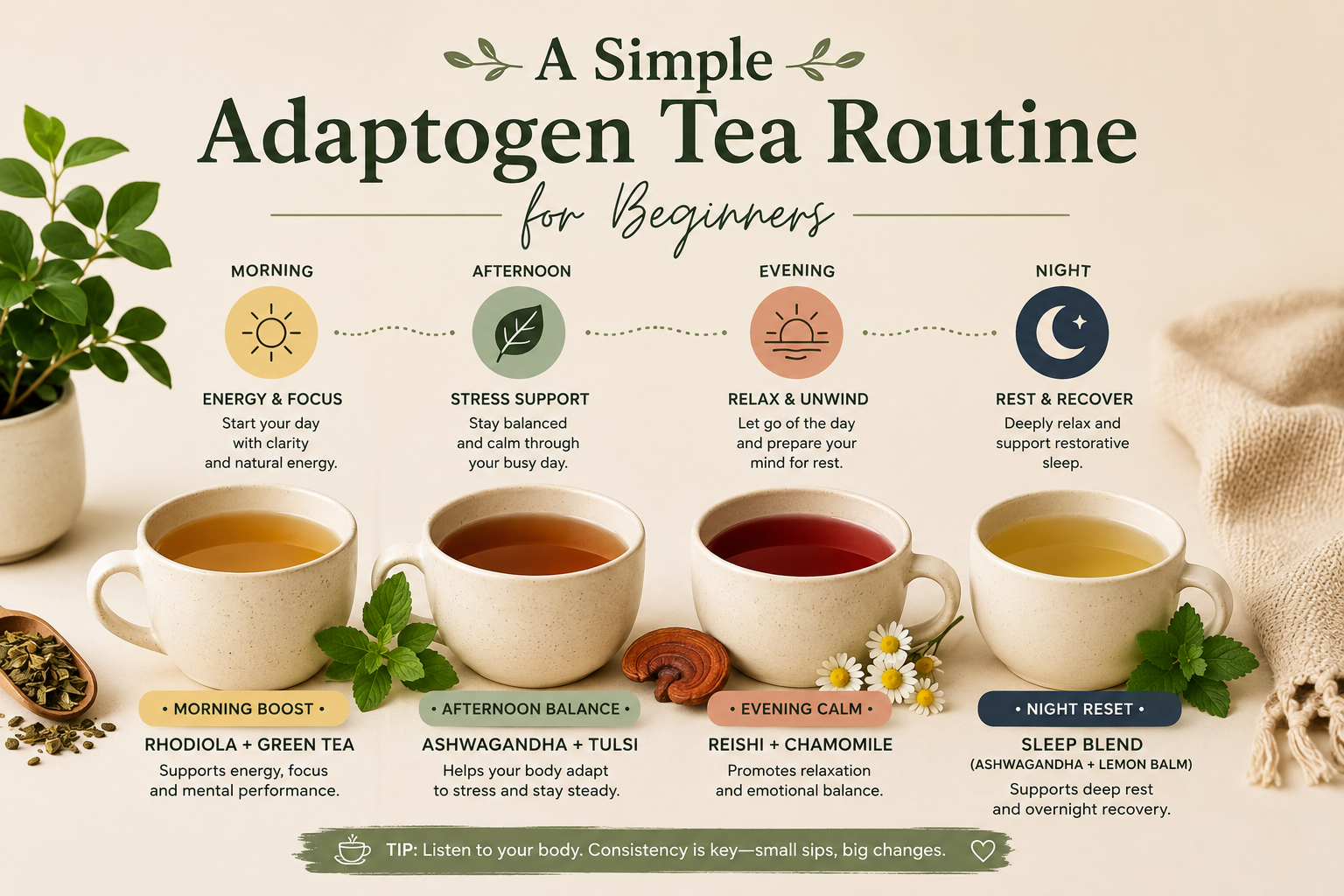
A Simple Adaptogen Tea Routine for Beginners
The easiest way to start with adaptogen tea is not to buy twelve jars, line them up like tiny wellness soldiers, and hope your life becomes instantly serene.
The easiest way is to match one tea to one moment in your day.
Morning. Afternoon. Evening.
That’s it. A small routine your actual life can handle.
Morning: Choose Gentle Energy
Morning adaptogen tea should help you feel awake without making your nervous system tap dance on the kitchen counter.
For this time of day, look for blends with rhodiola, ginseng, or tulsi paired with green tea. Rhodiola and ginseng are often used in more energizing adaptogen blends, while tulsi can be a gentler option if you want something that feels steady rather than stimulating.
A simple beginner morning cup could be:
Rhodiola + green tea + lemon or Tulsi + green tea + mint
This is a good fit if you want focus but do not want to feel like a human espresso machine.
One note: if you are sensitive to caffeine, check the label. Some adaptogen teas are caffeine-free, but blends with green tea, black tea, matcha, yerba mate, or guayusa are not.
So your morning question is simple:
Do I want calm focus or actual caffeine?
That one question can save you from accidentally turning your peaceful morning cup into a tiny lightning storm.
Afternoon: Choose Calm Focus
Afternoon is where good intentions go to wobble.
You started strong. You had plans. Maybe even a list. Then 3 p.m. arrives with a snack craving, a foggy brain, and the emotional tone of a printer jam.
This is tulsi’s moment.
A cup of tulsi tea in the afternoon can feel like a gentle reset. Not sleepy. Not dramatic. Just enough ritual to help you pause, breathe, and return to the day with slightly fewer internal alarms.
Try:
Tulsi + peppermint or Tulsi + lemon balm or Tulsi + ginger + honey
This is the cup for the reader who does not need a nap. She needs a moment.
And sometimes a moment is the most underrated wellness tool in the whole kitchen.
Evening: Choose Grounding Comfort
Evening adaptogen tea should feel like a soft landing.
This is not the time for rhodiola. This is not the time for a mystery “energy blend.” This is not the time to discover, at 10:37 p.m., that your tea contains green tea and your brain would now like to discuss every decision you have made since 2014.
For nighttime, beginners often look toward ashwagandha or reishi blends.
Try:
Ashwagandha + cinnamon + ginger + oat milk or Reishi + cacao + cinnamon or Ashwagandha chai with milk and honey
These blends feel cozy, earthy, and grounding. They pair beautifully with a screen-free wind-down, a book, or five quiet minutes where nobody asks you where the scissors are.
But keep the safety piece close. Ashwagandha can cause side effects like drowsiness and stomach upset in some people, and it should be avoided during pregnancy and breastfeeding. Reishi may interact with blood thinners and immunosuppressants.
So the beginner evening rule is:
Cozy is good. Careful is better.
Start with one herb. Use a small amount. Notice how you feel.
And if your main goal is a better night routine, you may also enjoy this Tea Shots Club guide: Discovering the Best Sleepytime Tea: Your Guide to a Restful Night.
How to Make Adaptogen Tea Taste Better
Let’s say the quiet part out loud:
Some adaptogen teas taste… committed.
Earthy roots. Bitter mushrooms. Herbal blends that smell like a forest had a very serious meeting.
That does not mean you are doing it wrong. It means many adaptogens come from roots, bark, mushrooms, and hardy plants—not delicate little tea leaves trying to win Miss Floral Cup 2026.
The good news? You can make adaptogen tea taste warm, cozy, and actually craveable.
You just need the right supporting cast.
Pair Earthy Roots With Warm Spices
Warm spices are the best friends of earthy adaptogens.
Ashwagandha, reishi, and licorice root all have deeper flavors. Some are rooty. Some are bitter. Some taste like they were raised by a woodland elder.
Spices help.
Try these easy pairings:
Ashwagandha + cinnamon + ginger This gives ashwagandha a chai-like warmth and softens its rooty edge.
Reishi + cacao + cardamom Cacao helps reishi feel richer and more like a cozy evening drink than a mushroom experiment.
Tulsi + lemon + honey Tulsi already tastes more beginner-friendly, but lemon brightens it and honey smooths the herbal notes.
Rhodiola + mint + lemon Rhodiola can taste slightly bitter, so fresh mint and lemon help lift the flavor.
Think of spices like good lighting in a room.
They do not change the furniture. They just make everything look better.
Add Creaminess When the Flavor Feels Too “Medicinal”
Some adaptogen teas taste better when they stop pretending to be plain tea and become a latte.
This is especially true for ashwagandha and reishi.
Add a splash of:
Oat milk
Almond milk
Coconut milk
Regular milk
Cashew milk
Creaminess softens bitterness. It rounds out sharp edges. It turns “hmm, this tastes healthy” into “oh, I would drink this again.”
A simple beginner formula:
Adaptogen tea + warm milk + cinnamon + small sweetener
That’s it.
No complicated frother ceremony required, unless you enjoy that sort of thing. In which case: froth away, tiny kitchen wizard.
For evening, try this cozy version:
Ashwagandha + cinnamon + ginger + oat milk + honey
For mushroom tea, try:
Reishi + cacao + oat milk + maple syrup
Both feel comforting, grounding, and much more beginner-friendly than drinking them plain.
Sweeten Lightly
A little sweetness can make adaptogen tea more enjoyable.
A lot of sweetness can turn your wellness cup into dessert wearing a leaf costume.
So start small.
Good options include:
Honey
Maple syrup
Date syrup
Coconut sugar
A naturally sweet tea blend with licorice root
Honey works beautifully with tulsi, ginger, and lemon. Maple syrup pairs well with reishi, cacao, cinnamon, and chai-style blends. Date syrup adds a deeper caramel note, especially in creamy evening teas.
The goal is not to hide the tea completely.
The goal is to make the cup taste like something you want to return to tomorrow.
Because that is the real secret with adaptogen tea: the best tea is not the most impressive one on the shelf.
It is the one you will actually drink.
Adaptogen Tea Safety: What Beginners Should Know
Adaptogen tea can feel gentle.
Warm mug. Pretty herbs. Cozy label. Maybe a little drawing of a leaf looking emotionally stable.
But here is the important beginner truth: natural does not always mean right for every body.
Herbs, roots, and mushrooms can have real effects. That is the whole reason people use them. And because they can have real effects, they can also cause side effects, interact with medications, or be a poor fit for certain health conditions.
So let’s keep this simple and sensible.
Start With One Adaptogen at a Time
The biggest beginner mistake is trying five adaptogens at once.
Tulsi in the morning. Rhodiola after lunch. Ashwagandha at night. Reishi on the weekend. Licorice root because the internet said it tastes nice.
Suddenly your tea routine has more characters than a holiday family dinner.
Start with one adaptogen.
Drink it in a small amount. Choose a clear time of day. Notice how you feel.
This helps you answer practical questions:
Did it make you sleepy?
Did it upset your stomach?
Did it feel too stimulating?
Did you actually like the taste?
Did it fit your routine without becoming another chore wearing wellness clothing?
Ashwagandha, for example, may cause drowsiness, stomach upset, diarrhea, or vomiting in some people, and there is not enough information to know its long-term safety.
That does not mean everyone should avoid it.
It means beginners should treat it with respect.
Tea first. Science experiment never.
Check Before Using Adaptogens Daily
Some people drink adaptogen tea regularly. But daily use should depend on the herb, your health, your medications, and your season of life.
This matters especially if you are pregnant, breastfeeding, taking prescription medications, managing blood pressure, dealing with thyroid concerns, living with an autoimmune condition, taking sedatives, using blood thinners, or preparing for surgery.
Ashwagandha should be avoided during pregnancy and should not be used while breastfeeding. Reishi may increase bleeding risk and may not be safe for people taking blood thinners or immunosuppressants. Licorice root may interact with certain medications and may not be a good choice for people with blood pressure concerns.
So the safest beginner habit is this:
Read the label. Start small. Ask your healthcare provider when needed.
Especially before making any adaptogen tea part of your everyday routine.
More Is Not More
Wellness does not get extra credit for being complicated.
Three adaptogens are not automatically better than one. A stronger blend is not automatically more helpful. A giant mug is not automatically more effective than a normal cup.
More can simply mean: more chance of side effects, more confusion, and more jars taking over your cabinet like tiny botanical roommates.
Adaptogen tea works best as a simple ritual.
One goal. One tea. One moment of the day.
Maybe tulsi in the afternoon. Maybe ashwagandha chai once in the evening. Maybe reishi cocoa on a slow Sunday night.
That is enough.
Your tea routine should support your life, not become a second job with steam.
Adaptogen Tea vs Regular Tea
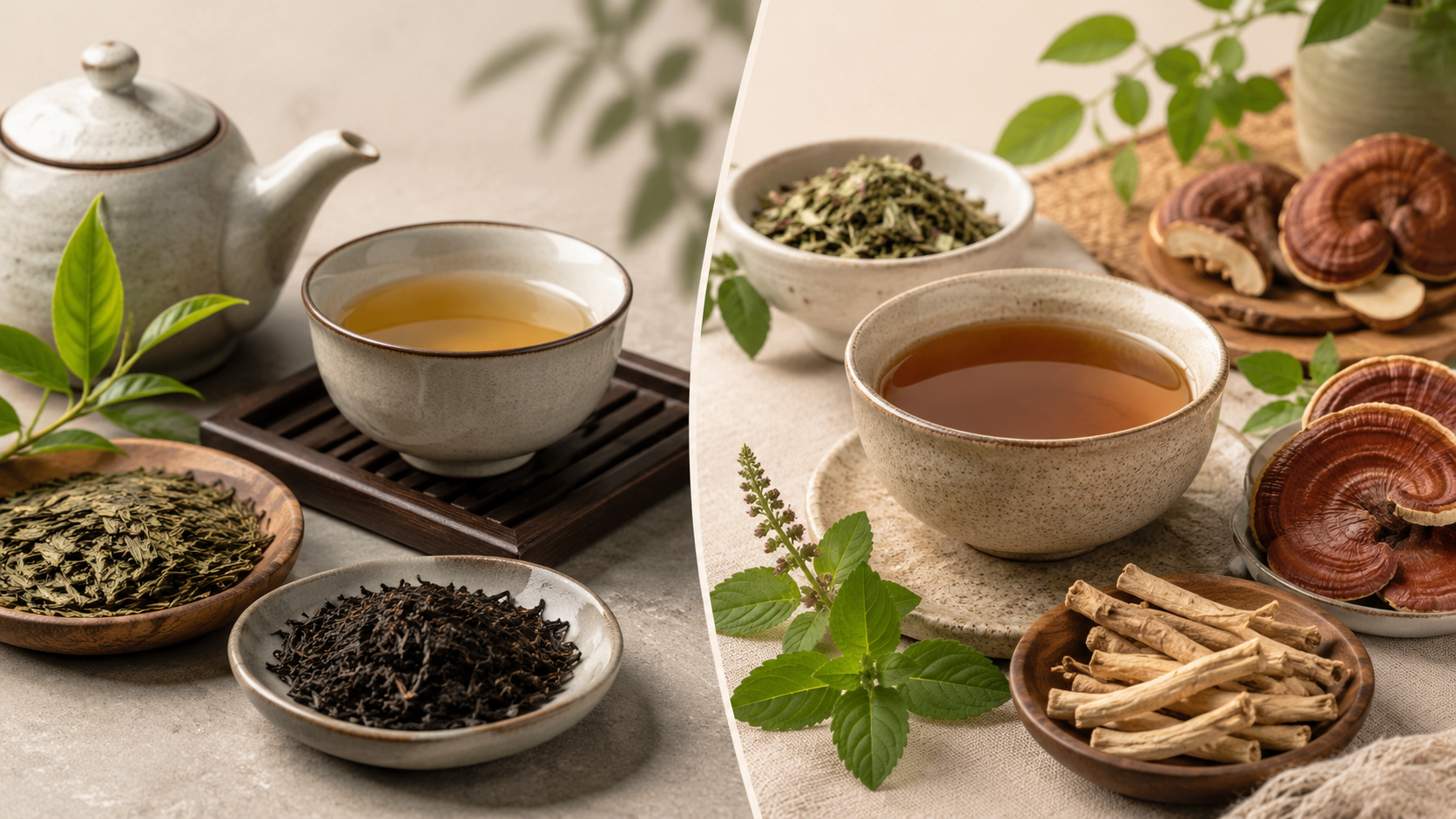
Adaptogen tea and regular tea can both be beautiful little rituals.
Both can involve a warm mug, a quiet pause, and the hopeful belief that five minutes alone might repair the entire day.
But they are not exactly the same.
Regular tea usually comes from the Camellia sinensis plant. That includes black tea, green tea, white tea, oolong tea, and pu-erh tea. Adaptogen tea, on the other hand, is usually made with herbs, roots, or mushrooms like tulsi, ashwagandha, reishi, rhodiola, or ginseng.
Different plants. Different purpose. Different personality in the cup.
Caffeine
Regular tea often contains caffeine.
Black tea usually has more caffeine than green tea. Green tea usually has a gentler feel. Herbal teas are often caffeine-free, unless they are blended with caffeinated ingredients.
Adaptogen teas are often caffeine-free too, but not always.
This is where labels matter.
A tea called “Calm Adaptogen Blend” might be caffeine-free if it contains tulsi, ashwagandha, and reishi. But a tea called “Focus Adaptogen Blend” might include green tea, yerba mate, matcha, or guayusa.
Translation: read the package before drinking it at bedtime.
Because nothing says “peaceful evening ritual” quite like accidentally giving your brain a small drum set at 10 p.m.
For readers who want to understand caffeine differences more deeply, this section is a natural place to link to your existing Tea Shots Club post: Black Tea vs. Green Tea: Which One is Better for You?
Purpose
Regular tea is often chosen for flavor, caffeine, antioxidants, tradition, or pure comfort.
A strong black tea in the morning. A green tea after lunch. A delicate oolong when you want something special. A cozy cup of chai because the day has been rude and you deserve spices.
Adaptogen tea is usually chosen with a more specific wellness goal in mind.
People often reach for it when they want:
Calm focus
Gentle energy
Stress support
Evening grounding
A caffeine-free wellness ritual
That does not make adaptogen tea “better” than regular tea.
It just makes it different.
Regular tea is like your reliable friend who always shows up with good conversation. Adaptogen tea is like the friend who also brings a journal, a weighted blanket, and says, “Let’s talk about your nervous system.”
Both have a place.
Flavor
Regular tea has a wide flavor range.
Green tea can taste grassy, fresh, or slightly sweet. Black tea can be malty, bold, brisk, or rich. Oolong can be floral, roasted, creamy, or fruity. White tea can feel delicate and soft.
Adaptogen tea often tastes more earthy.
That is because many adaptogens come from roots, mushrooms, bark, or hardy herbs. Ashwagandha tastes rooty and grounding. Reishi tastes woody and slightly bitter. Tulsi tastes herbal and lightly peppery. Licorice root tastes naturally sweet and earthy.
So if regular tea is a polished linen shirt, adaptogen tea is a cozy wool sweater.
A little rustic. A little textured. Best when paired thoughtfully.
That is why many adaptogen blends include cinnamon, ginger, cacao, vanilla, mint, lemon, or honey. These ingredients help balance the earthy notes and make the tea feel more like a treat and less like homework from the forest.
The simplest way to choose between them?
Choose regular tea when you want classic flavor, caffeine, or a familiar daily cup.
Choose adaptogen tea when you want a more intentional wellness ritual built around calm, focus, energy, or evening comfort.
Beginner Adaptogen Tea Blends to Try
The best beginner adaptogen tea blend is not the one with the longest ingredient list.
It is the one you understand.
Because once a tea label starts listing 14 roots, 3 mushrooms, 2 berries, a flower, and something that sounds like a password, your body is not the only thing trying to adapt.
Your brain is, too.
So let’s keep these blends simple, useful, and beginner-friendly.
Calm Beginner Blend
This is the softest place to start.
Try:
Tulsi + lemon balm + mint
Tulsi brings the adaptogen piece. Lemon balm adds a gentle, lemony-herbal softness. Mint makes the whole cup feel fresh instead of heavy.
This blend is lovely in the afternoon, especially when your day feels scattered but you still need to function like a reasonably polite human.
Best time: afternoon Best for: calm focus, gentle reset, caffeine-free sipping Flavor: fresh, herbal, lightly minty
To make it: steep the herbs in hot water for 5 to 10 minutes, depending on how strong you like your tea. Add honey if you want a softer finish.
Simple. Kind. No drama in the mug.
Cozy Evening Blend
This one is for the end of the day, when your body is home but your mind is still running errands.
Try:
Ashwagandha + cinnamon + ginger + oat milk
Ashwagandha brings the earthy, grounding base. Cinnamon adds warmth. Ginger adds a little sparkle. Oat milk softens everything so the cup feels more like a cozy chai than a root-based negotiation.
Best time: evening Best for: grounding comfort, nighttime routine Flavor: warm, earthy, spicy, creamy
To make it: simmer or steep the ashwagandha with cinnamon and ginger, then add warm oat milk and a small spoonful of honey or maple syrup.
This is a good cup for pajamas, low lights, and not checking your email again.
A tiny miracle, honestly.
Earthy Mushroom Blend
Reishi can taste bold on its own.
And by bold, I mean: it has opinions.
So pair it with ingredients that know how to handle earthy flavors.
Try:
Reishi + cacao + cinnamon
Cacao gives the tea a deeper, almost chocolate-like richness. Cinnamon adds warmth. Together, they make reishi feel less like a mushroom tea experiment and more like a grown-up cocoa ritual.
Best time: evening Best for: cozy mushroom tea, earthy comfort Flavor: deep, woody, lightly bitter, cocoa-warm
To make it: steep reishi tea or mix reishi powder according to the product instructions, then add unsweetened cacao, cinnamon, warm milk, and a little maple syrup.
This is the cup for people who like their wellness with a blanket and a little mystery.
Focus Blend
This blend belongs earlier in the day.
Try:
Rhodiola + green tea + lemon
Rhodiola is often used in daytime adaptogen blends, and green tea adds a familiar tea base with gentle caffeine. Lemon brightens the flavor so the cup feels clean and awake.
Best time: morning or early afternoon Best for: focus, gentle energy, workday routine Flavor: bright, herbal, lightly bitter, fresh
To make it: steep green tea separately so it does not become bitter, then combine it with your rhodiola tea or blend. Add lemon at the end.
This is not the tea for bedtime.
This is the tea for opening your laptop, finding your list, and remembering what you walked into the room to do.
Which, frankly, deserves applause.
How to Start an Adaptogen Tea Routine in 5 Simple Steps
Choose one goal. Calm, energy, focus, or evening comfort.
Choose one adaptogen. Start with tulsi if you want the easiest beginner cup.
Drink it at the right time. Energizing blends in the morning. Grounding blends in the evening.
Keep the blend simple. One adaptogen plus one or two flavor helpers is enough.
Notice how you feel. Your body is the best reviewer. Better than the internet. Much less shouty.
How to Choose Your First Adaptogen Tea
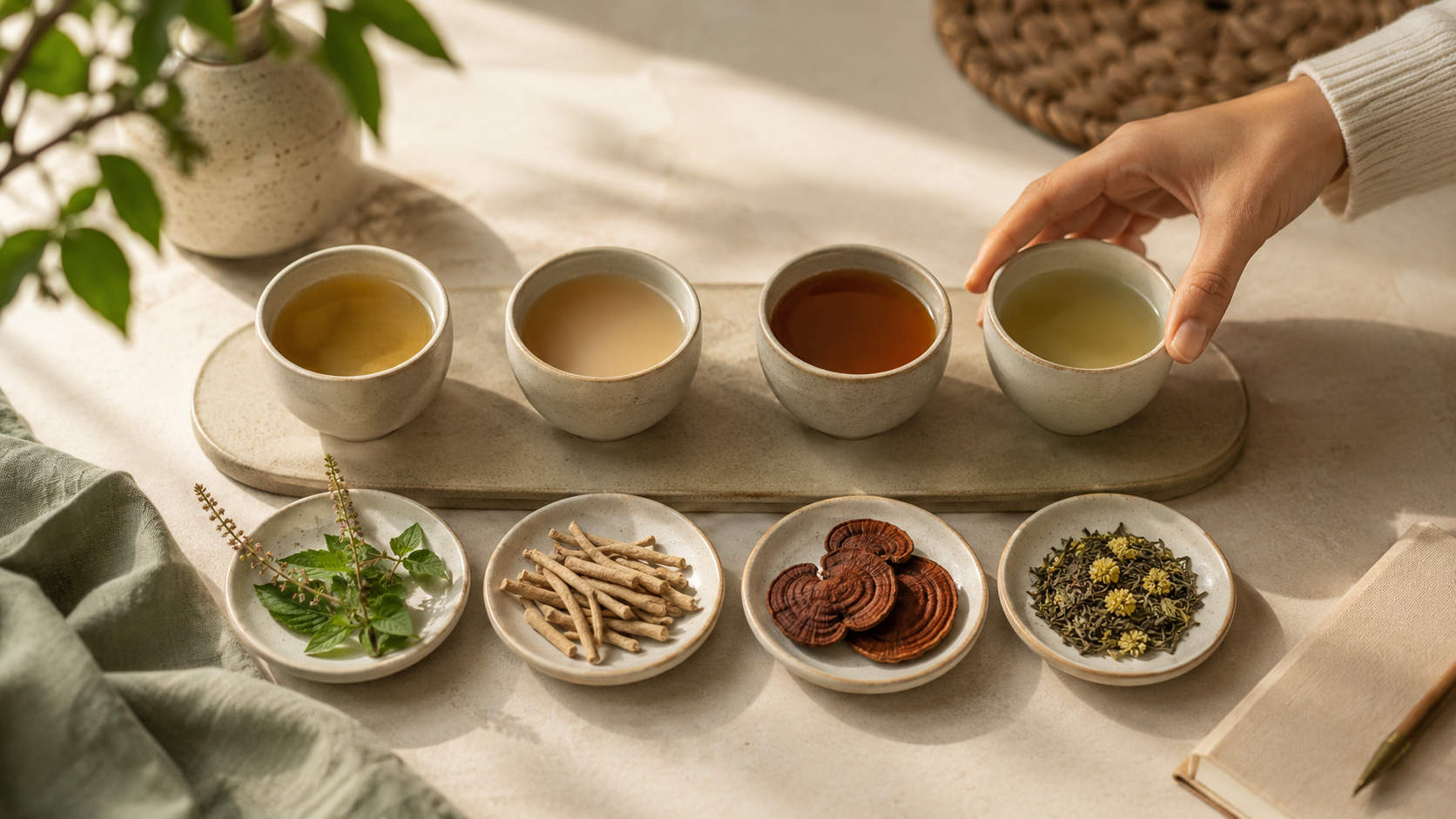
Choosing your first adaptogen tea should feel simple.
Not like adopting a tiny herbal lifestyle with paperwork.
The best place to begin is with three questions:
What do I want this tea to help me feel?When will I drink it?Will I actually enjoy the taste?
That last one matters more than people admit. A tea can have the most beautiful wellness promise in the world, but if it tastes like damp bark and regret, you will not drink it twice.
And a tea you do not drink is not a routine.
It is cabinet decor.
Choose Based on Your Goal
Start with the reason you want adaptogen tea in the first place.
Not the trendy reason. Your reason.
If your day feels busy and scattered, start with tulsi tea. It is gentle, caffeine-free, and easy to blend with mint, lemon, or honey.
If your evenings feel restless and you want a more grounding ritual, look at ashwagandha tea or reishi tea. These are often used in nighttime blends because they feel earthy, cozy, and slow.
If you want daytime focus, choose rhodiola tea or a blend that pairs rhodiola with green tea. Just keep it earlier in the day.
If you want natural sweetness, you might see licorice root in blends. It can make tea taste smoother, but use it with caution, especially if you have blood pressure concerns or take medication.
Here is the beginner shortcut:
Calm balance: tulsi
Evening comfort: ashwagandha or reishi
Daytime focus: rhodiola
Natural sweetness: licorice root, with caution
Simple beats impressive.
Every time.
Choose Based on Taste
Taste is not a shallow detail.
Taste is what decides whether your wellness habit survives Thursday.
If you like mild herbal teas, start with tulsi. It is earthy, lightly spicy, and friendly enough for beginners.
If you like chai, try an ashwagandha chai blend with cinnamon, ginger, cardamom, and milk. The spices do a lot of helpful flavor work.
If you like cocoa, coffee, or deep earthy flavors, try reishi with cacao and cinnamon. Mushroom tea can be intense on its own, but cacao makes it feel richer and more comforting.
If you like fresh, bright teas, pair tulsi or rhodiola with mint and lemon.
Your first adaptogen tea should not feel like a dare.
It should feel like something you can imagine making again tomorrow.
Choose Based on Time of Day
Time of day matters.
Some adaptogens feel more energizing. Some feel more grounding. Some are gentle enough to sip in the afternoon without turning your evening into a staring contest with the ceiling.
For mornings, choose teas made for focus or energy. Look for rhodiola, ginseng, green tea, or matcha blends.
For afternoons, choose balance. Tulsi is a beautiful choice here because it feels calm without being too sleepy.
For evenings, choose grounding comfort. Ashwagandha and reishi blends are popular options, especially with warming spices and milk.
Here is a simple rhythm:
Morning: rhodiola or tulsi green tea Afternoon: tulsi, mint, or lemon balm blend Evening: ashwagandha chai or reishi cocoa
Do not overthink it.
Your first adaptogen tea routine does not need to become a full personality with matching jars.
Pick one tea. Pick one moment. Notice how you feel.
That is the whole beginning.
FAQ About Adaptogen Tea
Can I drink adaptogen tea every day?
Some people drink adaptogen tea daily, but beginners should not rush into the “every day forever” lane.
Start with one adaptogen. Try it a few times. Notice how your body responds. Then decide whether it belongs in your regular routine.
The key is that different adaptogens have different safety profiles. Ashwagandha, for example, may be safe short-term for some people, but there is not enough information to know its long-term safety. It can also cause side effects like drowsiness, stomach upset, diarrhea, and vomiting in some people.
So daily use is not a simple yes-or-no.
It is more like: which herb, what amount, what health situation, and what medications?
Not as cute on a tea label. Much more useful.
Does adaptogen tea have caffeine?
Usually, adaptogen tea is caffeine-free when it is made only with herbs, roots, or mushrooms.
But not always.
Some adaptogen blends include green tea, black tea, matcha, yerba mate, or guayusa. Those can contain caffeine.
So check the label, especially if you are drinking it in the evening. A “calm focus” blend at 8 p.m. may sound peaceful until you realize it contains green tea and your brain suddenly wants to reorganize your entire life.
What is the best adaptogen tea for beginners?
Tulsi tea is one of the best adaptogen teas for beginners.
It is caffeine-free, easy to find, and usually more pleasant-tasting than stronger adaptogens like ashwagandha or reishi. The flavor is herbal, earthy, lightly peppery, and friendly enough to sip plain or blend with mint, lemon, ginger, or honey.
Think of tulsi as the front porch of adaptogen tea.
Easy to step onto. No secret handshake required.
Can adaptogen tea help with anxiety?
Adaptogen tea may support a calming routine, but it should not be treated as a replacement for anxiety care.
Some adaptogens are traditionally used to support the body’s stress response. That said, anxiety can be a medical condition, and tea is not a diagnosis, treatment plan, or tiny therapist in a mug.
A calming tea ritual can help some people feel more grounded.
But if anxiety is persistent, intense, or interfering with daily life, it is worth talking with a healthcare professional.
Can I mix adaptogens together?
Yes, many commercial teas mix adaptogens together.
But beginners should start with one.
That way, if you feel sleepy, wired, nauseous, calm, focused, or weirdly aware of your elbows, you have a better idea of what caused it.
Once you know how one adaptogen feels in your body, you can try simple blends. Tulsi with lemon balm. Ashwagandha with cinnamon. Reishi with cacao.
Start boring.
Boring is underrated. Boring is how we learn.
Is ashwagandha tea safe for everyone?
No. Ashwagandha is popular, but it is not a perfect fit for every person.
Ashwagandha should be avoided during pregnancy and breastfeeding. It may also cause side effects in some people, and rare cases have linked ashwagandha supplements to liver injury.
That does not mean everyone needs to fear it.
It means we should respect it.
Especially if you are pregnant, breastfeeding, taking medication, managing a health condition, or considering daily use.
Is reishi tea safe for beginners?
Reishi tea can be a cozy beginner choice for people curious about mushroom tea, but it also needs caution.
Reishi may increase bleeding risk with anticoagulant or antiplatelet drugs, and it may interact with immunosuppressants because it can affect immune response.
So if you take blood thinners, immune-related medications, or have a medical condition, check with a healthcare provider before making reishi a regular habit.
Mushroom tea can be lovely.
But mushrooms are not decorations with benefits.
Final Thoughts: Start With One Cup, Not a Whole Wellness Cabinet

Adaptogen tea is easy to overcomplicate.
The jars are pretty. The names sound ancient and important. The blends promise calm, focus, balance, clarity, grounding, and possibly the emotional stability of a mountain.
But you do not need to start with everything.
You need one cup.
That is the real beginner secret.
Choose one goal. Maybe you want a calmer afternoon. Maybe you want a cozier evening routine. Maybe you want gentle focus in the morning without feeling like caffeine has grabbed you by the collar.
Then choose one tea.
For most beginners, tulsi tea is the friendliest first step. It is simple, caffeine-free, easy to blend, and not too intense in flavor. For evening comfort, ashwagandha or reishi can be lovely, especially with cinnamon, ginger, cacao, or warm milk. For daytime focus, rhodiola may be a better fit.
But the best adaptogen tea is not the trendiest one.
It is the one that fits your body, your taste, and your actual life.
No tea should make you feel like you have homework. No routine should require a spreadsheet, three powders, and a personality change.
Start small. Read the label. Respect the herb. Notice how you feel.
That is enough.
This Adaptogen Tea Guide for Beginners is not here to turn your kitchen into a wellness laboratory. It is here to help you build a tea ritual that feels supportive, simple, and kind.
One mug. One pause. One small way back to yourself.
Advertisement
Related Articles
Comments (0)
You must be logged in to leave a comment.
Log In to CommentNo comments yet. Be the first to share your thoughts!