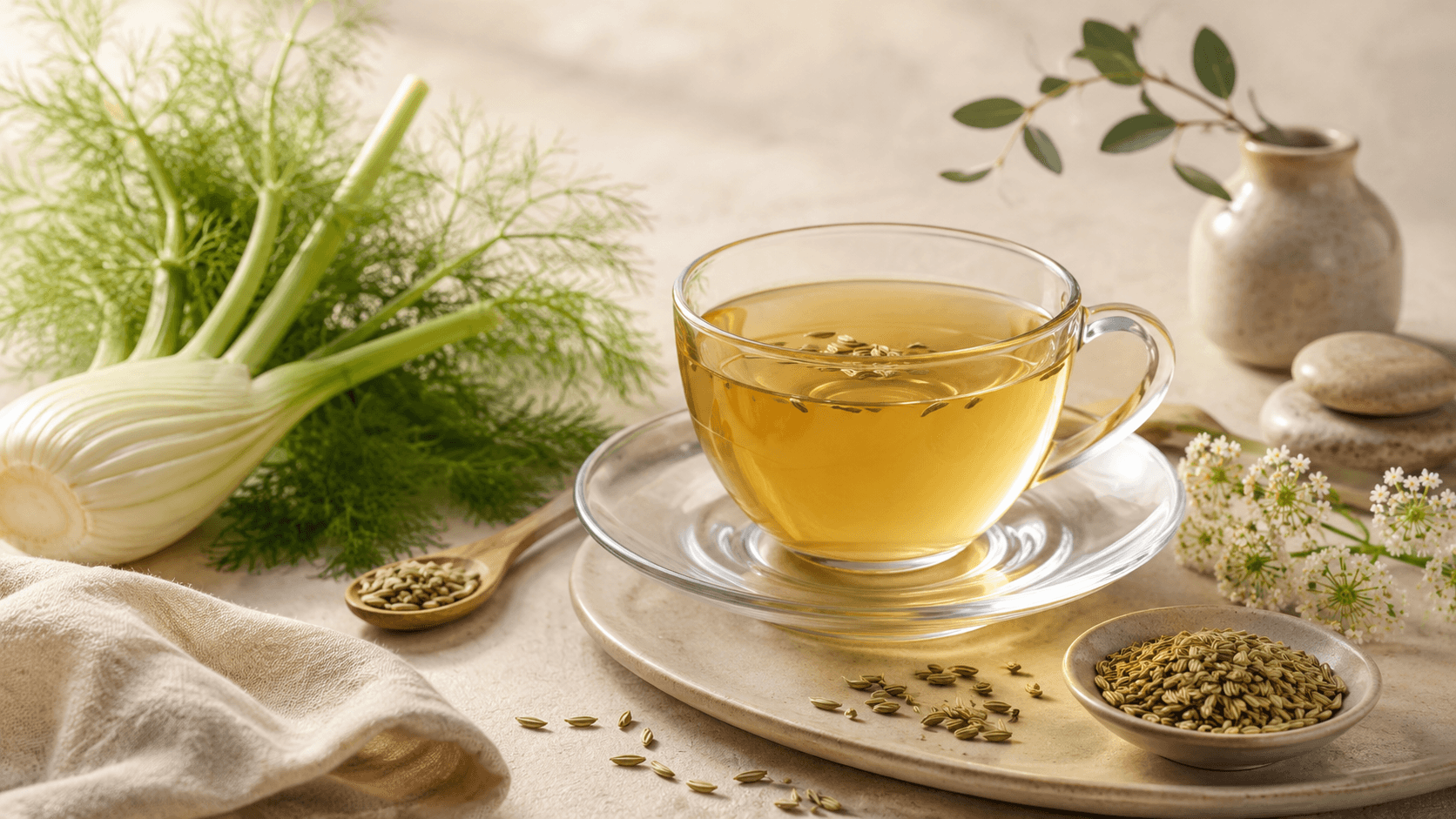

The Best Herbal Teas for Period Relief.
Gentle Sips for Cramps, Bloating, and PMS Days.
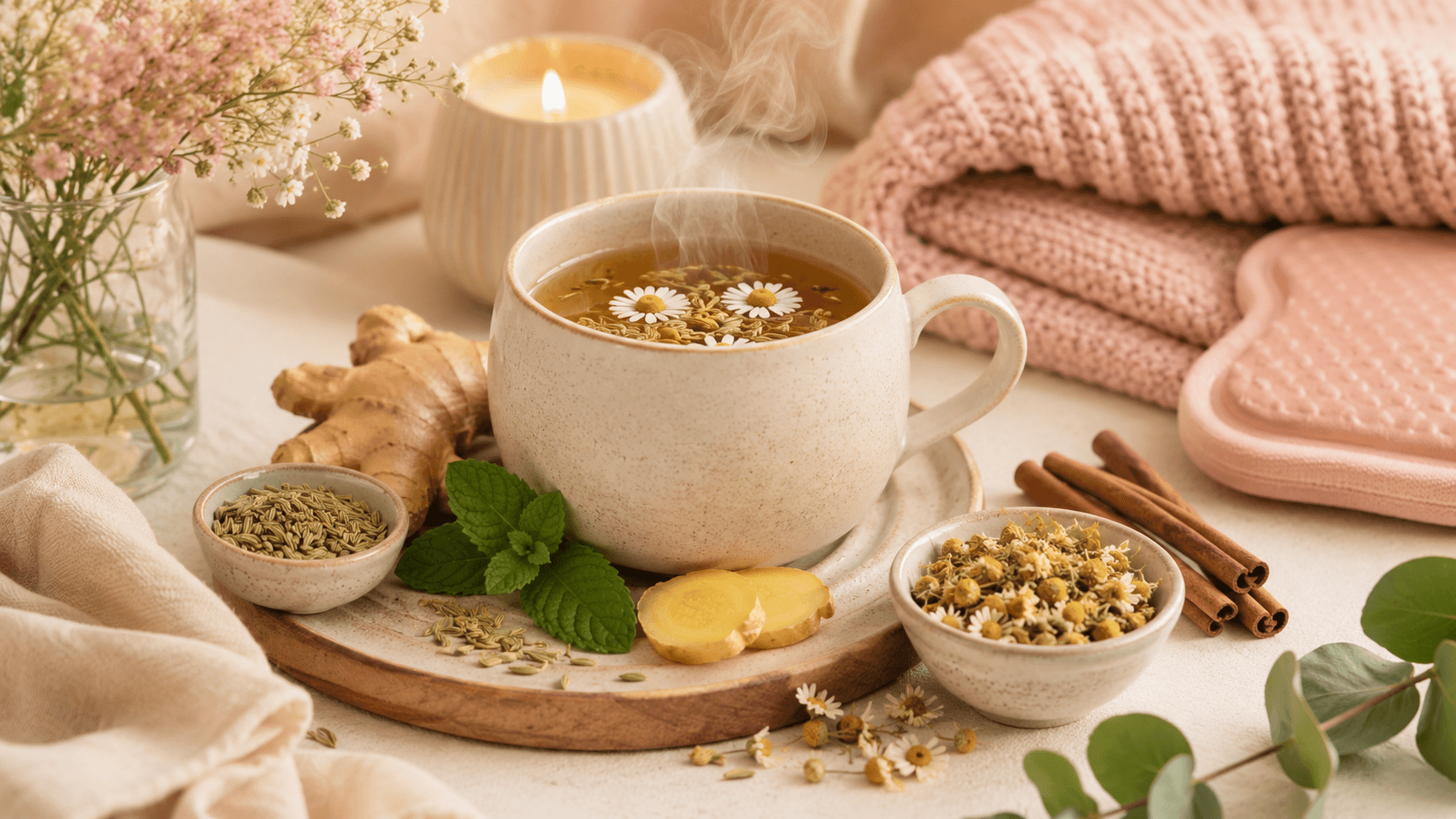
Some days, your period arrives like a quiet knock.
Other days, it kicks the door open, drops cramps on the couch, brings bloating as a plus-one, and somehow eats all your patience before noon.
That is usually the moment we start looking for something simple. Something warm. Something that does not ask us to become a new person, start a 14-step wellness routine, or pretend we are thriving while curled around a heating pad like a shrimp.
This is where herbal tea can help.
Not as a miracle cure. Not as a replacement for medical care. Not as a tiny mug wearing a superhero cape.
But as a gentle, steady sidekick.
The right cup of tea can support your period routine in a few comforting ways: warmth, hydration, calming aromas, digestive support, and that small ritual of stopping for five minutes when your body is loudly asking for kindness. ACOG includes heat as one at-home strategy that may soothe period pain, and Mayo Clinic notes that sleep, relaxation, and stress-reducing habits may help manage PMS symptoms.
That matters because period relief is not always one single thing.
Sometimes you need help with cramps. Sometimes it is the bloat. Sometimes nausea joins the party, uninvited and rude. Sometimes your mood feels like a browser with 47 tabs open and one of them is playing music.
So in this guide, we are matching the tea to the symptom.
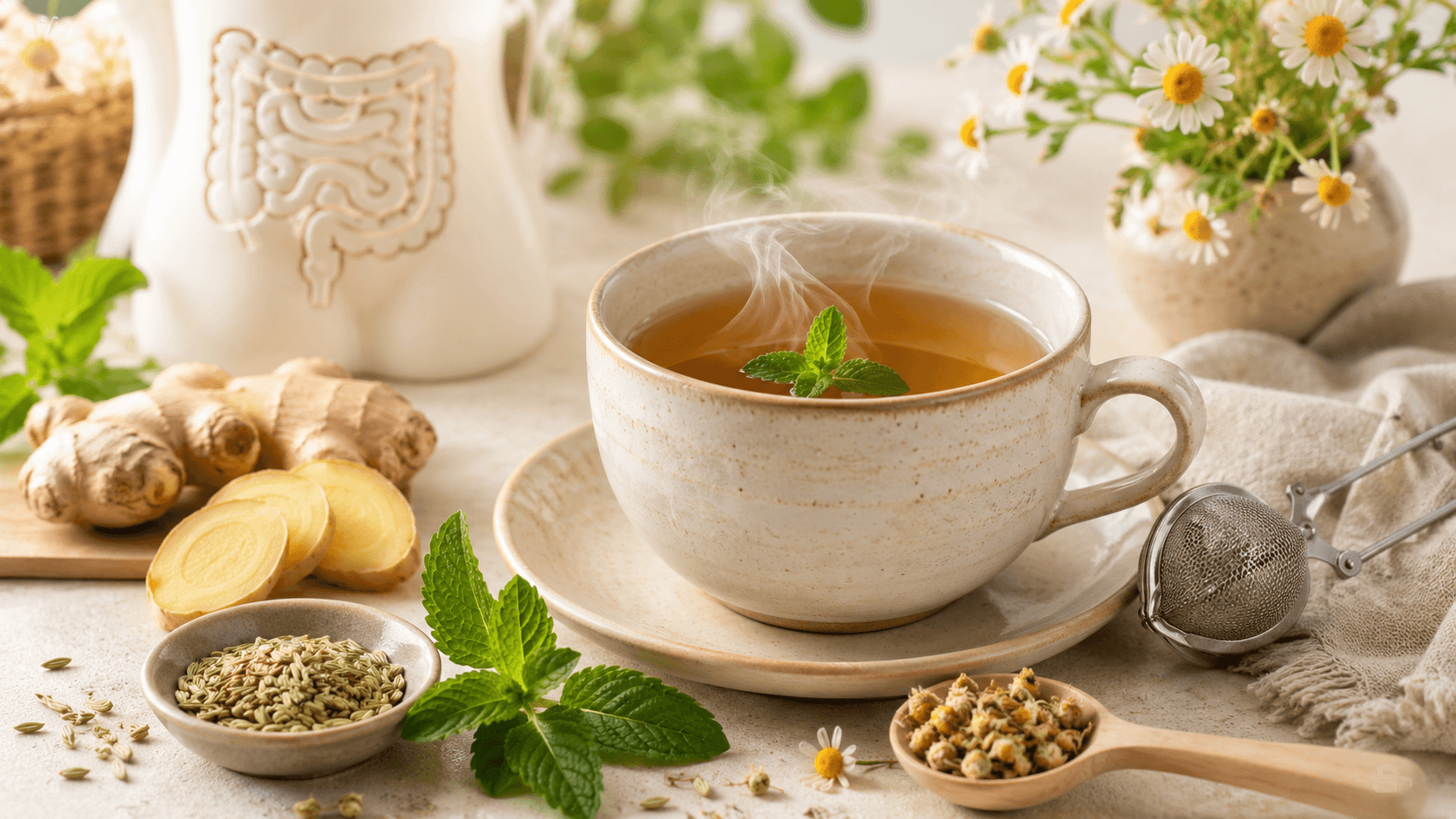
We’ll look at The Best Herbal Teas for Period Relief, including ginger, fennel, chamomile, peppermint, cinnamon, and raspberry leaf. We’ll talk about what each one may support, how to brew it, when to drink it, and when to be a little cautious.
And because your body deserves more than vague wellness confetti, we’ll keep the claims honest.
Tea can be comforting. Tea can be supportive. Tea can be part of a cozy period-care ritual.
But you should not have to “push through” severe pain, heavy bleeding, fainting, fever, sudden new symptoms, or cramps that interrupt your life. That is not a personality test. That is a reason to check in with a healthcare professional.
For now, start here: one cup, one symptom, one small act of care.
Let’s brew the kind of period support that feels less like fixing yourself and more like coming home to yourself.
Can Herbal Tea Really Help with Period Relief?
Herbal tea can help with period relief in the way a soft lamp helps a dark room.
It may not fix the whole house.
But it changes how the room feels.
When cramps, bloating, nausea, and PMS tension show up, tea can support your body in a few simple ways: it adds warmth, encourages hydration, gives your stomach something gentle to work with, and creates a small pause in a day that may feel loud and uncomfortable.
That pause matters.
Because period care is not only about “stopping symptoms.” Sometimes it is about giving your body fewer battles to fight at once.
What Tea Can Do Gently
A warm cup of herbal tea may support comfort by helping you slow down, breathe deeper, and stay hydrated. Some herbs also have a long history of use for digestive comfort, nausea, relaxation, or menstrual cramps.
For example, ginger is often used for nausea and has been studied for menstrual pain. Fennel and cinnamon have also appeared in research around primary dysmenorrhea, which is the medical term for painful period cramps not caused by another condition. The research is promising in some areas, but it is not a blank check to treat tea like medicine in a mug.
It is support.
Not a cure.
Think of herbal tea as part of your period comfort team.
A good cup can sit next to the heating pad. Next to rest. Next to an easy meal. Next to the decision to cancel one non-urgent thing because your body has already filed a complaint.
ACOG notes that heat, such as a heating pad or warm bath, may help soothe period pain, while Mayo Clinic lists lifestyle approaches like sleep, exercise, and stress reduction as part of PMS self-care. Tea fits beautifully into that softer side of support.
What Tea Cannot Do
Tea cannot diagnose the reason for severe period pain.
Tea cannot treat endometriosis, fibroids, infections, ovarian cysts, or other conditions that may cause pelvic pain.
Tea cannot replace a clinician when your symptoms are getting worse, disrupting your life, or showing up in a new way.
And tea should never be used as a way to talk yourself out of getting help.
If your cramps keep you from work, school, daily tasks, or basic functioning, that is worth discussing with a healthcare professional. Cleveland Clinic notes that severe cramping that prevents normal activities may need treatment. ACOG also recommends talking with an ob-gyn about painful periods, especially when pain is not relieved by first-step treatments or when the cause needs to be investigated.
You are not “being dramatic.”
You are reading your body’s memo.
Best Symptoms to Match with Tea
The easiest way to choose The Best Herbal Teas for Period Relief is to start with your main symptom.
Not the fantasy version of your period routine.
The real one.
The one happening today.
For cramps: ginger, fennel, and cinnamon are the strongest starting points. They bring warmth and have been studied for menstrual discomfort.
For bloating and gas: fennel and peppermint are helpful choices. They feel like the tea version of loosening the top button on your jeans.
For nausea: ginger is the classic. Peppermint can also feel refreshing, especially when your stomach is being fussy.
For PMS tension, irritability, and bedtime restlessness: chamomile is a gentle evening option. It is not a personality transplant. But it can help the whole room feel quieter.
For low-energy, “please leave me alone” days: choose caffeine-free blends that hydrate and comfort without adding jitters.
Here is the small rule I love: choose one symptom, then choose one tea.
Because when you are already tired, your wellness routine should not require a spreadsheet.
Ginger Tea — Best for Cramps and Queasy Period Days
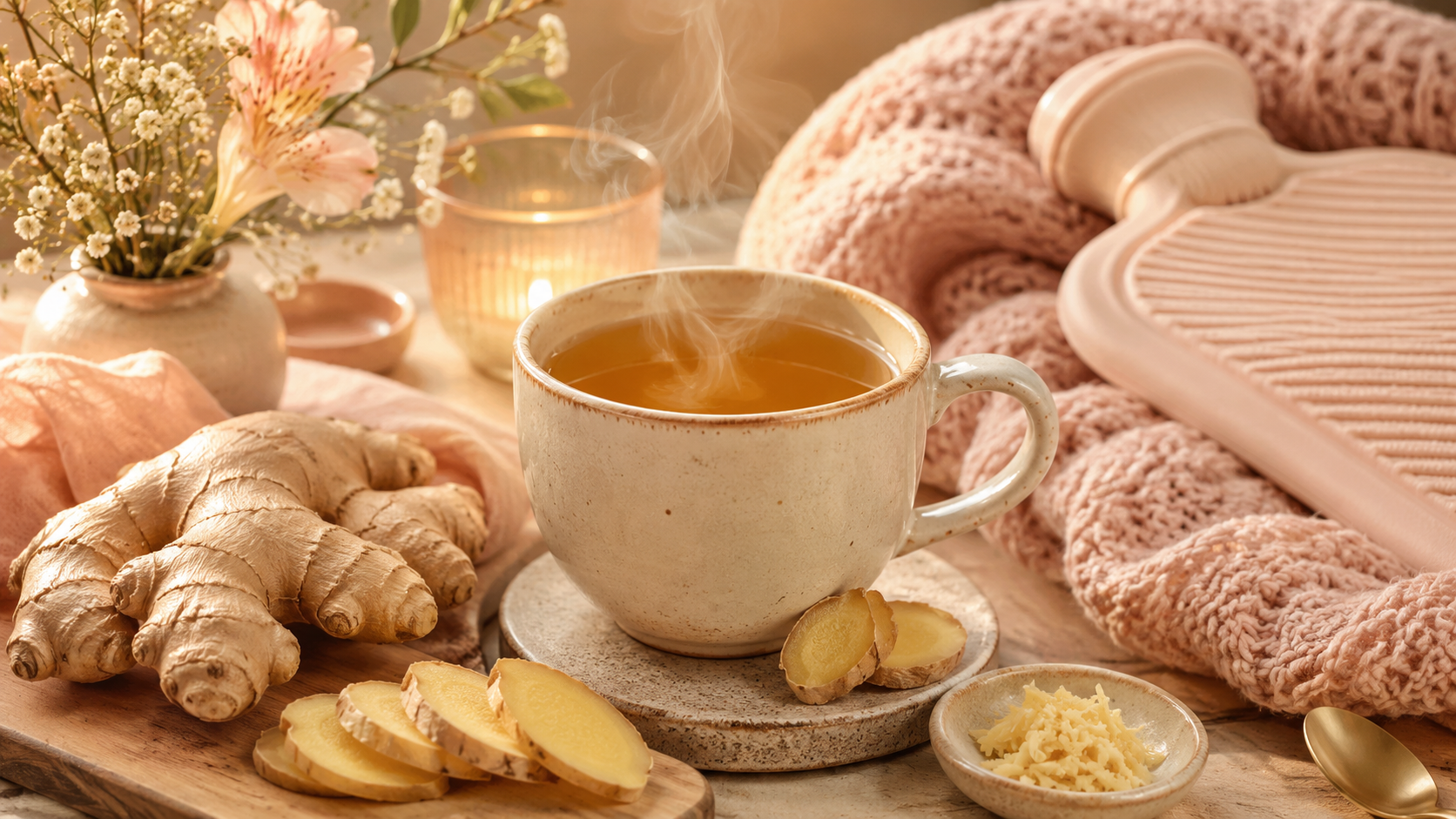
Ginger tea is the friend who shows up with a warm blanket, a slightly spicy attitude, and no unnecessary questions.
It is bold. It is bright. It gets straight to the point.
That is why ginger earns a top spot in The Best Herbal Teas for Period Relief, especially when your period brings cramps and a queasy stomach along for the ride.
Ginger has been studied for primary dysmenorrhea, which means menstrual cramps that are not caused by another condition. One systematic review found that ginger may help reduce menstrual pain over one or two cycles, and another review concluded that oral ginger could be helpful for dysmenorrhea, though the research quality and study sizes mean we should interpret the results with care.
Translation: promising, not magical.
A warm mug of ginger tea will not personally negotiate with your uterus. But it may be a smart, soothing choice when cramps feel sharp, heavy, or achy.
Why Ginger Belongs in the Period Tea Cabinet
Ginger brings two things many period days need: warmth and digestive support.
That matters because cramps do not always travel alone. Sometimes they arrive with nausea, stomach heaviness, low appetite, or that strange “I’m hungry but everything sounds terrible” feeling.
Ginger is widely used for nausea, and NCCIH notes that it may help with nausea and vomiting related to pregnancy, while also mentioning possible mild side effects like heartburn, stomach upset, diarrhea, and gas.
For period days, that makes ginger especially useful when your symptoms are a two-part drama:
Cramps downstairs. Queasiness upstairs.
Rude, but common.
Ginger tea also has a cozy heat that feels good when your body wants warmth from every direction. Pair it with a heating pad, soft pants, and permission to do less. That last ingredient is not optional.
Best Way to Drink It
Fresh ginger tea is simple and strong in the best way.
Here is an easy version:
Slice 4–6 thin pieces of fresh ginger.
Add to 1½–2 cups of water.
Simmer for 8–10 minutes.
Strain into a mug.
Add honey and lemon, if you like.
For a softer cup, steep ginger in hot water instead of simmering it. For a stronger cup, simmer longer or lightly crush the ginger before adding it to the pot.
A lovely period-support blend:
Ginger + cinnamon + honey
This tastes like comfort with a backbone. The ginger brings the heat. The cinnamon adds sweetness and depth. The honey makes it feel less like a remedy and more like a small kindness.
You can also try:
Ginger + peppermint for cramps with nausea. Ginger + fennel for cramps with bloating. Ginger + chamomile for cramps with bedtime tension.
Start with one cup and see how your body responds. More is not always better. Sometimes more is just more dishes.
Gentle Safety Note
Food-level ginger, like ginger used in tea or cooking, is generally well tolerated for many people. But ginger can still cause side effects for some, especially heartburn, stomach upset, diarrhea, or gas. NCCIH also notes that concerns have been raised about ginger possibly interacting with blood thinners.
Be more cautious with ginger, especially strong teas, extracts, or supplements, if you:
Take blood-thinning medication.
Have a bleeding disorder.
Have gallstone disease.
Are pregnant or breastfeeding.
Have surgery coming up.
Notice ginger worsens your reflux or heartburn.
And remember: tea is gentler than capsules, but herbs still count. Your body knows the difference between “cozy cup” and “I took seven concentrated things because the internet said so.”
For period cramps with nausea, ginger tea is one of the best first cups to try: warm, simple, and easy to blend.
A tiny spicy sidekick.
Sometimes that is exactly enough.
Fennel Tea — Best for Bloating, Gas, and Crampy Tightness
Fennel tea is the cup you reach for when your belly feels like it is holding a committee meeting.
Bloating? Present. Gas? Unfortunately vocal. Crampy tightness? Sitting in the front row with a clipboard.
Fennel has a naturally sweet, slightly licorice-like flavor, and it has long been used in traditional herbal practices for digestive comfort. That makes it especially useful during period days when your lower belly feels tight, full, or heavy.
It is also one of the most helpful herbs to consider when we talk about The Best Herbal Teas for Period Relief, because fennel has been studied for primary dysmenorrhea. A 2020 systematic review found that fennel showed pain-relieving potential for primary dysmenorrhea, while also noting that stronger and more diverse research is still needed.
So, again: not magic.
But promising? Yes.
Why Fennel Feels Like a Soft Exhale for the Belly
Period bloating is its own tiny betrayal.
You wake up in the same body, wearing the same pants, and suddenly your waistband has opinions.
Fennel tea can be a gentle choice here because it is often associated with digestive ease. Many people sip it after meals for gas, fullness, and belly pressure. During your period, that digestive support can feel extra welcome because cramps and bloating tend to blur together into one uncomfortable “everything hurts in the middle” situation.
Fennel’s flavor is soft and naturally sweet, which also makes it a nice option when you want comfort but do not want caffeine, sugar, or anything too sharp.
It is the tea version of unclenching your jaw.
For cramps, fennel may also offer support. Reviews of herbal options for menstrual discomfort have included fennel among herbs that may reduce pain intensity in primary dysmenorrhea, though the research still needs more robust studies before anyone starts speaking in capital letters.
And we do not need capital letters here.
We need a warm mug and pants with mercy.
How to Brew Fennel Tea
Fennel tea is best when made from seeds.
Use crushed seeds if you can. Crushing helps release the aromatic oils, which gives the tea more flavor and personality. Whole seeds work too, but they are a little more reserved. Like guests who bring a casserole but do not want attention.
Try this simple method:
Add 1 teaspoon of crushed fennel seeds to a mug.
Pour in 1 cup of hot water.
Cover and steep for 8–10 minutes.
Strain.
Sip warm.
Covering the mug matters. It keeps the fragrant steam from escaping, and that steam is part of the cozy experience.
For period relief, try fennel tea:
After meals, if bloating gets worse when you eat.
In the afternoon, if cramps and gas start building.
Before bed, if your belly feels tight and unsettled.
A simple blend to try:
Fennel + ginger
This is a lovely match when your period brings cramps and bloating together. Ginger adds heat. Fennel softens the belly-heavy feeling. Together, they make a cup that feels practical and kind.
Another cozy blend:
Fennel + chamomile
This one is gentler and better for evening. Fennel supports the belly. Chamomile brings the “please lower the emotional volume” energy.
When to Be Careful with Fennel
Fennel tea is commonly used as a food-like herbal drink, but herbs can still have effects in the body. That is especially important if you are pregnant, breastfeeding, trying to conceive, taking medications, or dealing with hormone-sensitive conditions.
NCCIH reminds consumers that safety varies by herb and by the person using it, and that herbal supplements can interact with medications or be unsafe in certain situations.
That does not mean you need to be afraid of a modest cup of fennel tea.
It means you should not treat “natural” as a permission slip to overdo it.
Keep it simple. Start with one cup. Notice how you feel. Avoid concentrated fennel oils or high-dose supplements unless your healthcare professional has said they are appropriate for you.
For bloating, gas, and that crampy tightness that makes you want to curl into a punctuation mark, fennel tea is a beautiful period-support option.
Soft. Warm. Slightly sweet.
A little exhale in a mug.
Chamomile Tea — Best for Tension, Mood, and Bedtime PMS
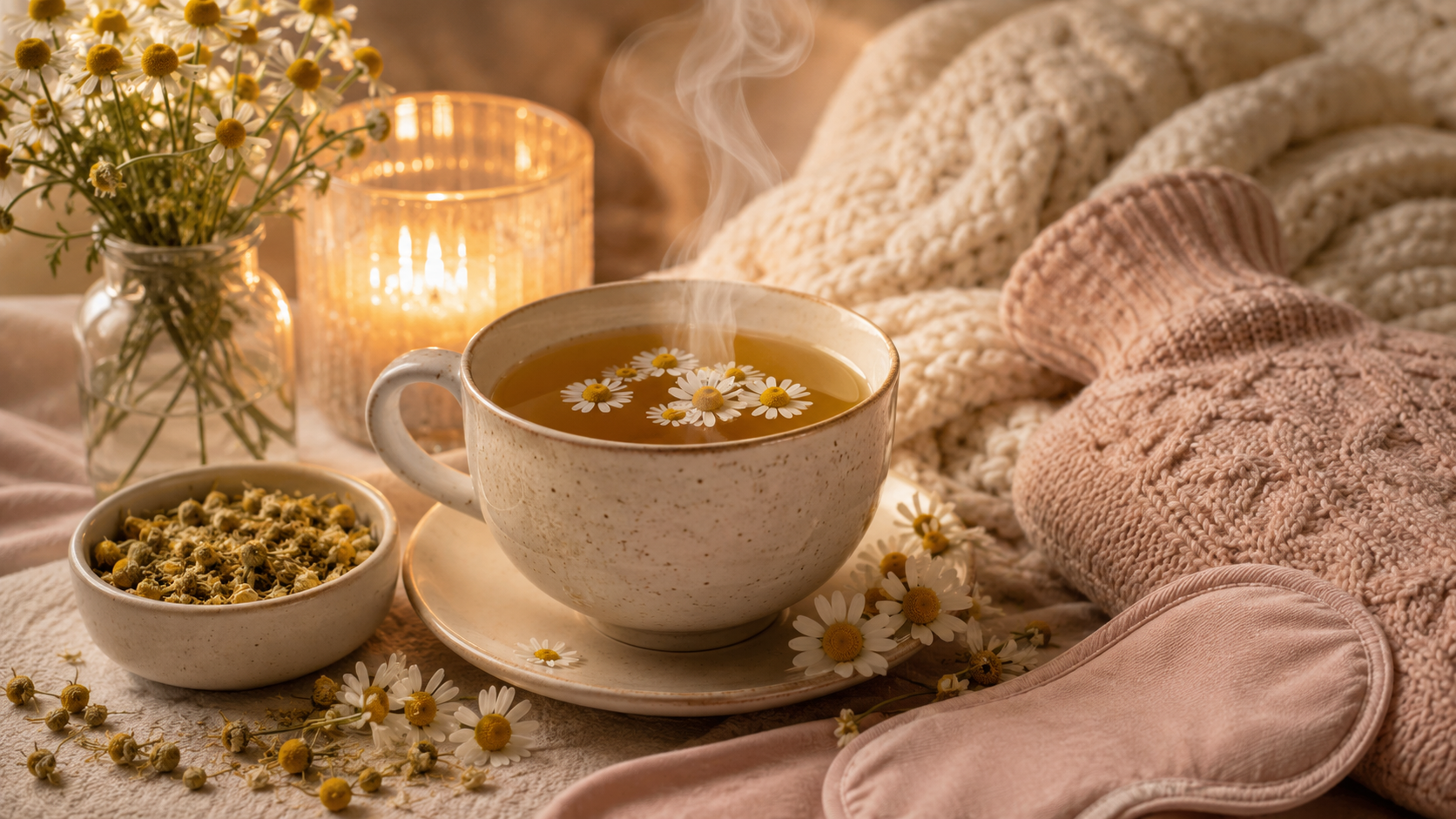
Chamomile tea is the soft cardigan of the herbal tea world.
Not flashy. Not bossy. Not trying to become a personality on the internet.
Just warm, gentle, and quietly useful when your PMS mood is hanging by one very tired thread.
Chamomile earns its place in The Best Herbal Teas for Period Relief because not every period symptom is physical in the obvious way. Yes, cramps matter. Bloating matters. Nausea matters.
But so does the feeling of being emotionally overcooked.
The irritability. The heaviness. The “why did that commercial make me cry?” moment. The bedtime restlessness, when your body is tired but your brain is hosting a town hall meeting.
Chamomile is not going to rewrite your hormones, clean your kitchen, or make everyone around you suddenly less annoying.
A tragedy, truly.
But it can help create a calmer evening ritual. And sometimes, that is exactly the kind of support your body is asking for.
The Cozy Blanket Tea
Chamomile is best known as a calming tea, especially before bed. It has a mild floral flavor, a soft golden color, and the emotional energy of someone speaking in a whisper at a library.
That makes it a lovely choice for PMS days when you feel tense, sensitive, restless, or overstimulated.
This is less about “treating PMS” and more about supporting the conditions that help you feel steadier: warmth, quiet, hydration, and a bedtime routine that tells your nervous system, We are safe. We are done for today. No more dramatic emails.
A warm mug of chamomile can also pair well with other period-support herbs.
Try:
Chamomile + ginger when cramps meet bedtime tension. Chamomile + fennel when bloating makes it hard to relax. Chamomile + cinnamon when you want something naturally sweet and cozy. Chamomile + lavender-style blends when your mood needs the lights dimmed.
This is the tea I would choose for the “I don’t need fixing; I need softness” part of your cycle.
And that part is real.
Best Time to Drink It
Chamomile is especially helpful in the evening.
Try it:
After dinner, if you feel bloated but also tired.
One hour before bed, if PMS makes sleep feel harder.
During a warm bath or heating-pad moment.
On emotionally tender days when you want a caffeine-free cup that does not ask much of you.
The ritual can be simple:
Boil water. Steep chamomile. Turn down the lights. Put your phone somewhere slightly inconvenient.
That last step may be the most advanced wellness practice of all.
For a stronger cup, steep chamomile for 5–10 minutes and cover the mug while it rests. Covering keeps the aromatic steam in the cup instead of letting it wander off like it pays rent.
Add honey if you like a sweeter flavor. Add lemon if you want brightness. Add nothing if you want the full meadow-in-a-mug experience.
Safety Note
Chamomile tea is commonly enjoyed by many people, but it is still an herb. That means it can interact with certain medications or be a poor fit for some health situations.
NCCIH notes that chamomile may interact with some medicines and may worsen conditions that are sensitive to estrogen exposure, such as breast or uterine cancer. Chamomile may also cause allergic reactions, especially in people allergic to related plants like ragweed, daisies, marigolds, or chrysanthemums.
Use extra caution or ask a healthcare professional first if you:
Are pregnant or breastfeeding.
Take blood thinners, sedatives, or other regular medications.
Have a hormone-sensitive condition.
Have strong seasonal or ragweed-related allergies.
Are preparing for surgery.
Again, this does not mean a modest cup is automatically scary.
It means your body deserves context, not internet confidence in a flower crown.
For PMS tension, emotional sensitivity, and bedtime restlessness, chamomile is a beautiful support tea: gentle, caffeine-free, and easy to turn into a calming ritual.
A small cup of quiet.
And on some period days, quiet is the whole point.
Peppermint Tea — Best for Bloating and Period Nausea
Peppermint tea is the fresh sheet set of herbal teas.
Cool. Clean. A little bit bossy in the best way.
When your period comes with bloating, stomach heaviness, or nausea, peppermint can feel like opening a window in a stuffy room. It does not have the deep spicy warmth of ginger or the sweet softness of fennel. Peppermint is brighter. Sharper. More “let’s clear the air and get this belly drama under control.”
That is why peppermint belongs in The Best Herbal Teas for Period Relief, especially for readers whose period symptoms are digestive.
Because cramps are annoying enough.
Cramps plus nausea? That is just bad event planning.
The Fresh, Cooling Option
Peppermint is often used for digestive discomfort. Most of the stronger research focuses on peppermint oil rather than peppermint tea, especially for IBS symptoms and abdominal pain. NCCIH notes that enteric-coated peppermint oil capsules may improve IBS symptoms in adults, though side effects like acid reflux and indigestion can happen.
Peppermint tea is much gentler than peppermint oil capsules. But the reason people reach for it is similar: that cool, minty feeling can make the stomach feel calmer and lighter.
For period days, peppermint tea may be a good match when you feel:
Bloated after meals.
Nauseous but not hungry.
Gassy or full.
Heavy in the stomach.
Too warm, puffy, or sluggish.
There is also early research around peppermint and menstrual symptoms. A 2025 systematic review suggested peppermint may help with menstrual disorders such as primary dysmenorrhea and PMS, but the authors also called for higher-quality studies.
So we are keeping our feet on the ground.
Peppermint tea may support comfort. It is not a guaranteed cramp cure. It is more like the friend who says, “Let’s start by making your stomach less dramatic.”
Honestly? A valuable friend.
Best Way to Drink It
Peppermint tea is wonderfully simple.
Use:
1 peppermint tea bag or 1–2 teaspoons dried peppermint leaves
1 cup hot water
Steep for 5–10 minutes
Cover while steeping
Sip warm
For period bloating, try peppermint tea after meals or in the afternoon, when the “why do my jeans feel personal?” feeling tends to show up.
For nausea, sip slowly. Tiny sips count. You do not need to chug tea like you are completing a wellness challenge with prizes.
A few easy blends:
Peppermint + ginger Best for nausea with cramps. Ginger brings warmth. Peppermint brings freshness.
Peppermint + fennel Best for bloating and gas. This blend is light, naturally caffeine-free, and very belly-friendly.
Peppermint + chamomile Best for evening PMS tension when your stomach and mood are both asking for dim lights.
You can also drink peppermint iced if warm drinks feel unappealing. On some period days, the body wants cozy. On others, it wants crisp and cold. Both are allowed.
Your uterus does not get to run a dictatorship.
When Peppermint May Not Be Your Friend
Peppermint is not ideal for everyone.
The biggest caution is reflux. Peppermint can relax the lower esophageal sphincter, which may allow stomach acid to move upward. In regular-person language: peppermint can make heartburn worse for some people. NCCIH also notes that side effects from peppermint oil can include heartburn, nausea, abdominal pain, and dry mouth.
Peppermint tea is usually milder than peppermint oil, but pay attention to your body.
You may want to avoid or limit peppermint if you:
Have GERD or frequent acid reflux.
Notice mint makes your heartburn worse.
Are pregnant or breastfeeding and have not asked your clinician.
Take regular medications and are using concentrated peppermint products.
Have gallbladder concerns.
And please do not confuse peppermint tea with peppermint essential oil. Tea is for sipping. Essential oil is not something to casually drink because a wellness reel had good lighting.
For bloating and period nausea, peppermint tea can be a refreshing, caffeine-free option. It is especially useful when your stomach feels crowded, tight, or unsettled.
A cool little reset.
Sometimes that is the cup your period needs.
Cinnamon Tea — Best for Warming Comfort and Heavy, Achy Days
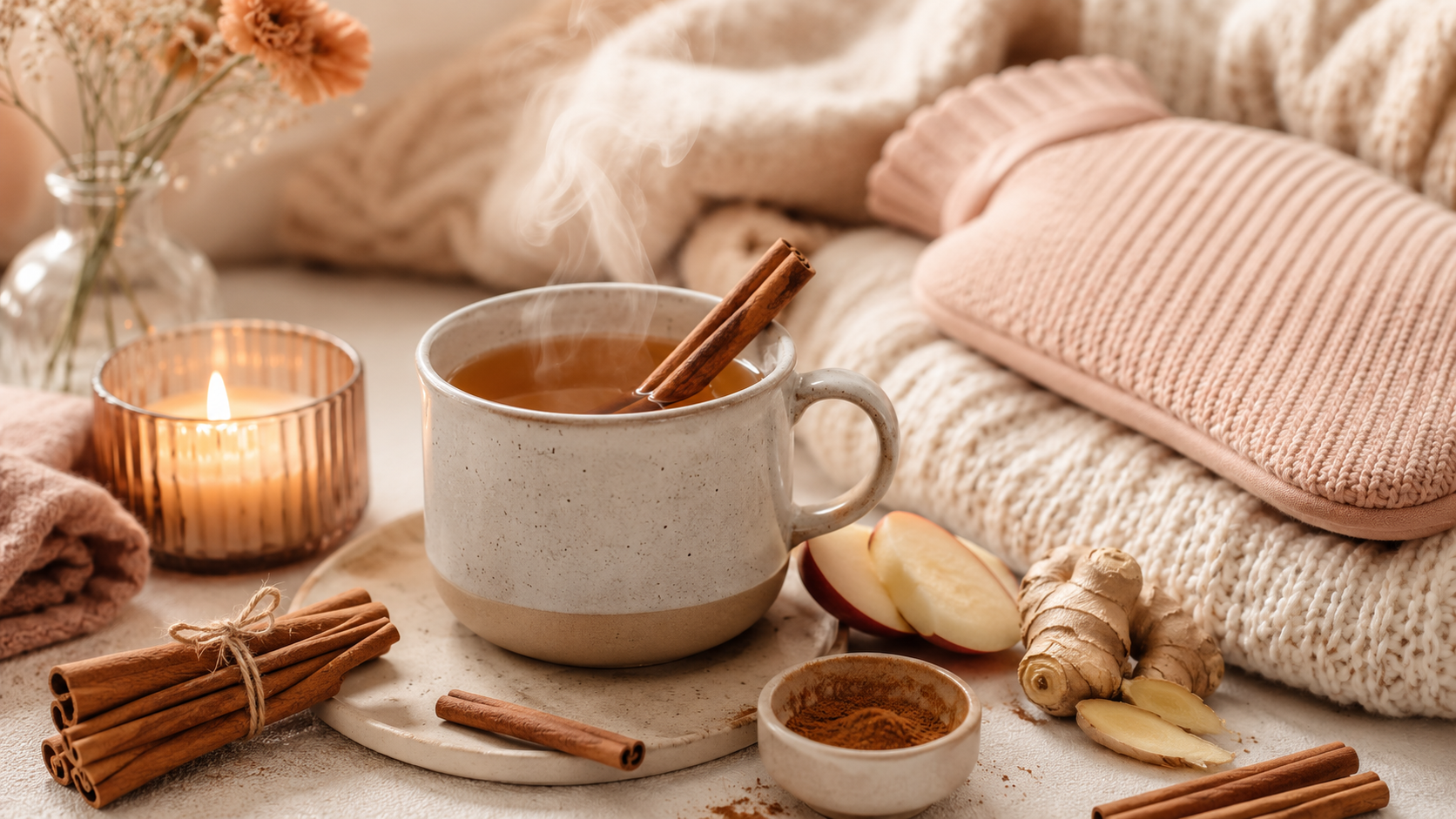
Cinnamon tea is what happens when your period asks for comfort food, but your body says, “Maybe start with something warm.”
It is sweet without trying too hard. Spicy without being dramatic. Cozy in a way that makes the whole kitchen smell like someone has their life together.
A small lie, perhaps.
But a delicious one.
Cinnamon earns a place in The Best Herbal Teas for Period Relief because it brings that deep, warming feeling many of us crave on heavy, achy period days. The kind of days when your lower belly feels dull, your back feels tired, and your motivation has left the group chat.
Cinnamon has also been studied alongside ginger and fennel for primary dysmenorrhea. A systematic review found that cinnamon, fennel, and ginger may help reduce pain intensity in primary dysmenorrhea, and cinnamon was also linked with a shorter duration of pain in the reviewed studies. The authors still called for more research, so we’ll keep this grounded: cinnamon may support comfort, but it is not a guaranteed fix.
The Spicy-Sweet Comfort Cup
Cinnamon tea is especially lovely when your period feels heavy, cold, sluggish, or achy.
It is not the cooling, fresh reset of peppermint. It is not the floral bedtime softness of chamomile. It is not the belly-soothing sweetness of fennel.
Cinnamon is warmer. Rounder. A little more fireside.
That makes it a beautiful tea base when you want something that feels like a treat but still belongs in a simple wellness routine.
Try cinnamon tea when you feel:
Heavy and achy.
Cold or tense.
Crampy but not nauseous.
In need of something naturally sweet.
Tempted to inhale a bakery, emotionally.
Cinnamon also blends beautifully with other period-support herbs. On its own, it is cozy. With ginger, it becomes more warming. With chamomile, it becomes softer. With fennel, it becomes a sweet digestive cup.
Period tea math does not need to be complicated.
Warm + simple = enough.
How to Brew Cinnamon Tea Gently
For the best flavor, use cinnamon sticks instead of dumping spoonfuls of ground cinnamon into hot water.
Ground cinnamon has a way of turning tea into a gritty little swamp. Not the vibe. Not today.
Try this method:
Add 1 cinnamon stick to 1½ cups of water.
Simmer for 10–15 minutes.
Strain into a mug.
Add honey, lemon, or a splash of milk if you like.
For a stronger blend, add a few slices of fresh ginger while the cinnamon simmers.
My favorite period comfort blend:
Cinnamon + ginger + honey
It tastes warm, slightly spicy, and soothing. The ginger brings the “let’s help the cramps” energy. The cinnamon brings the cozy. The honey makes the whole cup feel less like a task and more like care.
For nighttime:
Cinnamon + chamomile
This is the tea equivalent of putting on soft socks and refusing to answer one more email.
For bloating:
Cinnamon + fennel
Sweet, simple, and gentle after meals.
When to Use Cinnamon Carefully
Cinnamon is a common kitchen spice, and normal food-level amounts are safe for many people. But high amounts, concentrated supplements, and daily overuse are a different story.
Cassia cinnamon, the common type found in many grocery stores, contains coumarin. NCCIH notes that coumarin-related liver interactions have been reported, although ordinary culinary use usually does not contain enough coumarin to cause major problems for most people.
That means: cinnamon tea is not something to fear.
But it is also not something to turn into a high-dose challenge because the internet got enthusiastic.
Use extra caution or ask a healthcare professional first if you:
Have liver disease.
Take medications that affect the liver.
Take blood thinners.
Are pregnant or breastfeeding.
Use cinnamon supplements or extracts.
Drink strong cinnamon tea every day in large amounts.
A cinnamon stick in a mug? Cozy.
A mountain of cinnamon powder every day because someone promised “hormone balance”? Please escort that advice out of the kitchen.
For heavy, achy, chilly period days, cinnamon tea is a beautiful comfort cup. It is warm, easy to blend, and naturally sweet enough to feel like a small treat.
And sometimes, during your period, a small treat is not extra.
It is the assignment.
Raspberry Leaf Tea — Popular, But Worth a Careful Note
Raspberry leaf tea has a reputation.
If herbal teas had a yearbook, raspberry leaf would probably be voted “Most Likely to Be Mentioned in a Cycle-Syncing TikTok.”
It is often associated with women’s wellness, uterine tone, menstrual comfort, and pregnancy preparation. You’ll see it in period tea blends, fertility tea blends, and late-pregnancy tea blends. Sometimes it is talked about like a wise grandmother herb. Sometimes like a miracle.
We are going to place it somewhere more useful:
Interesting. Traditional. Popular. But not a tea we should oversell.
Raspberry leaf can be included in a guide to The Best Herbal Teas for Period Relief, but it deserves a careful note because the evidence is much thinner than the internet confidence around it.
Why People Search for It
Raspberry leaf tea is made from the leaves of the red raspberry plant, not the fruit. So no, it does not taste like raspberry jam in a mug. I wish. We all wish.
The flavor is more earthy, leafy, and lightly tannic, closer to a mild black tea without caffeine.
People often search for raspberry leaf tea because it has a long tradition of use around menstrual and reproductive wellness. It is commonly marketed for period cramps, PMS, “cycle support,” and uterine tone. It is also widely discussed during pregnancy, especially late pregnancy, where many people use it hoping to support labor or birth preparation.
That history is why raspberry leaf shows up again and again in period-relief conversations.
But tradition and proof are not the same thing.
They can sit at the same table. They should not wear each other’s name tags.
What We Should Say Responsibly
The strongest research conversation around raspberry leaf is not actually about PMS or everyday period cramps. It is mostly about pregnancy and labor.
A 2021 review concluded that many women use raspberry leaf during pregnancy, but the evidence supporting its effectiveness is weak and more research is needed. A 2023 review also notes that raspberry leaf extracts are associated with traditional claims around childbirth and uterine effects, but the review focuses on mechanisms and safety rather than proving clear period-relief benefits.
So for period support, we should be honest:
Raspberry leaf tea may feel comforting. It may be part of traditional menstrual wellness routines. It may pair nicely with other herbs.
But it should not be presented as a proven fix for cramps, PMS, heavy bleeding, or hormone balance.
For cramps specifically, ginger, fennel, and cinnamon have stronger supportive research behind them than raspberry leaf. Raspberry leaf belongs in the “popular but proceed thoughtfully” category.
Not banished.
Just not crowned queen.
Who Should Ask First
Because raspberry leaf is discussed for uterine effects, it is especially important to be cautious if pregnancy is possible.
Ask a healthcare professional before using raspberry leaf tea if you:
Are pregnant.
Are trying to conceive.
Are breastfeeding.
Have a history of miscarriage, preterm labor, or pregnancy complications.
Have heavy or unusual bleeding.
Have endometriosis, fibroids, PCOS, or another reproductive health condition.
Take regular medications.
Are planning surgery.
Have been told to avoid herbs with possible hormonal or uterine effects.
Also, skip concentrated extracts unless your clinician specifically recommends them. Tea and extracts are not twins. They are more like cousins who grew up in very different households.
For most non-pregnant adults, a modest cup of raspberry leaf tea may be fine, but “natural” does not mean “automatically right for every body.”
That is the heart of this section.
Raspberry leaf tea can be a gentle, traditional option in a period tea routine. But if your goal is evidence-informed support for cramps, bloating, nausea, or PMS discomfort, I would build your first cup around ginger, fennel, chamomile, peppermint, or cinnamon.
Then, if raspberry leaf fits your body and your clinician has no concerns, you can invite it to the tea tray.
Thoughtfully.
No miracle crown required.
The Best Herbal Tea Blends for Period Relief
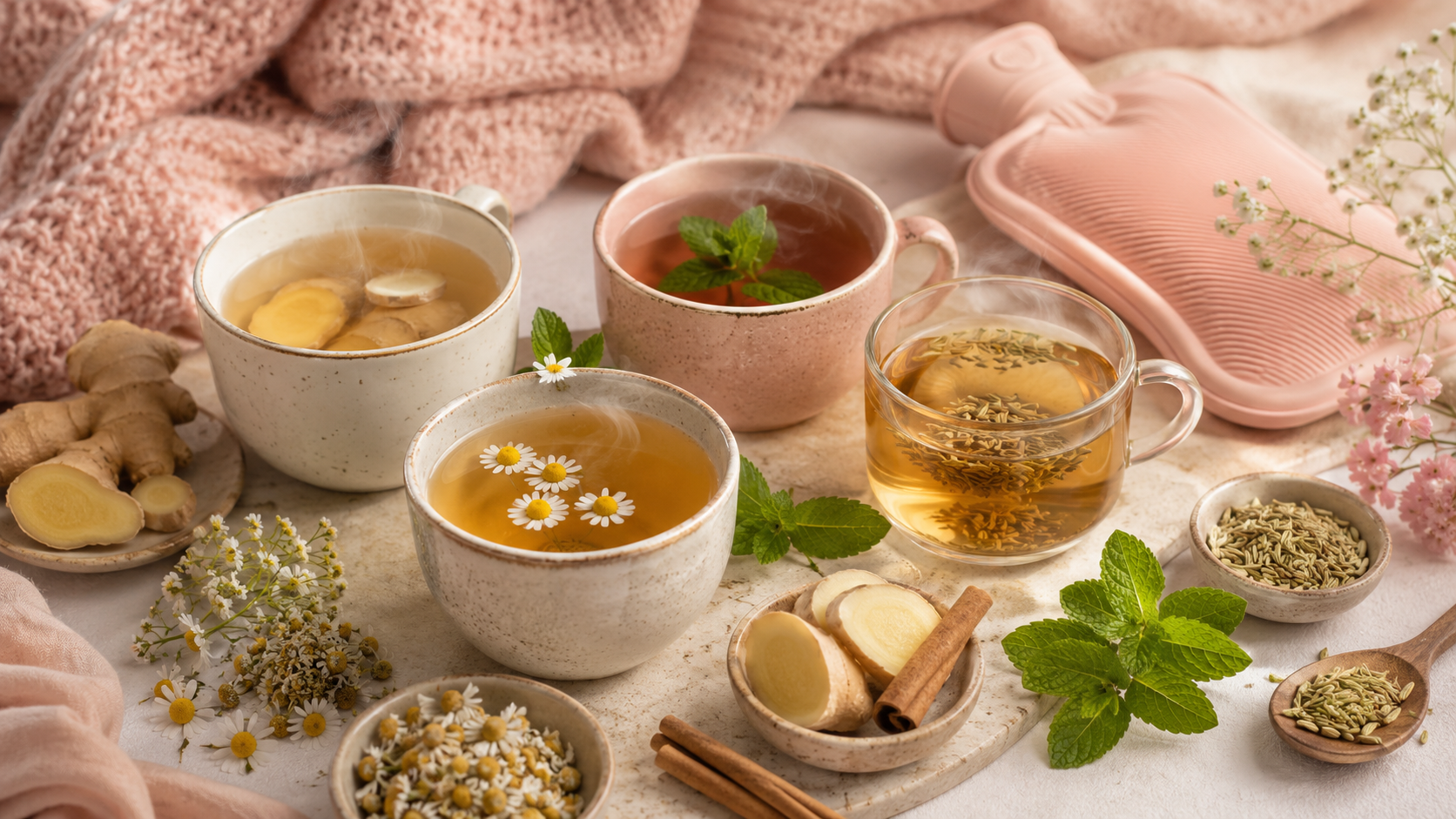
Single-herb teas are wonderful.
But blends? Blends are where your tea mug starts acting like it has a tiny strategy meeting.
The goal is not to throw every “period herb” into one cup and hope for greatness. That is not a blend. That is a botanical traffic jam.
A better approach: choose your main symptom, then pair two or three herbs that make sense together.
That is how you build The Best Herbal Teas for Period Relief without turning your kitchen into a wellness lab with a suspicious amount of jars.
For Cramps: Ginger + Fennel + Cinnamon
This is the warm, cramp-focused blend.
Ginger brings heat. Fennel brings belly softness. Cinnamon brings cozy depth.
Together, they make a spicy-sweet cup that feels especially good on heavy, achy, lower-belly days. Ginger, fennel, and cinnamon have all been studied for primary dysmenorrhea, and one systematic review found they may reduce pain intensity, though the authors noted that more research is still needed.
How to make it:
3–4 thin slices fresh ginger
1 teaspoon crushed fennel seeds
1 cinnamon stick
2 cups water
Honey, optional
Simmer the ginger, fennel, and cinnamon for 10 minutes. Strain. Add honey if you want a softer flavor.
This is a good blend for the first day or two of your period, especially if cramps come with bloating or a heavy, dull ache.
For Bloating: Peppermint + Fennel
This blend is for the waistband-negotiation phase of your cycle.
Peppermint tastes fresh and cooling. Fennel tastes lightly sweet and soft. Together, they make a simple caffeine-free cup that feels clean, light, and belly-friendly.
This is not the blend I would choose for intense cramps. It is the blend I would choose when your stomach feels full, gassy, or puffy and you want something that says, “Let’s make the middle of the body less dramatic.”
How to make it:
1 teaspoon dried peppermint
1 teaspoon crushed fennel seeds
1½ cups hot water
Cover and steep for 8–10 minutes. Strain and sip slowly.
Try it after meals, in the afternoon, or whenever period bloating starts acting like it pays rent.
One note: peppermint can bother some people with reflux or heartburn, so skip it if mint tends to make your stomach acid sassy.
For PMS Mood and Bedtime: Chamomile + Cinnamon
This is the “please dim the lights” blend.
Chamomile brings softness. Cinnamon brings warmth. The result is gentle, slightly sweet, and perfect for the kind of PMS evening when your feelings have feelings.
This blend is not about knocking you out. It is about creating a small signal to your body: we are slowing down now.
How to make it:
1 chamomile tea bag or 1 tablespoon dried chamomile
1 cinnamon stick
1½ cups hot water
Honey or milk, optional
Steep covered for 8–10 minutes. Add honey or a splash of milk if you want a creamier, dessert-like cup.
Drink it after dinner or about an hour before bed.
Bonus points for pairing it with soft pajamas, a heating pad, and the radical decision not to solve your entire life tonight.
For Nausea: Ginger + Peppermint
This blend is bright, simple, and very useful when your period makes your stomach feel like it has joined a protest.
Ginger is the warming classic for queasiness. Peppermint adds a cool, fresh finish. Together, they make a cup that is especially nice when you feel nauseous, low appetite, or heavy after eating.
How to make it:
3 thin slices fresh ginger
1 teaspoon dried peppermint or 1 peppermint tea bag
1½ cups hot water
Lemon, optional
Steep covered for 8–10 minutes. Sip slowly.
Tiny sips count. You do not need to finish the whole mug just because you made it. Your body is not a productivity app.
For Tender, Low-Energy Days: Chamomile + Fennel
This is the gentle blend.
No big spice. No bold mint. No dramatic “wake up and conquer” energy.
Just soft floral chamomile and sweet fennel.
Choose this when you feel tired, puffy, emotionally sensitive, or generally like the world should lower its volume by 30%.
How to make it:
1 tablespoon dried chamomile
1 teaspoon crushed fennel seeds
1½ cups hot water
Cover and steep for 8–10 minutes. Strain and sip warm.
This is a beautiful cup for late afternoon or evening, especially when you want comfort without caffeine.
A Simple Blending Rule
Use this little formula:
One main herb + one supporting herb + one cozy add-in.
For example:
Main herb: ginger for cramps
Supporting herb: fennel for bloating
Cozy add-in: cinnamon for warmth
That gives you a thoughtful blend instead of a crowded mug.
And please keep blends moderate. MedlinePlus notes that herbal medicines can come as teas, extracts, powders, capsules, and other forms, and they can affect health or interact with medications. Tea is usually gentler than concentrated supplements, but it still deserves respect.
Start with one cup.
Notice how you feel.
Then let your body vote.
A Simple Period Tea Ritual You Can Actually Keep
A period tea ritual should not feel like homework.
You already have enough happening. Your body is busy. Your patience may be on airplane mode. Your uterus is apparently running a percussion section.
So let’s keep this simple.
The best ritual is not the prettiest one. It is not the one with twelve herbs, a handmade mug, and a sunrise journal entry.
The best ritual is the one you will actually do when you feel crampy, tired, bloated, or emotionally tender.
That is the whole point of The Best Herbal Teas for Period Relief: choosing the right tea for the real symptom you have today.
Not the imaginary wellness version of you.
The actual you.
The one in soft pants.
Step 1 — Choose Your Main Symptom
Start with one question:
What is bothering me most right now?
Not everything. Just the loudest thing.
If it is cramps, choose ginger, fennel, cinnamon, or a blend of the three.
If it is bloating, choose fennel or peppermint.
If it is nausea, choose ginger or ginger with peppermint.
If it is PMS tension or bedtime restlessness, choose chamomile.
If it is heavy, achy, chilly discomfort, choose cinnamon with ginger.
Choosing one symptom helps you avoid the classic wellness trap: trying to fix your whole life with one mug.
Your tea does not need that kind of pressure.
Step 2 — Brew One Strong Cup, Not Five Random Cups
More tea is not always better.
Sometimes more tea is just more trips to the bathroom.
Choose one blend and give it a fair chance. Brew it with intention, which is a fancy way of saying: use enough herb, steep it long enough, and do not forget it on the counter until it becomes sad room-temperature leaf water.
A simple period tea formula:
1 main herb + 1 support herb + hot water + 10 quiet minutes
That might look like:
Ginger + cinnamon for cramps
Fennel + peppermint for bloating
Chamomile + cinnamon for PMS evenings
Ginger + peppermint for nausea
Cover the mug while it steeps. This keeps the aromatic steam in the cup, which makes the tea taste fuller and feel more comforting.
Tiny upgrade. Big cozy return.
Step 3 — Add Warmth
Tea gives you internal warmth.
Now add external warmth.
ACOG lists heat as one home strategy for period pain, including a warm bath, heating pad, or hot water bottle on the abdomen. Mayo Clinic also includes heat, such as a hot bath, heating pad, hot water bottle, or heat patch on the lower abdomen, as a self-care option that might ease menstrual cramps.
So make the cup.
Then add the heating pad.
Or take the warm bath.
Or wrap yourself in the blanket that has no aesthetic value but excellent emotional support.
This is not laziness. This is body care.
Step 4 — Pair Tea with One Calming Cue
Your nervous system loves repetition.
Not the boring kind. The reassuring kind.
When you do the same small thing each cycle, your body starts to recognize the cue: Oh. We are slowing down now.
Try pairing your period tea with one simple cue:
Dim the lights.
Put your phone across the room.
Turn on calm music.
Take five slow breaths.
Sit with a heating pad.
Read something gentle.
Stop multitasking for ten minutes.
Do not choose all of them.
This is a ritual, not a group project.
Pick one.
Step 5 — Track What Helps
You do not need a beautiful cycle journal unless you want one.
A basic phone note is enough.
Write:
Day 1 — cramps — ginger + cinnamon — helped a little after 30 minutes Day 2 — bloating — fennel + peppermint — felt lighter after dinner PMS night — chamomile — slept better
Mayo Clinic recommends recording PMS symptoms for a few months to identify timing and triggers, which can help you choose strategies that actually fit your pattern.
This is where your tea ritual becomes useful instead of random.
Because your body may have preferences.
Maybe ginger is your cramp tea. Maybe peppermint bothers your reflux. Maybe chamomile is perfect at night but too sleepy in the afternoon. Maybe fennel becomes your bloating hero.
Let your body leave reviews.
Step 6 — Keep Herbs Respectful
Herbal tea can feel gentle, but herbs are still active plants. MedlinePlus notes that “natural” does not automatically mean safe, and some herbs can interact with prescription or over-the-counter medicines.
So keep your ritual moderate.
One or two cups of a simple herbal tea is very different from high-dose extracts, concentrated oils, or complicated blends with twenty ingredients and a label that sounds like it was written by a moon goddess with a sales funnel.
Tea can support you.
It does not need to overpower you.
A simple period tea ritual might look like this:
Morning: Ginger tea for cramps or nausea. Afternoon: Fennel tea for bloating. Evening: Chamomile tea for PMS tension and sleep.
Or even simpler:
One cup. One symptom. One small pause.
That is enough.
Your period care does not have to be perfect to be supportive. It only has to be kind enough that you can return to it when your body asks.
What to Avoid in Period Teas
Most period tea choices are gentle, cozy, and helpful in a small ritual kind of way.
But some teas walk into the wellness aisle wearing too much mascara and making promises they cannot keep.
Those are the ones we need to talk about.
When you are choosing The Best Herbal Teas for Period Relief, the goal is comfort. Not punishment. Not “detoxing.” Not forcing your body to prove it is clean, flat, pure, balanced, or any other word that makes normal human biology sound like a moral failure.
Your period is already doing a big job.
Your tea should not add chaos.
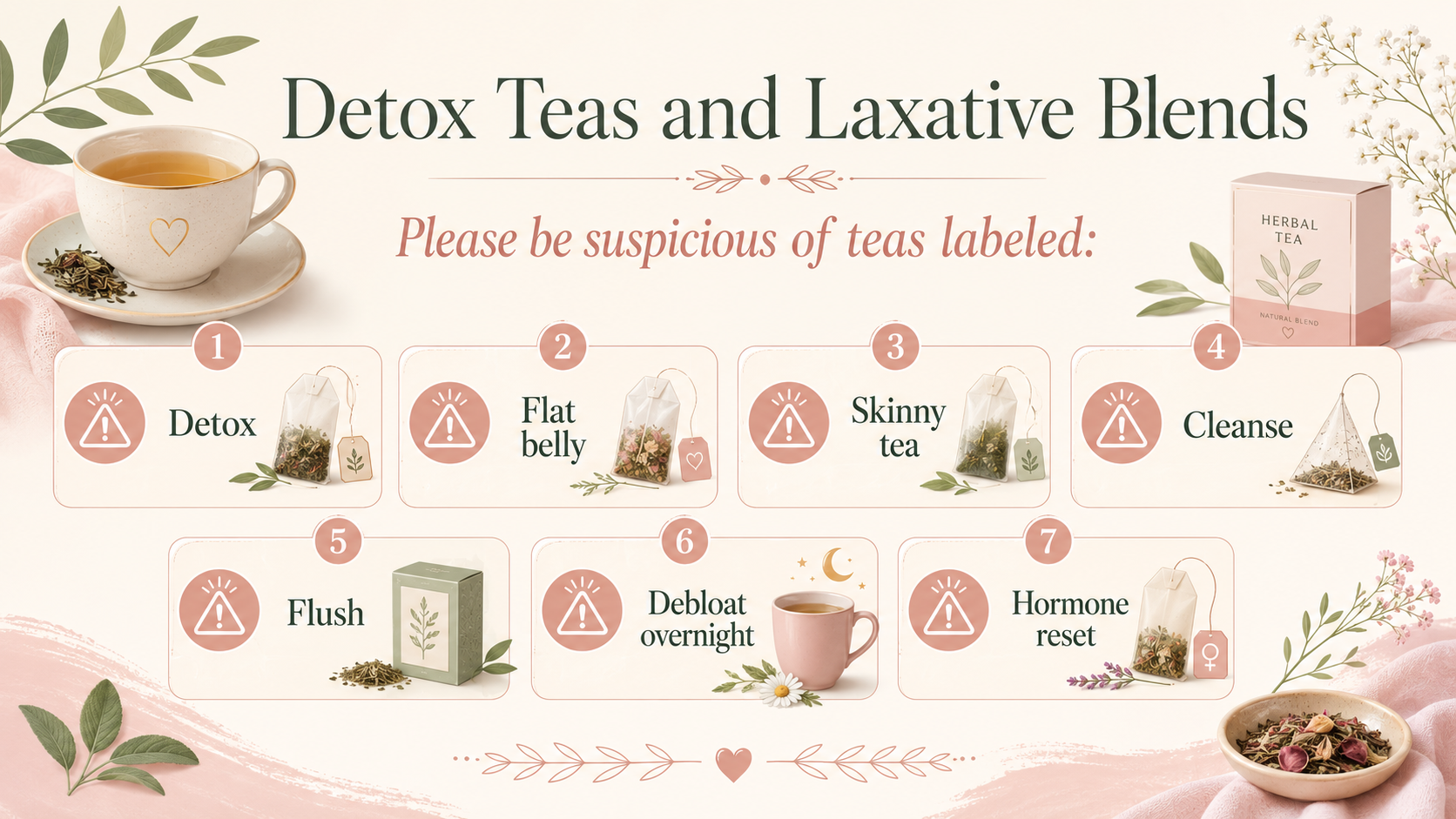
Some of these blends contain stimulant laxatives, diuretics, or high-caffeine ingredients. They may make you lose water weight or run to the bathroom, but that is not the same as supporting your body.
That is just your intestines filing an emergency evacuation plan.
During your period, this matters even more. You may already be dealing with cramps, loose stools, nausea, bloating, or fatigue. A harsh laxative tea can make the whole situation feel more dramatic.
And we are not giving your period a microphone.
Choose gentle digestive teas instead:
Fennel
Peppermint, if reflux is not an issue
Ginger
Chamomile
Support the belly. Do not bully it.
Too Much Caffeine
Caffeine is not automatically bad.
A cup of black tea or green tea can be lovely for some people. But during PMS or your period, too much caffeine may make certain symptoms feel worse, especially if you are sensitive to it.
Mayo Clinic recommends avoiding caffeine and alcohol as part of PMS diet and lifestyle changes. It also suggests smaller, more frequent meals and limiting salt to reduce bloating and fullness.
That does not mean you must break up with caffeine forever.
It means your period week may not be the best time to triple your iced coffee and then wonder why your anxiety is tap-dancing.
Consider cutting back if caffeine seems to worsen:
Jitters
Breast tenderness
Irritability
Anxiety
Headaches
Sleep trouble
Cravings
Heart palpitations
A gentle swap:
Morning caffeine, if you want it. Caffeine-free herbal tea after lunch. Chamomile or cinnamon in the evening.
Your nervous system may send a thank-you note.
Teas That Make Reflux Worse
Period nausea and bloating can tempt you toward peppermint tea, and for many people, peppermint feels wonderful.
But peppermint is not everyone’s friend.
If you have GERD, reflux, or frequent heartburn, peppermint may make symptoms worse. Some people notice that mint relaxes the “door” between the stomach and esophagus, letting acid move upward like an uninvited guest with no shoes on.
For reflux-prone period days, ginger or chamomile may be a better place to start.
Peppermint is refreshing.
But refreshing is less charming when your chest is on fire.
High-Dose Herbal Supplements Without Guidance
A tea bag is one thing.
A concentrated extract, capsule, tincture, essential oil, or mystery blend from the internet is another thing wearing the same name tag.
NCCIH notes that dietary supplements may interact with medications, may pose risks for people with certain medical conditions, and often have not been tested in pregnant women, nursing mothers, or children.
So keep your period tea routine food-like and simple unless your healthcare professional says otherwise.
Be especially cautious with high-dose or concentrated herbs if you:
Take prescription medication.
Take blood thinners.
Are pregnant or breastfeeding.
Are trying to conceive.
Have liver, kidney, heart, or hormone-sensitive conditions.
Have surgery coming up.
Have very heavy bleeding or unusual symptoms.
And please do not drink essential oils.
Not peppermint oil. Not cinnamon oil. Not “but it says therapeutic grade” oil.
Tea is tea. Essential oil is not tea. The end.
Teas with Huge Hormone Claims
Be careful with blends that promise to “balance hormones,” “fix PMS,” “reset your cycle,” or “clean your uterus.”
Your uterus is not a kitchen counter.
It does not need a scrub.
Hormonal health is complex. PMS, cramps, irregular cycles, heavy bleeding, and pelvic pain can have many causes. A tea can be part of a comforting routine, but it should not be marketed as a cure for symptoms that might need real medical attention.
ACOG says period pain can disrupt school, work, or everyday activities, and it is especially important to get help when pain is severe, worse than usual, or makes life hard every month.
So let tea be tea.
Let it be warm. Let it be calming. Let it be a little ritual that helps you feel cared for.
But do not let a dramatic label convince you to ignore your body.
The best period tea is not the one with the loudest promise.
It is the one that supports you gently, safely, and realistically.
When Period Pain Is Not “Normal”
Some period discomfort can be common.
But common does not mean you have to suffer through it with a brave little smile and a mug of tea as your only plan.
No.
Tea can be comforting. A heating pad can help. Rest can help. Soft pants can help humanity continue.
But if your period pain is severe, new, worsening, or interrupting your life, that is not a “just deal with it” situation. ACOG says it is especially important to get help if period pain is severe, feels worse than usual, or makes life hard every month.
Signs to Call a Healthcare Professional
Please reach out to a doctor, gynecologist, or other qualified healthcare professional if you notice:
Pain that keeps you from school, work, errands, or normal daily life.
Cramps that feel much worse than your usual pattern.
Pain that starts earlier than usual or continues after your period ends.
Pelvic pain outside your period.
Sudden, sharp pelvic pain.
Heavy bleeding that soaks through pads or tampons quickly.
Bleeding that lasts longer than 7 days.
Large blood clots.
Dizziness, fainting, fever, nausea, or vomiting with severe pain.
Unusual discharge or bleeding between periods.
Pain during sex or pain when using the bathroom.
Mayo Clinic advises emergency care for sharp, sudden pelvic pain when it comes with symptoms such as excessive vaginal bleeding, fever, nausea or vomiting, or signs of shock like fainting. ACOG also lists bleeding longer than 7 days, soaking through one or more pads or tampons every hour for several hours, and clots as big as a quarter or larger as signs of heavy menstrual bleeding.
That is not meant to scare you.
It is meant to give you permission.
Because too many people are taught to treat period pain like a monthly inconvenience they should politely endure. But painful periods can sometimes be connected to conditions like endometriosis, fibroids, adenomyosis, pelvic inflammatory disease, or other health concerns. Mayo Clinic notes that conditions such as endometriosis or uterine fibroids can cause menstrual cramps, and treating the cause may reduce the pain.
A cup of ginger tea can support you.
It cannot investigate what is happening inside your pelvis.
That job belongs to medical care.
Gentle Reassurance
Here is the part I want you to keep:
You are not being dramatic.
You are not weak.
You are not failing at “natural wellness” because chamomile did not fix pain that makes you curl up and cancel your day.
Your body is not a group project where everyone else gets a vote.
If your pain feels too big, too frequent, too strange, or too disruptive, you deserve answers. Cleveland Clinic puts it plainly: minor aches during menstruation can be normal, but extremely painful periods are not something you have to suffer through silently.
So yes, brew the tea.
Choose ginger for cramps. Fennel for bloating. Chamomile for the tender PMS night. Peppermint for nausea. Cinnamon for warmth.
But also listen for the difference between discomfort and distress.
Comfort belongs in the mug.
Medical concerns belong in a conversation with someone who can help you get real answers.
FAQ: The Best Herbal Teas for Period Relief
What is the best herbal tea for period cramps?
For cramps, start with ginger tea, fennel tea, or cinnamon tea.
Ginger is a smart first choice when cramps come with nausea or a cold, heavy feeling. NCCIH notes that ginger supplements may help reduce the severity of menstrual cramps, though tea is gentler than concentrated supplements.
Fennel and cinnamon are also popular for crampy, tight, achy days. I especially like this blend:
Ginger + fennel + cinnamon
It is warm, simple, and useful when your period feels like it brought a tiny construction crew into your lower belly.
Is ginger tea good for period pain?
Ginger tea may be helpful for period discomfort, especially when cramps come with queasiness.
The strongest research often looks at ginger supplements, not tea, so we should keep the claim honest. Ginger tea can be part of a supportive period routine, but it is not a guaranteed pain treatment. It may also cause mild side effects for some people, including heartburn, stomach upset, diarrhea, or gas.
Try ginger tea during the first day or two of your period, when cramps tend to be loudest.
A simple cup:
Fresh ginger + hot water + honey + lemon
Spicy. Warm. No wellness gymnastics required.
Can peppermint tea help with period bloating?
Peppermint tea may feel helpful for period bloating, gas, or nausea because it has a fresh, cooling quality that many people find soothing.
Most stronger research is on peppermint oil, not peppermint tea. NCCIH notes that enteric-coated peppermint oil capsules may improve IBS symptoms in adults, but side effects can include acid reflux and indigestion.
So peppermint tea can be a gentle option for bloating.
But.
If you have reflux, GERD, or frequent heartburn, peppermint may not be your best friend. Choose fennel or ginger instead.
Is chamomile tea good for PMS?
Chamomile tea can be a lovely choice for PMS tension, bedtime restlessness, and emotionally tender days.
It is caffeine-free, mild, and easy to turn into a calming evening ritual. Think of it less as “fixing PMS” and more as giving your nervous system a soft place to land.
PMS can include mood swings, tender breasts, food cravings, fatigue, irritability, and depression, and symptoms can range from mild to intense. For those softer-but-still-annoying PMS evenings, chamomile can support the routine around rest: dim lights, warm mug, heating pad, phone away.
Tiny ritual. Big mercy.
Can I drink herbal tea every day during my period?
For many people, one or two cups of simple herbal tea during a period is reasonable.
But the word simple is doing important work here.
A cup of chamomile, ginger, fennel, peppermint, or cinnamon tea is very different from a high-dose extract, essential oil, “detox” blend, or supplement. Herbs can interact with medications and may not be right for everyone, especially during pregnancy, breastfeeding, or certain health conditions.
Start with one tea at a time. Notice how your body responds. Your body is allowed to have preferences.
Very rude of it, but allowed.
Which teas should I avoid during my period?
Avoid teas that promise aggressive results, especially:
Detox teas
Skinny teas
Flat-belly teas
Laxative teas
“Hormone reset” blends
Teas with huge cure-like claims
Any blend with ingredients you do not recognize
Also consider limiting caffeine if PMS makes you feel anxious, irritable, jittery, or unable to sleep. Mayo Clinic recommends avoiding caffeine and alcohol as part of PMS lifestyle changes.
And please avoid drinking essential oils. Peppermint oil is not peppermint tea. Cinnamon oil is not cinnamon tea.
Tea should comfort your body.
Not start a group chat with your digestive system at 2 a.m.
When should I see a doctor for period pain?
Talk with a healthcare professional if your period pain is severe, getting worse, disrupting your normal life, or not improving with first-step care. ACOG says that if medications do not relieve dysmenorrhea, care should focus on finding the cause of the pain.
Also get help if you have sudden sharp pelvic pain, very heavy bleeding, fever, fainting, unusual discharge, pain outside your period, or symptoms that feel new and concerning.
A warm cup of tea can support you.
But you deserve answers when your body is asking for more than comfort.
Final Sip: Build Your Period Comfort Cup
The best period tea is not the fanciest tea.
It is not the blend with the longest ingredient list, the prettiest label, or the most dramatic promise.
It is the cup that meets your body where it is.
Crampy? Try ginger, fennel, or cinnamon. Bloated? Reach for fennel or peppermint. Queasy? Start with ginger. Tender, tired, or overstimulated? Let chamomile take the evening shift.
That is the real beauty of The Best Herbal Teas for Period Relief. You do not have to build an entire wellness personality around your cycle. You only need a few gentle options and enough self-trust to notice what helps.
One symptom. One cup. One small pause.
That can be enough.
And please remember: period care is not about proving how much you can tolerate. It is not about being “natural” enough, productive enough, or cheerful enough while your body is doing monthly internal renovations.
Some days, your period asks for ginger tea and a heating pad.
Some days, it asks for chamomile, soft pants, and canceling the thing you did not want to do anyway.
Some days, it asks for a doctor’s appointment because the pain is too big to be handled by tea alone.
All of those are valid.
Tea is here to support you, not silence you.
So build your little period tea cabinet with care: ginger for warmth, fennel for bloating, peppermint for freshness, chamomile for calm, cinnamon for cozy comfort, and raspberry leaf only if it fits your body and your situation.
Then keep the ritual simple enough to return to.
A warm mug. A softer evening. A body listened to.
That is a beautiful place to start.
Advertisement
Related Articles
Comments (0)
You must be logged in to leave a comment.
Log In to CommentNo comments yet. Be the first to share your thoughts!